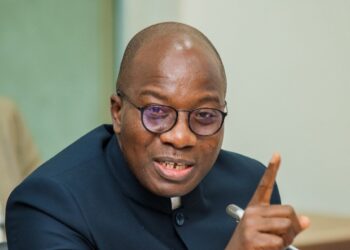

Legal scholar Professor Stephen Kwaku Asare, popularly known as Kwaku Azar and writing under the signature “GOGO,” has cautioned Chief Justice Paul Baffoe-Bonnie against language that carries partisan meaning, arguing that judicial independence imposes restraint on judges just as it demands restraint from politicians toward the courts.
Professor Asare’s intervention responds to remarks Justice Baffoe-Bonnie made during visits to the Minerals Income Investment Fund and the Social Security and National Insurance Trust on Wednesday, September 2, 2026, where the Chief Justice praised the performance of both institutions under the current administration and questioned Ghana’s governance over what he called the past eight years.
What the Chief Justice Said
Justice Baffoe-Bonnie told MIIF officials he was impressed by their performance, extending the comment into a broader reflection on the state of public institutions. “Sometimes when we hear how well some state organisations are doing now, we wonder what we’ve been doing for the past eight years and how Ghana could have sunk so low,” he said.

He pointed specifically to SSNIT’s turnaround, recalling that the pension fund had been preparing to sell prized assets such as Labadi Beach Hotel not long before the improvements he was now witnessing.
The remarks drew immediate political reaction, with Ofoase-Ayirebi MP Kojo Oppong Nkrumah separately questioning the propriety of a sitting Chief Justice touring state-owned enterprises at all, describing it as unprecedented for the head of an arm of government meant to remain independent of the Executive and Legislature.
“I Understand the Sentiment. But I Worry About the Language.”
Professor Asare’s response was more measured than Oppong Nkrumah’s, focused specifically on the political resonance of the phrase Baffoe-Bonnie used.
“I understand the sentiment. But I worry about the language. The past eight years’ carries an unmistakable partisan meaning in our political discourse. Coming from the Chief Justice, it can therefore easily be understood, fairly or unfairly, as an assessment of one administration relative to another.”
CDD-Ghana Fellow Professor Stephen Kwaku Asare
He argued that this is territory the head of the Judiciary should avoid entirely, regardless of whether the underlying observation about institutional performance happens to be accurate.

The Robe Constrains What Judges Can Say
Professor Asare grounded his caution in a broader principle about judicial speech. “Judges do not cease to be citizens when they assume office,” he wrote. “But the robe necessarily constrains their public speech. This is especially so for the Chief Justice, whose words inevitably carry the institutional weight of the Judiciary.”
He framed the obligation as running in both directions. Ghanaians rightly insist that politicians respect judicial independence and stay out of the judicial arena, he argued, but that expectation carries a reciprocal duty. “Judges, particularly the Chief Justice, must also exercise the restraint necessary to stay out of the partisan political arena.“
Not About Right or Wrong, But About Protecting the Institution
Professor Asare was explicit that his concern was not whether Baffoe-Bonnie’s underlying assessment of SSNIT or MIIF’s performance was accurate, nor about what motivated the remarks.
“The point is not whether the observation is right or wrong,” he wrote. “Nor is it about the motives of the speaker. It is about protecting an institution.” He pointed to the practical stakes of that protection.
Ghana’s courts will continue to hear cases involving the acts and omissions of both the previous government and the current one, and Professor Asare argued that no litigant appearing before those courts should have reason to wonder whether the head of the Judiciary has already formed a favourable or unfavourable view of either administration.
A Standard That Rises With the Office
Professor Asare closed by restating the reciprocal nature of judicial independence as a general principle rather than a criticism aimed solely at the current Chief Justice.
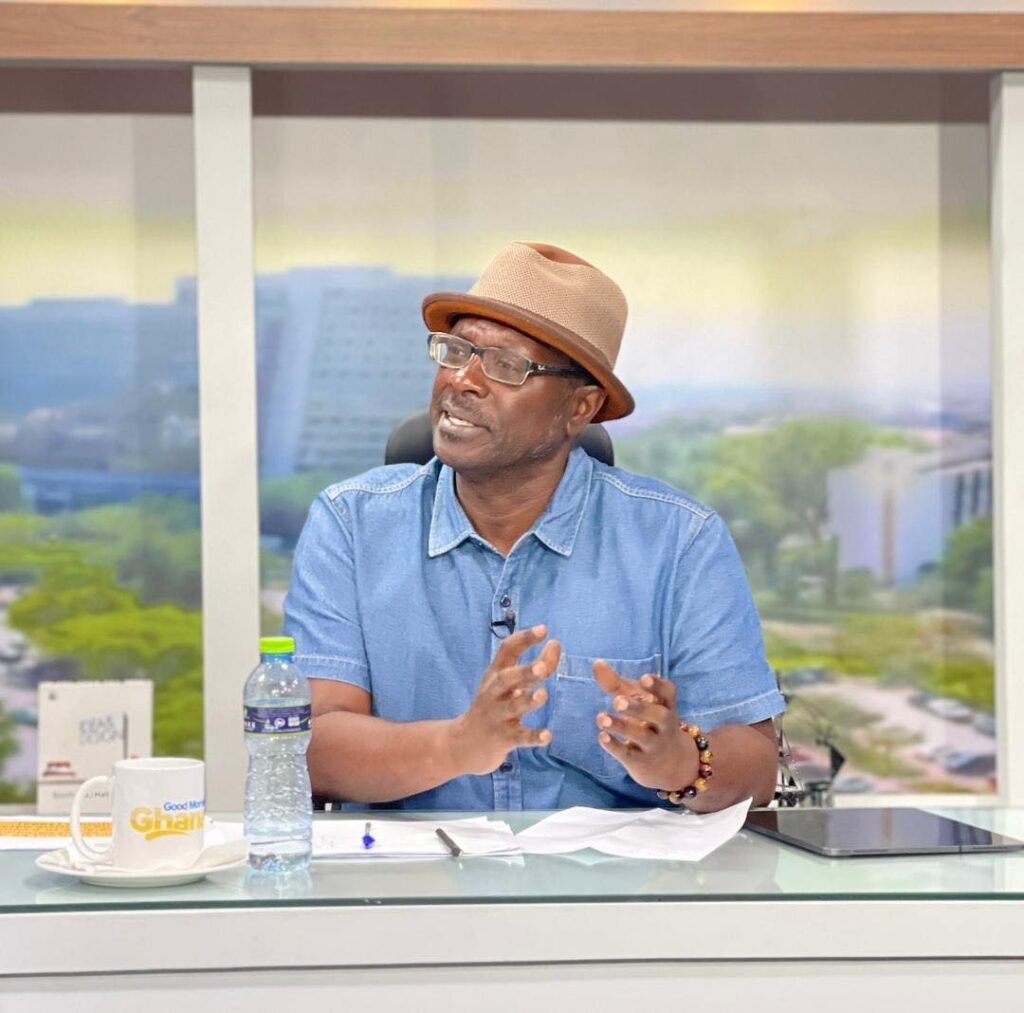
“Judicial independence requires political restraint, from politicians toward judges, and from judges toward partisan politics,” he wrote, adding a final line that situated Justice Baffoe-Bonnie’s remarks within a broader standard of institutional conduct. “The higher the judicial office, the heavier the burden of restraint.”
His intervention adds a distinct voice to a controversy that has otherwise centred on questions of institutional propriety, with NEIP Chief Executive Officer Eric Adjei separately defending the Chief Justice’s comments as an honest citizen’s assessment rather than a partisan statement, and Oppong Nkrumah challenging the site visits themselves as an unusual departure from judicial norms.
READ ALSO: Words Can’t Describe Him: Mourinho Hails Messi’s Quality