
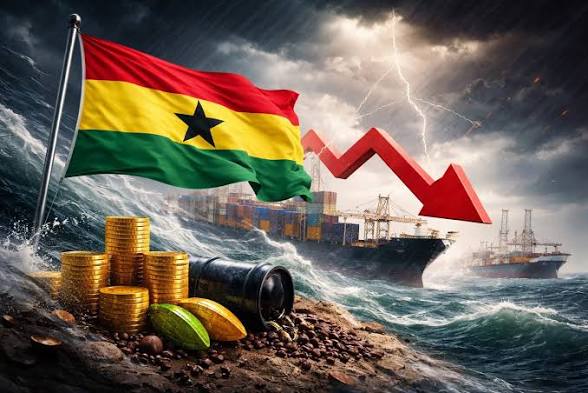
Ghana’s progress on inflation came under renewed pressure in August 2026, with the cost of housing, water, electricity, gas and other fuels emerging as one of the strongest sources of price pressure even as overall inflation remained relatively low by recent standards.
Data from the Ghana Statistical Service (GSS) show that year-on-year headline inflation increased to 5.0% in August from 4.6% in July, marking the second consecutive monthly increase.
More significantly for the energy sector, the housing, water, electricity, gas and other fuels division recorded inflation of approximately 10.2%, substantially above the national headline rate.
The development creates an important distinction between Ghana’s improving macroeconomic picture and the costs still being experienced by households and productive sectors.
While headline inflation has fallen dramatically from the double-digit levels recorded in 2025, essential energy-related costs are rising at roughly twice the pace of the overall consumer basket.
Energy Costs Outpace The Broader Inflation Trend
The August numbers show that the moderation in headline inflation has not translated evenly across the economy.
In July, housing, water, electricity, gas and other fuels recorded inflation of 8.3%, up from 7.9% in June.
By August, the rate had climbed to about 10.2%, representing an acceleration of roughly 1.9 percentage points in a single month.
That movement deserves attention because energy is fundamentally different from many discretionary items in the inflation basket.
Households can postpone certain purchases, switch brands or reduce consumption of non-essential goods.
Electricity, cooking fuels, transportation and other energy inputs offer considerably less flexibility.
Housing, water, electricity, gas and other fuels category was the largest contributor to headline inflation, accounting for 29.5% of the August inflation rate. Food and non-alcoholic beverages contributed 29.1%, while transport contributed 13.2%.
GSS
The implication is significant: energy-related expenditure is not merely becoming more expensive; it is accounting for a larger share of the inflation burden carried by consumers.
This also places energy policy closer to the centre of Ghana’s inflation-management challenge.
Transport And Energy Are Reinforcing Each Other
The energy picture becomes more consequential when combined with developments in transport.
Transport inflation reached 10.5% in August, slightly higher than the 10.2% recorded for housing, water, electricity, gas and other fuels.
At the same time, services inflation increased to 8.6%, remaining more than twice the goods inflation rate of 3.8%.
This combination illustrates how energy costs can move through the economy.
Fuel affects the cost of moving people and goods, while electricity and other energy inputs influence the cost of operating businesses.
A logistics company, for example, faces fuel and vehicle costs; a manufacturer faces electricity and fuel costs; a restaurant faces electricity, cooking fuel and transportation costs. These expenses can ultimately find their way into the prices paid by consumers.
The latest figures therefore suggest that Ghana’s energy inflation challenge cannot be assessed solely through the price of electricity or petroleum products. The wider question is how the total cost of energy enters the cost structure of the economy.
Recent concerns from Ghana’s transport sector reinforce the point.
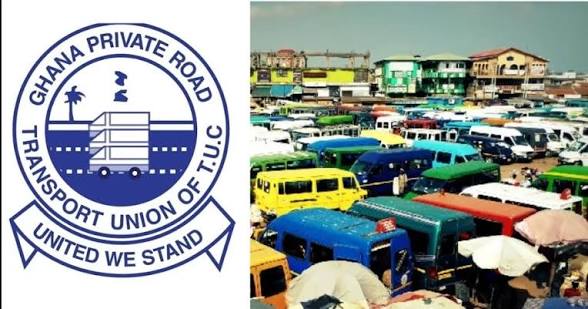
The Ghana Private Road Transport Union has warned that another increase in fuel prices could make it difficult to maintain existing transport fares, after operators had previously suspended a planned fare increase following government intervention on diesel prices.
That pressure is occurring against a background in which Parliament’s Energy Committee has also called for a fresh examination of taxes and levies on petroleum products as international crude-price pressures increase.
Domestic Costs Are Becoming The Bigger Inflation Problem
Perhaps the most important message from the August figures is that Ghana’s inflation challenge is becoming increasingly domestic.
Inflation for locally produced goods and services increased from 5.9% in July to 6.1% in August, while imported inflation remained significantly lower at 2.2%. Locally produced items and services accounted for 86.2% of total inflation.
That distinction changes the policy diagnosis.
When imported inflation dominates, exchange-rate stability and international commodity prices become particularly important.
Ghana’s relatively low imported inflation suggests that the cedi’s improved stability is helping to contain external price transmission.
But domestic energy costs are not determined exclusively by the exchange rate.
They reflect the cost of generation, fuel supply, transmission, distribution, network losses, financing, maintenance, regulation and, in the petroleum sector, taxes, levies and international crude prices.
Consequently, monetary stability alone cannot solve the energy component of Ghana’s inflation problem.
The country can maintain a relatively stable currency while businesses continue to face expensive electricity, fuel and logistics.
That is why the August inflation data should be read as a signal that macroeconomic stabilisation now needs to be matched by structural cost reduction.
Services Inflation Shows The Pressure Is Spreading
The persistence of services inflation provides another warning.
Services inflation rose from 8.5% in July to 8.6% in August, while goods inflation increased from 3.6% to 3.8%.
The GSS reported that about 71% of total inflation originated from non-food items, including transport, housing, rent, education and other services.
This is important because services tend to incorporate domestic operating costs more heavily than imported manufactured goods.
When energy and transport costs rise, the impact can become embedded in service prices through wages, logistics, equipment operation and business overheads.
Unlike a temporary jump in the price of a particular imported commodity, these pressures can prove more persistent.
The August figures consequently point to a potential second-round risk: energy costs could continue affecting inflation even if the original external shock begins to fade.
That risk is particularly relevant for Ghana as the economy moves toward stronger industrial activity.
Government’s Big Push agenda is intended to expand infrastructure and productive capacity, but the competitiveness of those investments will depend partly on the cost of operating them.
An industrial facility connected to an unreliable or expensive energy system does not automatically translate into competitive production.
The Energy Sector Faces A Difficult Policy Balance
The policy challenge is therefore not simply to suppress energy prices.
Ghana needs affordable energy, but it also needs financially sustainable energy institutions capable of maintaining infrastructure, paying suppliers and investing in additional capacity.

A government that reduces tariffs or petroleum taxes without addressing the underlying financial structure may provide immediate relief while creating larger liabilities later.
Conversely, allowing energy costs to rise unchecked can weaken household purchasing power and undermine industrial competitiveness.
The more durable solution lies in reducing the cost base.
That means improving the financial health and operational efficiency of electricity utilities, reducing technical and commercial losses, securing adequate natural-gas supplies for thermal generation, expanding reliable transmission and distribution infrastructure and improving planning between energy supply and expected industrial demand.
It also means treating petroleum taxation as part of a broader energy-cost strategy rather than viewing each levy independently.
The issue is particularly important because Ghana’s power system remains heavily dependent on thermal generation and therefore exposed to the cost and availability of natural gas and other fuels.
At the same time, the country is pursuing greater renewable-energy deployment and broader energy-transition objectives.
The policy objective should not be choosing between affordability and sustainability.
It should be building an energy system where improved efficiency, diversified supply and stronger infrastructure gradually make both objectives more achievable.
A Low Headline Rate Can Hide A High-Cost Economy
There is also a wider lesson in the August inflation figures.
Ghana’s 5.0% headline inflation remains a significant improvement over the 11.5% recorded in August 2025, according to the GSS. Moreover, month-on-month inflation was negative 1.0%, meaning the average price level fell between July and August.
Those are positive indicators.
But they do not eliminate the importance of the categories where inflation remains high.
A household experiencing 10.2% inflation in housing and energy does not experience the economy as a 5.0% inflation environment.
A commercial driver facing 10.5% transport inflation does not experience the same cost environment as the national average.
A manufacturer paying for electricity, fuel, logistics and other domestic inputs faces a different economic reality from an aggregate CPI figure.
That is why the composition of inflation matters as much as its headline level.
The current figures suggest that Ghana has moved from a broad-based inflation crisis toward a more concentrated domestic cost problem, with energy, transport and services among the areas requiring closer attention.
September Could Test Ghana’s Energy-Inflation Gains
The immediate question is whether August represents a temporary acceleration or the beginning of another sustained rise in energy-related inflation.
The answer will depend partly on developments in petroleum prices, utility costs and domestic operating conditions.

It will also depend on whether the pressures recorded in August begin feeding more aggressively into services and productive-sector prices.
For policymakers, the danger would be to interpret the 5.0% headline rate as evidence that the inflation problem has effectively been solved.
The more accurate conclusion is that Ghana has made substantial progress on inflation, but the next stage will be harder.
The easy gains from lower imported inflation and improved macroeconomic stability cannot, by themselves, deliver a low-cost economy.
The remaining challenge is structural: making electricity, fuel, transport and other essential inputs cheaper to produce and deliver without weakening the institutions responsible for supplying them.
August’s 10.2% energy-related inflation is therefore more than another monthly statistic. It is a reminder that Ghana’s disinflation story will ultimately be judged not only by how quickly the headline CPI falls, but by whether the underlying cost of powering homes, businesses and industry falls with it.
READ ALSO: AGI Pushes Higher Excise on Imported Sugary Goods to Protect Local Industry