Ghana’s energy transition is increasingly taking a digital turn, with the Energy Commission positioning smart grids, data analytics and automation as critical tools for improving the reliability, resilience and efficiency of the country’s electricity system.
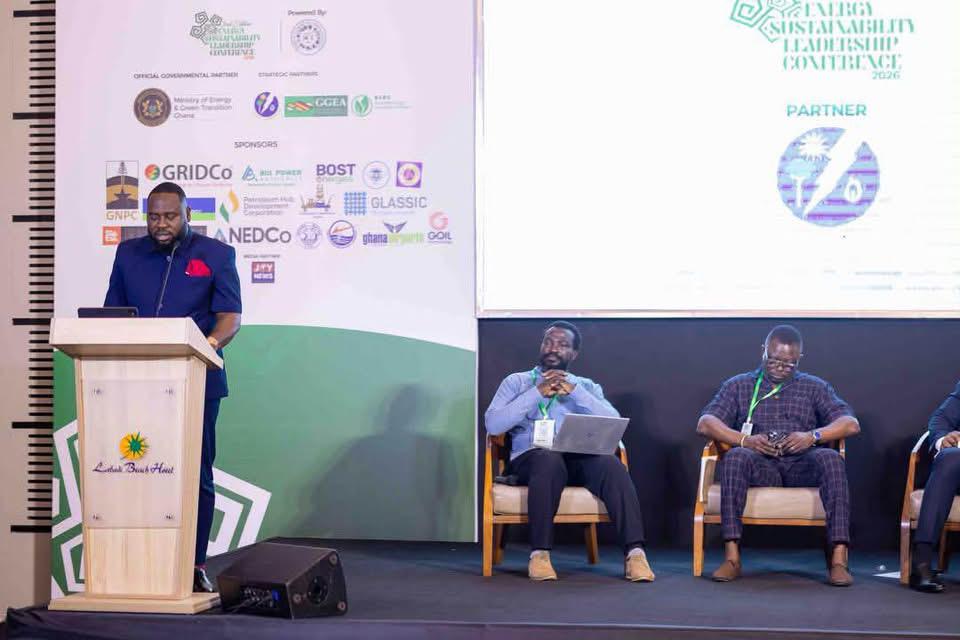
The issue featured prominently at the Energy Sustainability & Leadership Conference 2026.
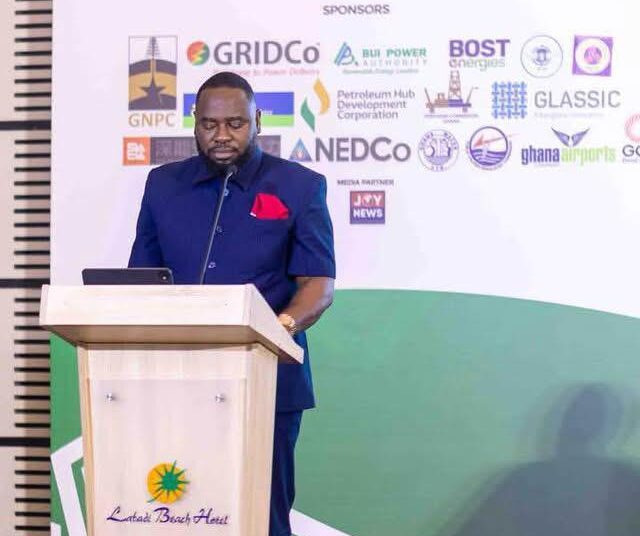
Deputy Executive Secretary of the Energy Commission, Chris Nana Banyin Yalley, delivered a keynote address on the growing role of digital transformation in Ghana’s energy sector.
Digitalisation Takes Centre Stage
Mr. Yalley’s presentation centred on a fundamental shift taking place within modern energy systems.
Rather than relying primarily on conventional infrastructure and reactive management, electricity networks are increasingly being transformed into intelligent systems capable of sensing changes, processing information, anticipating demand and responding more efficiently.
For Ghana, such a transition has implications beyond the introduction of new technology.
A smarter electricity system could strengthen the ability of utilities and regulators to understand consumption patterns, identify emerging problems and make decisions based on timely and reliable information.
“Smart but secure, innovative but inclusive, digital but dependable.”
Chris Nana Banyin Yalley, Deputy Executive Secretary, Energy Commission
The emphasis on intelligence within the electricity network is particularly relevant as Ghana seeks to accommodate changing patterns of electricity demand, increased renewable-energy penetration and the broader electrification of economic activity.
Digital tools can potentially provide greater visibility across the power system, allowing operators to detect disruptions more quickly and manage electricity flows with greater precision.
Data analytics can also support demand forecasting and infrastructure planning, while automation can reduce the time required to respond to operational problems.
However, digitalisation also introduces a different category of risk.
As more components of the energy system become connected and increasingly dependent on data and digital platforms, vulnerabilities to cyber threats become more significant.
Mr. Yalley therefore stressed that Ghana’s digital transformation must be accompanied by strong cybersecurity, data governance and interoperability.
Without those safeguards, the benefits of connected energy infrastructure could be undermined by system vulnerabilities, poor data management or incompatible technologies.
Reliability Requires More Than New Technology
The conference discussion points to an important distinction in Ghana’s energy transition: digitalisation should not be treated as an end in itself.
Smart meters, automated systems and advanced analytics can improve how an electricity system is managed, but they cannot compensate indefinitely for weaknesses in physical infrastructure, financial sustainability or institutional coordination.

This makes the Commission’s emphasis on a digital but dependable energy sector significant.
Ghana’s electricity challenges have historically involved a combination of generation adequacy, transmission and distribution constraints, financial pressures and operational inefficiencies.
Digital technologies can help address some of these problems, but their effectiveness depends on the wider system into which they are introduced.
A smart grid, for instance, creates greater value when the underlying transmission and distribution infrastructure is sufficiently reliable to support the information and control systems built around it.
Similarly, sophisticated data analytics are only as useful as the quality, accessibility and consistency of the data being analysed.
The regulatory dimension is therefore becoming increasingly important.
As the technical regulator, the Energy Commission has a role not only in encouraging innovation but also in ensuring that emerging technologies operate within appropriate standards and safeguards.
That includes addressing interoperability so that technologies developed by different companies and deployed across different parts of the electricity system can communicate effectively.
Without common standards, Ghana risks developing isolated digital systems that increase complexity rather than creating a genuinely integrated smart energy network.
Energy Security And Climate Finance Intersect
The digitalisation discussion formed part of a wider conference agenda covering energy security, corporate governance in energy projects, climate finance, green bonds and Ghana’s energy outlook towards 2030 and beyond.
The combination of these themes reflects the increasingly interconnected nature of energy policy.
Ghana’s ability to build a resilient energy system will depend not only on technology but also on access to capital, sound governance and the capacity to finance infrastructure capable of supporting long-term economic growth.
Climate finance and green bonds, in particular, could become increasingly relevant as Ghana seeks to expand cleaner energy infrastructure while managing the costs associated with the transition.
Yet access to such financing will depend on the credibility of projects, the strength of institutions responsible for implementation and the ability to demonstrate measurable environmental and economic outcomes.
This places governance alongside technology at the centre of the energy transition.
A digitally advanced energy sector that lacks strong governance could generate new risks, while a well-governed sector without the technological capacity to manage increasingly complex electricity systems could struggle to achieve the efficiency and responsiveness required by a modern economy.
Collaboration Becomes Critical To 2030 Goals
The conference ultimately highlighted the need for closer collaboration among regulators, utilities, technology companies, investors, development partners and consumers.
Such cooperation will be particularly important as Ghana approaches 2030, when electricity demand, renewable-energy deployment, digital infrastructure and climate-finance requirements are expected to place greater demands on the energy system.

For regulators, the challenge will be to create rules that allow innovation without compromising security or reliability.
Utilities will need to integrate digital technologies into existing systems, while technology providers must develop solutions suited to Ghana’s infrastructure and operating environment rather than simply importing models designed for different markets.
Investors and development partners, meanwhile, have a role in financing the technological and physical infrastructure required for the transformation.
Consumers will also become increasingly important as electricity users interact with smart systems and generate the consumption data that underpin more responsive energy management.
The central lesson from the conference is therefore that Ghana’s energy transition cannot be separated into isolated technology, finance, regulation and infrastructure conversations. The different components must develop together.
Digitalisation can make the energy system more intelligent, but intelligence must be matched by resilience. Innovation must be accompanied by inclusion, while connectivity must be protected by cybersecurity and strong data governance.
For Ghana, the real opportunity lies in using digital transformation to strengthen the entire energy architecture rather than simply adding technology to an existing system.
That approach would position smart grids, automation and data analytics not merely as technological upgrades, but as instruments for building a more reliable, secure and sustainable electricity sector capable of supporting Ghana’s economic ambitions beyond 2030.
READ ALSO: Ghana Stock Exchange Crowned Africa’s Best Performer