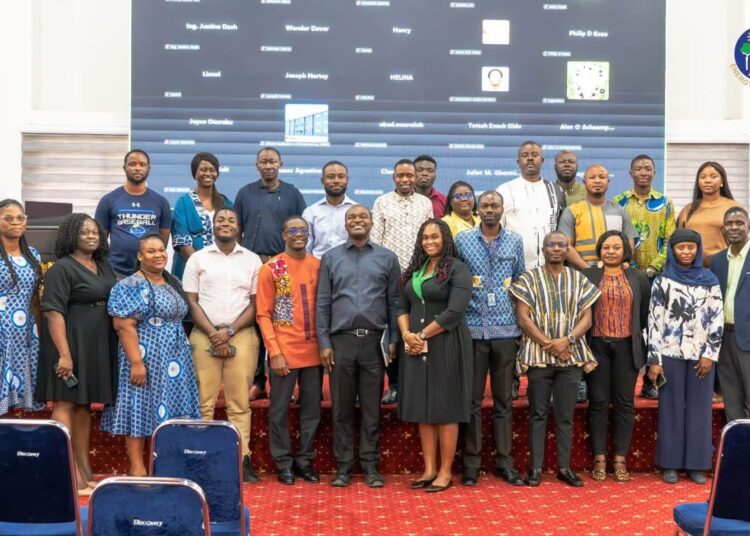
The Energy Commission has intensified stakeholder engagement on energy-efficient buildings, holding a second consultative meeting with the Ghana Institution of Engineering (GhIE) as part of a broader effort to strengthen the implementation of energy-efficiency requirements across Ghana’s building sector.
The engagement forms part of an ongoing series of consultations with architects, engineers and other built-environment professionals aimed at embedding energy efficiency into building design, construction and permit administration.
The meeting brought together engineers participating both physically and virtually, reflecting growing interest in the practical implications of the proposed regulatory framework for Ghana’s construction industry.
Engineers placed at the centre of implementation
Technical experts from the Energy Commission’s Energy Efficiency Department presented details of the Building Energy Efficiency Regulations, including compliance requirements and the responsibilities expected of engineering professionals.
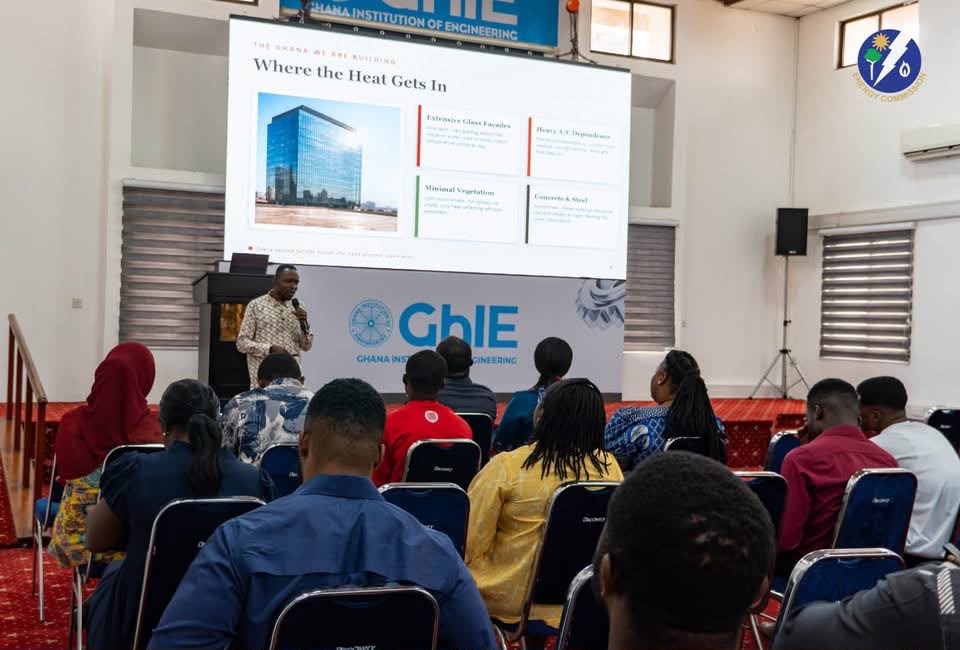
The discussions emphasised that energy efficiency must be incorporated from the earliest stages of building design and carried through construction and occupancy rather than being treated as an add-on after a project is completed.
Engineers have a critical role in integrating energy efficiency measures from the design stage through construction and occupancy.
Energy Commission
The focus on design-stage integration is significant because many opportunities to reduce energy consumption, such as building orientation, insulation, ventilation systems, lighting design and equipment selection, are most effective when addressed before construction begins.
Moving beyond policy to practical enforcement
Participants engaged actively with the Commission, raising questions about compliance procedures, implementation timelines and practical application within Ghana’s building environment.
The discussions suggest that the next phase of the process is shifting from policy formulation toward enforcement and operationalisation.
Analysts say this transition is often the most challenging stage of energy-efficiency regulation.
“Effective building-efficiency policy depends not only on regulations, but on whether engineers, developers and permitting authorities can apply the requirements consistently in real projects.”
Without clear compliance pathways and institutional coordination, efficiency standards can remain largely aspirational despite strong policy intent.
Buildings becoming an energy-security issue
The engagement highlights a broader shift in Ghana’s energy debate.
Energy efficiency is increasingly being treated not only as an environmental objective but also as an energy-security and infrastructure-planning issue.

Buildings account for a significant share of electricity consumption through cooling, lighting, appliances, pumps and other systems.
Improving building performance can therefore reduce peak demand, lower pressure on the national grid and reduce the need for additional generation capacity.
For a country seeking to expand industrial activity while managing power-sector costs, reducing energy waste in buildings can be one of the least expensive forms of new energy supply.
Climate and development goals converge
The Commission linked the initiative to Ghana’s wider sustainable-development and climate-resilience objectives.
Stronger building-efficiency standards are expected to support national efforts to reduce greenhouse-gas emissions while improving the long-term affordability of buildings for households, businesses and public institutions.
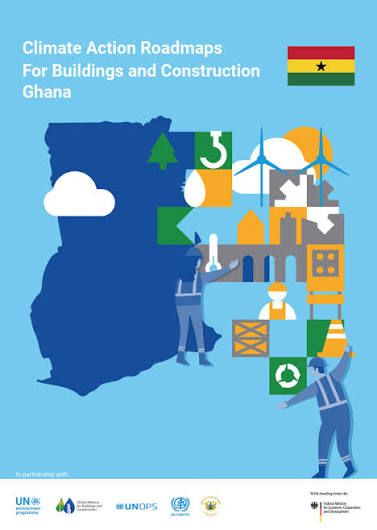
Energy-efficient buildings can also reduce exposure to future electricity-price increases by lowering consumption over the life of the building.
This is particularly important in urban areas where cooling demand is rising as temperatures increase and commercial activity expands.
A collaborative rather than confrontational approach
Unlike many regulatory rollouts that begin with enforcement actions, the Commission appears to be pursuing a collaborative implementation strategy.
The engagement with GhIE follows an earlier consultative meeting with architects, suggesting that the regulator is seeking alignment across the major professional groups involved in the building process.

This approach may improve acceptance of the regulations by allowing practitioners to shape implementation details before full enforcement begins.
The Commission said the consultations are intended to ensure that the framework is practical, commercially viable and responsive to industry realities.
Why the engineering community matters
The strong participation of engineers is particularly significant because they are often responsible for the systems that determine a building’s long-term energy performance.

Electrical engineers influence lighting and power systems, mechanical engineers shape cooling and ventilation efficiency, and structural and civil engineers affect material choices and overall building performance.
The meeting therefore reinforces the idea that energy efficiency is not confined to one discipline but is a cross-cutting engineering and planning issue.
A signal for the future of Ghana’s construction sector
The deeper significance of the consultation is that it points toward a possible transformation of how buildings are evaluated in Ghana.
Historically, building approvals have focused heavily on structural safety, land-use compliance and basic technical standards.

The emerging framework suggests that energy performance may become a more important consideration in permitting and regulatory oversight.
If implemented effectively, the regulations could gradually influence building design, construction practices, equipment selection and operational management across the sector.
The larger transition
The Energy Commission’s engagement with engineers illustrates a broader reality: Ghana’s energy transition will not be achieved only through new power plants, solar farms or gas infrastructure.
A substantial part of the transition will depend on using energy more efficiently in the buildings where people live, work and produce.
The consultation therefore represents more than a technical meeting.
It is an early step in building the professional, regulatory and institutional foundation required for a more energy-efficient and climate-resilient built environment.
For Ghana, the success of that effort will ultimately be measured not by the number of meetings held, but by whether future buildings consume less electricity, place less strain on the grid and contribute to a more sustainable and financially resilient energy system.
READ ALSO: GSE Trades GH¢7.3 Million as Index Climbs