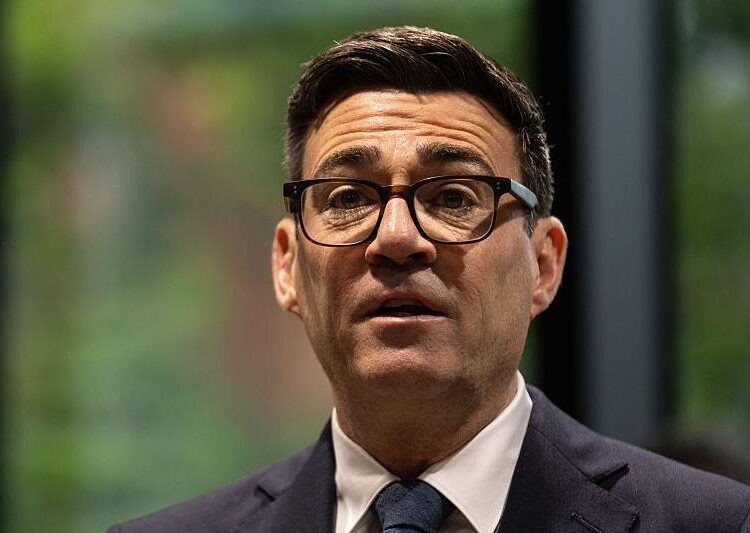
UK Prime Minister Andy Burnham has ordered his Justice Secretary to explore further options to keep the killers of police officer PC Andrew Harper in prison, signalling a potential government rethink over an early-release policy that has triggered widespread public and political anger.
Justice Secretary Alex Norris has been asked to “work through further options” that could keep “a greater number of the most serious offenders” behind bars, including Jessie Cole and Albert Bowers, who were sentenced to 13 years in prison for the manslaughter of PC Harper.
The development comes after the government previously stated that the two men could not be exempted from a broader early-release program because they were convicted of manslaughter, which is specifically prohibited from the policy. Cole and Bowers are set to be eligible for release in January, halfway through their terms.

The ruling has increased pressure on the new Labour government to strike a compromise between the need to reduce prison overcrowding and public desires for severe offenders to serve sentences commensurate with their crimes.
The government is expected to release thousands of prisoners early as part of measures designed to ease pressure on a prison system that has been operating close to capacity. Around 5,000 prisoners are expected to benefit from the revised arrangements after the government introduced exemptions for some categories of offenders, including those convicted of rape, serious child sexual offences and grooming offences.
However, the decision not to initially extend similar protection to offenders convicted of manslaughter has generated particular anger in the case of PC Harper.
The Thames Valley Police officer was killed in August 2019 after becoming caught in a strap attached to the back of a vehicle during an attempt to stop the theft of a quad bike in Berkshire. He was dragged along a rural road as the vehicle fled.

Cole, Bowers and Henry Long were initially tried for murder but were convicted of manslaughter. Long received a 16-year sentence, while Cole and Bowers were each sentenced to 13 years.
The government has previously pointed to the distinction between the different offences covered by its early-release rules. But the prospect of two men convicted over the death of an on-duty police officer being released after serving only half their sentences has intensified calls for ministers to intervene.
A petition calling for Cole and Bowers to remain in prison has attracted hundreds of thousands of signatures, reflecting the strength of public concern over the case.
Downing Street had initially insisted that manslaughter was “not a standalone offence” for the purposes of the early-release policy and that it was “not possible to simply exclude one or two offenders” from the wider category.
The latest intervention by Burnham, however, suggests that the government is no longer content to leave the matter there.
According to a government spokesperson, “the Prime Minister has asked the Justice Secretary to work through further options to keep a greater number of the most serious offenders in prison, including the killers of PC Harper.”
Prison Overcrowding Collides With Demands for Tougher Justice

Burnham’s intervention comes against the backdrop of a wider prison crisis that has forced successive governments to confront overcrowding and limited capacity across England and Wales.
The early-release programme is intended to create additional space by allowing certain prisoners to leave custody before completing the full custodial element of their sentences.
The government has already narrowed the scope of the programme following an urgent review, reducing the number expected to be released from around 6,000 to approximately 5,000.
But the Harper case has exposed the political difficulty of drawing the line between prisoners who can safely be released early and those whose crimes are regarded by the public as too serious to justify such treatment.
Dame Vera Baird, a former victims’ commissioner, has argued that the government should look more carefully at which prisoners are released as they attempt to relieve pressure on the prison estate.
Baird also pointed to another possible avenue for reducing pressure on prisons: prisoners serving controversial Imprisonment for Public Protection, or IPP, sentences.
The IPP system was introduced in 2005 for serious offenders who were considered a continuing risk to the public. Although the sentences were abolished in 2012, the change was not retrospective, leaving thousands of prisoners affected by the system.
The cause for concern highlights the challenging decisions that Burnham’s administration must make. On the one hand, there is a pressing need to expand jail capacity in order to keep the justice system from being undermined by overcrowding. On the other hand, it is expected that those found guilty of extremely heinous offences will spend a significant amount of time behind bars.
READ ALSO: GSE Trades GH¢7.3 Million as Index Climbs