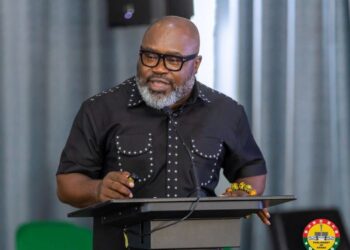

Dr. John Osae-Kwapong, a Political scientist, has welcomed the Supreme Court’s decision upholding the Office of the Special Prosecutor Act, 2017, while warning that the part of the ruling preserving the Attorney-General’s power to halt prosecutions could hand a future government the means to protect its own.
He made the assessment in an exclusive interview with The Vaultz News following the unanimous judgment delivered on 29 July 2026. Dr Osae-Kwapong, a Democracy and Development Fellow at CDD-Ghana and Project Director of The Democracy Project, argued that the case for an independent prosecutor rests on a task no Attorney-General can perform, which is charging a colleague who sits with them in cabinet.
His concern is that a nolle prosequi, an instrument designed for legitimate prosecutorial discretion, could instead be deployed to end inconvenient cases, with public outrage the only real check.
Why Ghana needed an independent prosecutor
Dr Osae-Kwapong began with the reasoning that produced the Office in the first place, and said the court has now confirmed the legitimacy of that reasoning.
“It is a good thing that the Supreme Court ruled in favour of the Office of the Special Prosecutor. We have said regularly, and I mentioned it in our last interview, that there are things an Attorney-General simply cannot do, especially where regime accountability is concerned”.
Dr. John Osae-Kwapong, Democracy and Development Fellow, CDD-Ghana, and Project Director, the Democracy Project
He then stated the conflict of interest in plain terms. “They cannot prosecute somebody they sit in cabinet with. They cannot bring a case against a fellow government official. That is precisely why we needed an independent office, and that need gave birth to the Office of the Special Prosecutor.“
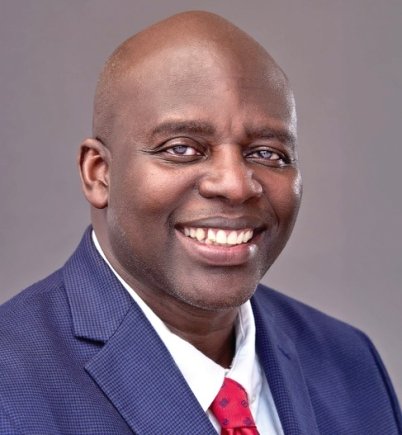
The recognition matters after months of legal uncertainty. “So I am glad that the court has at least recognised the legitimacy and the constitutionality of the Office of the Special Prosecutor,” he said.
The caveat he did not welcome
The judgment did not stop at validating the statute. It also reaffirmed that the Attorney-General may enter a nolle prosequi and discontinue a prosecution the Office of the Special Prosecutor has begun, a point Dr Osae-Kwapong said was never in dispute and did not need restating.
“I was not happy with that caveat in the ruling, and the court is yet to publish its full decision, so we cannot yet get a complete understanding of everything said in that case. But from what we know now, while the Special Prosecutor’s power is upheld as constitutional, the court also reaffirms the Attorney-General’s power of nolle prosequi.
“That was not in contention, yet the court has said the Attorney-General still reserves the right to enter a nolle prosequi and discontinue a prosecution the Office is embarking on”.
Dr. John Osae-Kwapong, Democracy and Development Fellow, CDD-Ghana, and Project Director, the Democracy Project
The perverse incentive he fears
Pressed on the practical risk, Dr Osae-Kwapong reached for the language of economics to describe what worries him. “I hope it does not create what economists would call perverse incentives, where an instrument is used not for its intended purpose but in a bad way,” he said.
He then built the scenario in both political directions, refusing to attach the risk to one party. Suppose the New Patriotic Party holds power and the Special Prosecutor identifies an alleged case of corruption he believes justifies a charge, and begins prosecuting that person while their own party governs.
Or reverse it, with the National Democratic Congress in office and one of its officials accused, and the Special Prosecutor satisfied that the evidence supports a charge. “Have we created a situation where an Attorney-General who does not like that can simply enter a nolle prosequi and stop the prosecution?” he asked.
That question, he said, is the heart of his objection. “Even though you have recognised the independence and the constitutionality of the Office’s power, an Attorney-General can still undercut a Special Prosecutor by entering a nolle prosequi and discontinuing a prosecution.”
The only restraint is public backlash
Asked what might stop an Attorney-General from taking that step, Dr Osae-Kwapong offered a check that lives in politics rather than law. “The little consolation is that an Attorney-General who does that may invite political backlash for their government,” he said.
He sketched how such a moment would unfold. Citizens follow a case the Special Prosecutor is pursuing; the Attorney-General shares a political party with the accused; and the country wakes one morning to news that the prosecution has been discontinued.
“You can imagine the public outcry. People will ask whether it is because they are members of the same government. That potential for political backlash and public dissatisfaction may constrain an Attorney-General from interfering with a case and entering a nolle prosequi. That may be the saving grace”.
Dr. John Osae-Kwapong, Democracy and Development Fellow, CDD-Ghana, and Project Director, the Democracy Project
His overall verdict balances the two halves. “It is a good ruling. My concern is what the court has said about the OSP’s power, and the possibility that an Attorney-General can stop a case, with the only restraint being the hope that public backlash and political cost will make them hesitant.”
What the Supreme Court decided
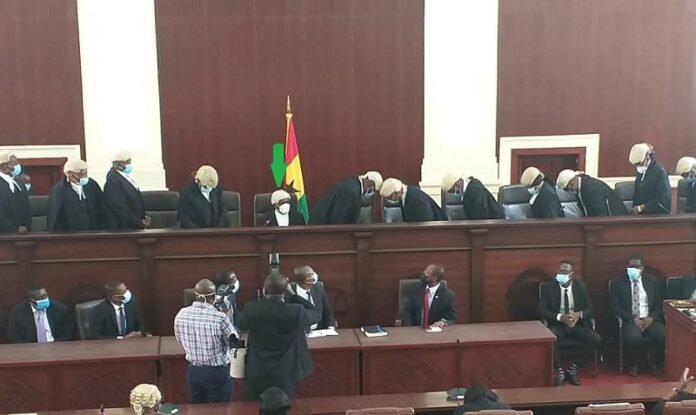
A seven-member panel presided over by Chief Justice Paul Baffoe-Bonnie dismissed the suit brought by private legal practitioner Noah E. Adamtey, who had argued that Article 88 of the 1992 Constitution vests prosecutorial authority exclusively in the Attorney-General and that Parliament exceeded its mandate in creating an insulated prosecutorial body.
The court held that sections 3 and 4 of Act 959 do not contravene the Constitution, and confirmed that the Office prosecutes on an authorisation given by the Attorney-General which subsists until amended. It also protected work already done, ruling that prosecutions, convictions and freezing orders secured under the Act remain valid.
The judgment followed an April 2026 High Court decision that had questioned the Office’s authority to prosecute independently and directed that its matters be referred to the Attorney-General’s Department.
The judgment therefore settles one question and reopens another. The Office of the Special Prosecutor now stands on firm constitutional ground, its past prosecutions intact and its mandate confirmed by the country’s highest court. What it does not have is protection from the office it was created to work around.
Until the full decision is published, the Special Prosecutor’s ability to see a politically sensitive case through to verdict rests on the calculation Dr Osae-Kwapong describes, which is whether an Attorney-General judges the public cost of stopping it too high to bear.
READ ALSO: Drought Grips 71% of England as Heatwave Threat Grows