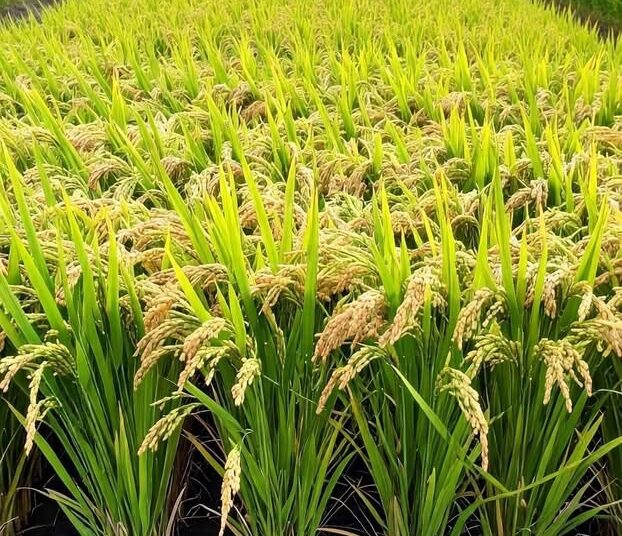
Ghana’s heavy reliance on imported rice is threatening the future of local producers, and Spring Agro Industries Limited says the time has come for consumers and institutions to consciously choose Ghanaian rice.
The company, which has been operating since 2019, has made significant investments across the rice value chain from cultivation to processing and packaging but says local millers are struggling to compete because the market is still dominated by foreign brands.
According to Spring Agro, the conversation around local rice has moved beyond quality. It says, Ghanaian producers are now producing rice that meets international standards. The real challenge is market access and consumer acceptance.
The agribusiness operates large scale farms at Adidome in the Volta Region and at Akuse in the Eastern Region, with a state-of-the-art processing plant located at Adidome. It is from this facility that the company produces its flagship brand, Striker Gold Rice.
Striker Gold is described as a premium Jasmine aromatic rice that is non-GMO and processed under strict quality controls to ensure superior taste, aroma, cleanliness and consistency. The company says the brand was intentionally developed to compete directly with imported Jasmine rice brands that have dominated Ghanaian supermarkets for years.
“We have committed resources to every stage land preparation, farming, modern factory, high-quality machinery and training of our people. We have shown that it is possible to produce top-quality rice in Ghana. What is left is for Ghanaians to patronize what we produce so that these investments can be sustained and scaled up.’’
Spring Agro
Imported Rice Drains Jobs and Local Capital
The company warns that the preference for imported rice over local alternatives has far-reaching economic consequences. When consumers choose imported rice, it says, Ghana exports jobs and capital that could have been retained to support local development.
Every bag of Ghanaian rice purchased, Spring Agro explains, has a multiplier effect. It supports out-grower farmers who supply paddy, factory workers at the processing plant, truck drivers who haul produce, distributors, market women, retailers and a host of service providers along the value chain.
Increased patronage, the company argues, would mean more jobs for young people, stronger and more profitable farming communities, expansion of local agribusinesses and a reduction in the foreign exchange spent on importing food. This, in turn, would strengthen food security and make the country less vulnerable to global supply chain disruptions.

Beyond individual consumers, Spring Agro Industries is calling on corporate Ghana and public institutions to lead the shift towards local rice consumption. The company wants businesses, government ministries, departments and agencies, as well as schools, hospitals and other public bodies to adopt a deliberate policy of buying Made-in-Ghana rice.
In particular, the company is making a special appeal ahead of the Christmas and end-of-year season. It is urging government institutions, private companies, churches, welfare associations and social groups to consider local rice, especially Striker Gold Rice, for staff packages, hampers and donations.
According to the company, the festive season presents a huge commercial opportunity for local rice producers. If a significant portion of the thousands of hampers and food packages shared during Christmas were filled with Ghanaian rice, it would provide a major boost to local producers and send a strong signal of confidence in Ghanaian industry.
Spring Agro has also lauded efforts by the Ministry of Food and Agriculture to promote local rice consumption. It singled out Deputy Minister John Dumelo for praise for his consistent advocacy for Made-in-Ghana food products, including rice.
The company is, however, calling for more concrete action to back the advocacy, particularly through public procurement. It wants government to enforce policies that prioritize local rice in school feeding programmes, buffer stock purchases and all state-funded food interventions.
A major barrier that local producers continue to face is perception. For many years, some Ghanaian consumers have assumed that imported rice is automatically better than local rice. Spring Agro says that narrative is no longer accurate.
Local Rice Quality Now Rivals Import
The company points to major improvements in seed quality, agronomic practices, harvesting, drying, milling, destoning, polishing, grading and packaging that have transformed the local rice industry. As a result, it says, brands like Striker Gold can now match or even outperform imported rice in terms of aroma, taste, cleanliness and cooking quality.
The company believes Ghana has all it takes when it comes to fertile lands, hardworking farmers, technical know-how and modern processing capacity to produce enough quality rice for domestic consumption and for export within the sub-region.
What is needed, it says, is sustained belief in Ghanaian products. Operations Manager of Spring Agro Industries Limited, Harry Asmah, says the company’s campaign is not just about selling its own brand but about securing the future of Ghana’s rice industry.
“Our message is very straightforward. Quality Ghanaian rice is available. It is being produced right here in Adidome and Akuse. It deserves to be on every dining table in this country.”
Spring Agro
Mr. Asmah added that Striker Gold Rice was produced with the Ghanaian consumer in mind and benchmarked against the best international Jasmine brands.
“We are telling every Ghanaian that when you choose Striker Gold Rice, you are choosing Ghana, you are choosing quality and you are choosing to support your own. Choose Striker Gold Rice. Choose Ghanaian. Choose quality.”
Spring Agro
Looking ahead, Spring Agro says it is confident that with stronger consumer loyalty, consistent institutional buying and supportive government policies, Ghana can build a competitive and self-sufficient rice industry that creates wealth, supports farmers and competes beyond the borders of the country.
READ ALSO:Ghana Stock Exchange Crowned Africa’s Best Performer