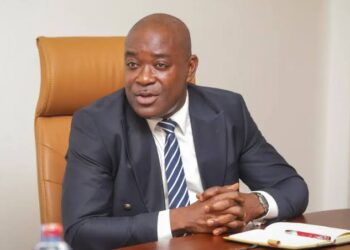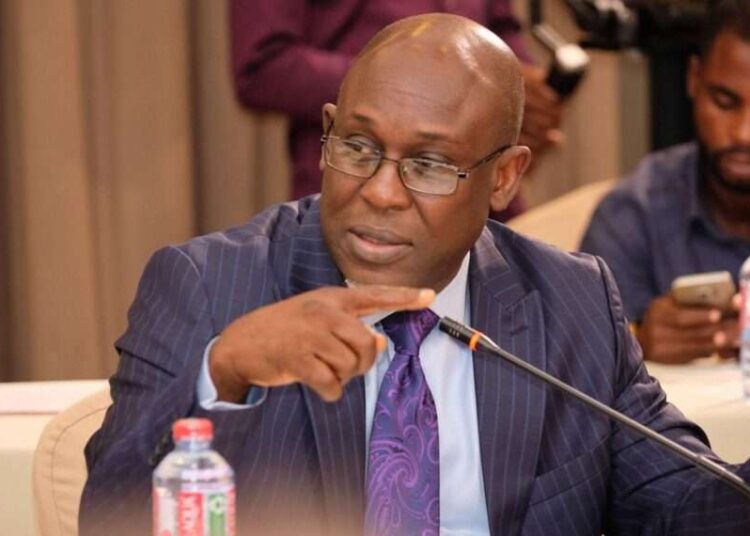
The Senior Vice President of Imani Africa, Kofi Bentil, has called for a rigorous audit of the financial figures recently presented by State Owned Enterprises, arguing that reported profits must withstand independent scrutiny before they are celebrated as evidence of improved management. The State Interests and Governance Authority (SIGA) reported that SOEs recorded GH¢19.80 billion in net profit after tax in 2025, compared with a GH¢2.25 billion net loss in 2024.
Directing attention to the sharp turnaround, Mr Bentil questioned whether the figures alone could establish that the institutions had undergone a genuine transformation within a relatively short period. Drawing on his background in management consulting, he explained that organisations that had struggled for decades could not easily be considered fundamentally rehabilitated simply because their accounts showed a dramatic improvement over one financial year.
The latest SIGA report indicates that the SOE sector also increased its total revenue from GH¢137.64 billion in 2024 to GH¢176.43 billion in 2025, representing a 28.12 percent rise. However, Mr Bentil cautioned that revenue growth and reported profit should be examined alongside the accounting methods, underlying liabilities and operational conditions that produced the results.
Analysing the issue further, the Imani Africa executive noted that accounting figures could produce different interpretations depending on how financial information was assessed. He therefore urged the public to distinguish between figures appearing in official reports and independently verified evidence of sustainable financial performance.
“Profit is an opinion. If two different accountants look at standard accounts or a certain set of accounts, they can come up with different profit figures,” he remarked, stressing the need for independent assessment before conclusions were drawn.
Owing to this position, Mr Bentil expressed surprise at the speed with which some commentators embraced the reported figures as proof of successful governance. He disclosed that analysts have begun challenging some of the claims within days of their publication, reinforcing his argument that public officials and influential voices should subject major financial announcements to closer examination.
The 2025 report itself presents a mixed picture across the state enterprise landscape, despite the overall improvement recorded by SOEs. SIGA identified five SOEs, including ECG, Ghana Cylinder Manufacturing Company, Ghana National Petroleum Authority, Graphic Communications Group and Ghana Digital Centre, as entities that recorded losses in every year from 2021 to 2025.
Beyond the headline profit figure, the report also shows that dividends paid to government by SOEs declined, with only Ghana Reinsurance Company and TDC Company contributing a combined GH¢16 million in 2025. Mr Bentil’s argument therefore places emphasis on examining the quality and sustainability of the reported gains instead of treating a single aggregate figure as sufficient evidence of institutional recovery.
Consequently, the Senior Vice President advocated a more restrained approach to assessing the performance of state enterprises. He argued that serious auditing would provide a clearer basis for determining which institutions had genuinely improved, which remained financially weak and what reforms were required to protect public resources.
President Within Powers To Dissolve State Enterprise Boards
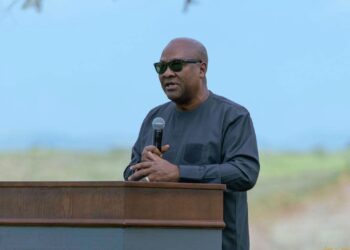
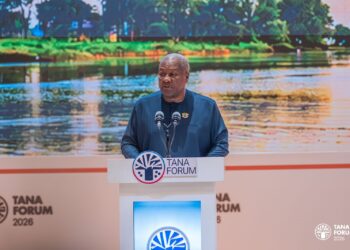
The Senior Vice President of Imani Africa, Kofi Bentil, also backed President John Mahama’s decision to dissolve the governing boards of nine state institutions, describing the action as one that falls within the President’s existing powers. He nevertheless argued that the broader concentration of presidential authority deserves attention as Ghana continues to debate how public institutions should operate beyond changes in political administration.
The President’s directive, announced on September 2, affected the boards of Prestea Sankofa Gold Limited, BOST, VALCO, Consolidated Bank Ghana, Ghana Post Company, the Road Maintenance Trust Fund, TDC Ghana, the Ghana National Petroleum Corporation and the National Sports Authority. The Presidency directed the relevant sector ministers to take the necessary steps to give effect to the dissolution, with new boards expected to be constituted in due course.
Addressing the decision, Mr Bentil indicated that the legality of the President’s action should be separated from the wider debate over how Ghana distributes executive authority. In his assessment, the immediate dissolution does not amount to an abuse of power because the President is acting within the authority available to the office under the existing governance framework.
Analysing the wider implications, however, the Imani Africa executive observed that Ghana’s political system gives the President extensive influence over state institutions. He linked that arrangement to the long standing debate over the winner takes all character of Ghanaian politics, where changes in government can result in significant changes in the leadership of public entities.

“On this specific matter, I don’t think the President has done anything wrong. He is acting within his power, and he is seeking the better good of the nation.”
Kofi Bentil
Mr Bentil cautioned against assuming that positive financial figures automatically require existing boards to remain in place. He explained that an organisation could post stronger financial results without necessarily resolving deeper governance, structural or institutional problems that might require a different management direction.
Directing attention to the nature of state enterprises, he argued that institutions which have remained weak for decades could not be transformed comprehensively within 18 months. Such a timeline, he suggested, should encourage policymakers to examine the underlying systems, management structures and financial practices before declaring a complete turnaround.
The Senior Vice President therefore placed the current board changes within a broader question about institutional renewal and presidential authority. While he accepted the immediate decision as lawful, his comments suggested that Ghana must still examine whether the extensive powers attached to the Presidency should be better managed over time.
READ ALSO: Zambia Adapts Ghana GoldBod Framework to Formalise Small-Scale Mining