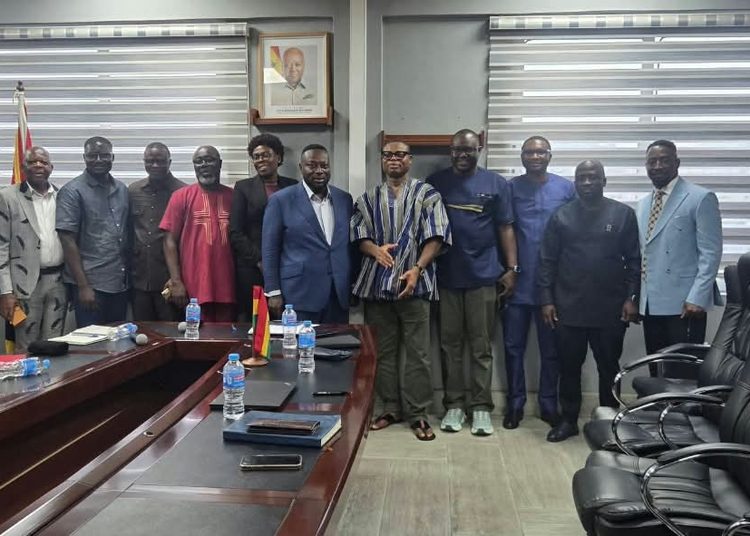
The IMANI Center for Policy and Education and the Ministry of Youth Development and Empowerment examined structural weaknesses in Ghana’s education-to-work pipeline during a strategic dialogue held in Accra on Wednesday, September 2, 2026, alongside a review of the digital and institutional platforms connecting young Ghanaians to governance structures.
The session, led by IMANI Founding President and Chief Executive Officer Franklin Cudjoe alongside Vice-President Evans Selorm Branttie and colleagues Ransford Brobbey, Kay Codjoe and John Sitsofe Mensah, moved from workforce skills gaps into a detailed review of youth civic engagement platforms, two areas the dialogue treated as closely linked dimensions of youth empowerment.
Participants confronted an uncomfortable pattern directly: domestic contractors frequently import artisan labour from neighbouring West African nations, not because of any deficit in Ghanaian technical knowledge, but because of perceived deficits in professional reliability, work ethic and honesty among locally trained workers.
That distinction matters considerably for policy design, since it locates the problem in character formation and workplace culture rather than in the technical curriculum itself.
To address that gap, stakeholders advocated for a holistic revamp of civic and moral education starting from the basic school level upward, treating professional reliability as a quality that must be cultivated over years of schooling rather than addressed solely within vocational training programmes shortly before young people enter the workforce.
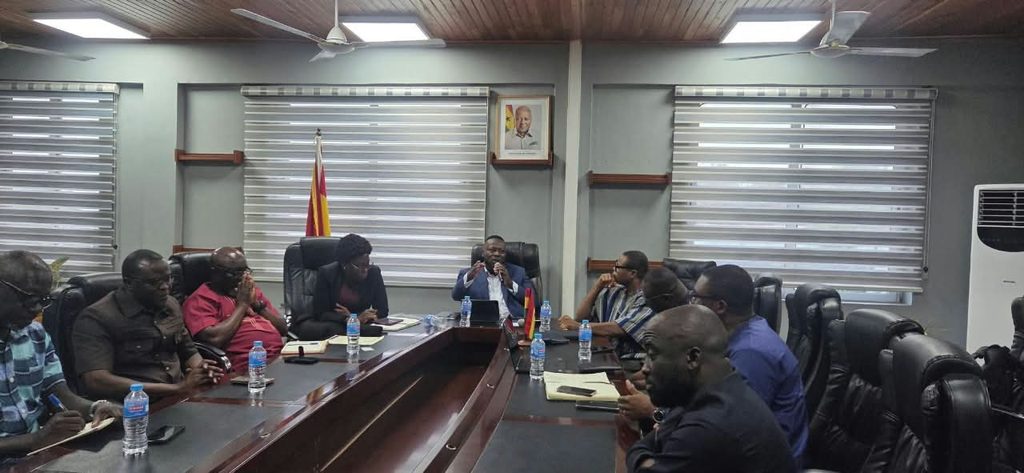
Destigmatising Vocational Education
The Ministry outlined its forthcoming “TVET First-Choice” campaign, to be executed in partnership with the Commission for TVET and the Design and Technology Institute.
The campaign’s core objective is destigmatising vocational education, addressing a longstanding cultural bias in Ghana that treats technical and vocational training as a fallback option for students who cannot access university education, rather than a legitimate and valuable career pathway in its own right.
That framing matters for the country’s broader employment picture, since it targets not the availability of vocational training itself but the social perception that discourages capable students from pursuing it as a first choice rather than a last resort.
IMANI extended the conversation into emerging technology, suggesting the integration of applied artificial intelligence literacy into non-formal training modules.
The delegation argued this move could quickly improve the job relevance of non-academic youth and position Ghana as a continental leader in tech-enabled vocational skilling, framing AI literacy not as a specialised university subject but as a practical addition to trade-based training that could differentiate Ghanaian workers in an increasingly automated regional labour market.
Scrutinising the YouthXplore App
The dialogue turned next to civic governance platforms, beginning with the newly launched YouthXplore app.
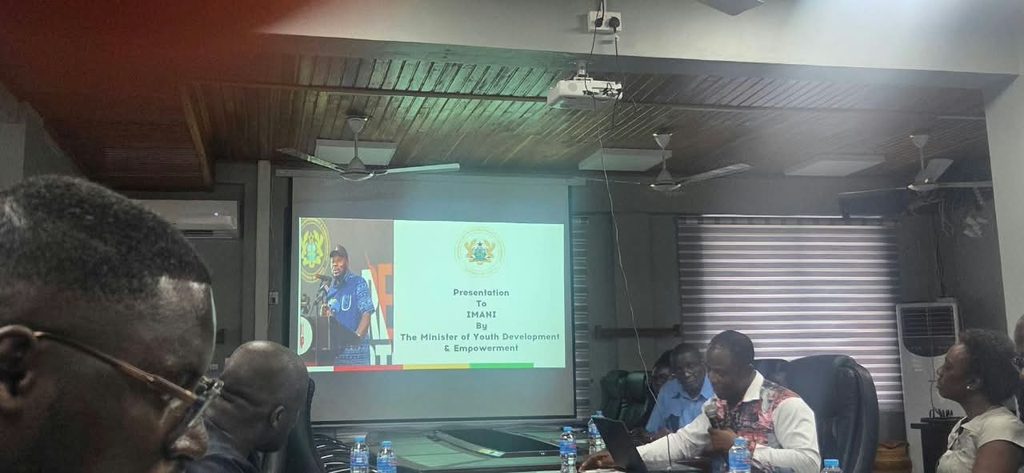
While acknowledging its potential, IMANI identified initial onboarding bottlenecks limiting its uptake and recommended expanding its functionality into a two-way civic portal, one where young people could directly report community grievances to local assembly officials and Members of Parliament rather than the platform functioning primarily as a one-directional information channel.
Complementing that digital recommendation, the Ministry detailed its multi-tiered Youth Parliament architecture, spanning district, regional and national levels, designed specifically to channel youth resolutions directly to the Parliament of Ghana.
That structure gives young Ghanaians a formal, escalating pathway to raise concerns from the community level up to national legislative attention, distinct from but complementary to the digital reporting function IMANI proposed for YouthXplore.
A Direct Line to the Presidency
MYDE also announced the formalisation of biennial policy dialogues between youth and the President of the Republic, institutionalising a recurring, direct engagement between young Ghanaians and the country’s highest office rather than leaving such interactions to occasional, informally arranged events.

Alongside that commitment, the Ministry disclosed plans to develop a Centre of Excellence for Youth Leadership, explicitly benchmarked against Singaporean public administration models, signalling an ambition to build a formal leadership development pipeline modelled on a country widely regarded for the technical competence of its civil service.
The two institutions closed the session with concrete next steps. IMANI committed to providing the Ministry with a comparative benchmarking concept note for the YouthXplore app, drawing on international examples of civic engagement platforms
The Ministry’s PPME directorate also agreed to facilitate ongoing peer review of upcoming youth policy frameworks, embedding IMANI’s technical input into the Ministry’s policy development process going forward rather than treating the September 2 dialogue as an isolated consultation.
READ ALSO: Foreign Technology, Capital Investment Tipped as Panacea to African Resource Sovereignty