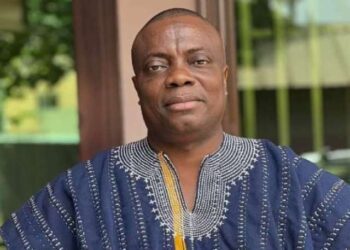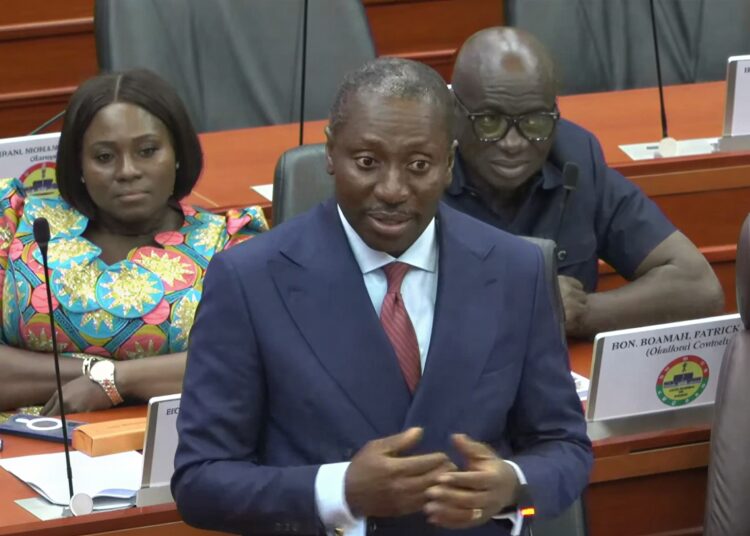
Minority Leader and Member of Parliament for Effutu, Honourable Alexander Afenyo-Markin, has called for a critical national conversation on Ghana’s education system following what he described as troubling outcomes in the latest WAEC results.
In a statement published on his Facebook page, Honourable Afenyo-Markin warned that the performance of students and the difficulties confronting school placement require urgent national attention beyond partisan political arguments.
The Minority Leader pointed to the performance of candidates in Core Mathematics and English Language, highlighting the number of young people who completed secondary education without securing a credit in Core Mathematics. He further drew attention to the decline in the English Language credit pass rate, which he noted had fallen to 62.40 percent, its lowest level in four years.
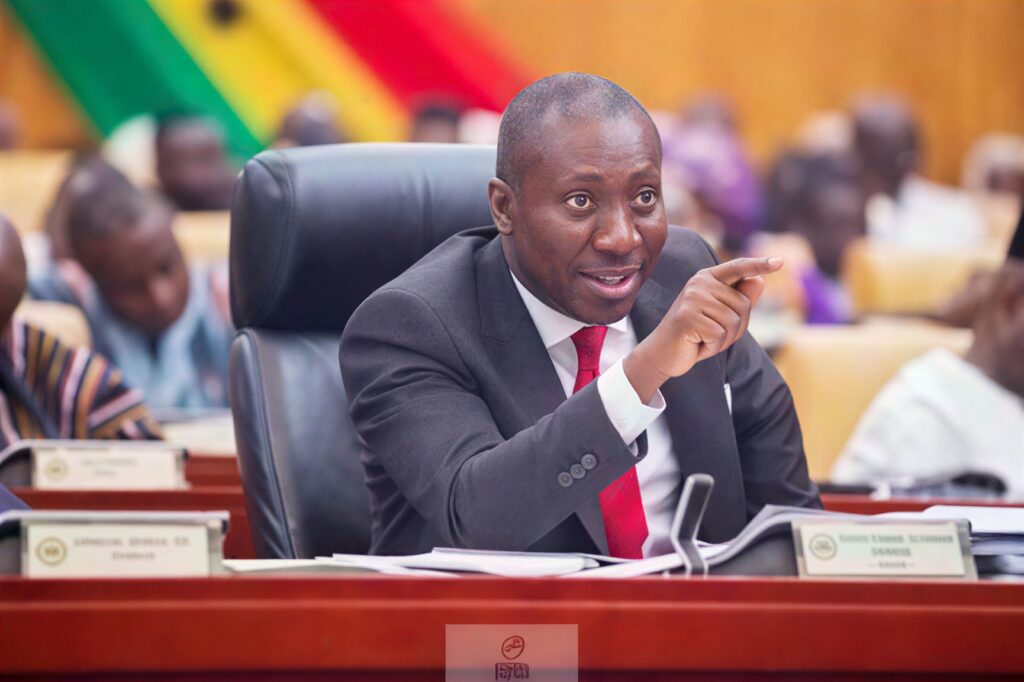
According to Honourable Afenyo-Markin, performance in both subjects remains below the levels recorded in 2024, making the latest results an issue that should concern stakeholders across the country. The Effutu MP argued that the situation requires a broader examination of the factors influencing learning outcomes, including teaching quality, contact hours, teacher motivation, learning materials, infrastructure and supervision.
“Ghana urgently needs an honest national conversation about educational funding, teaching quality, contact hours, teacher motivation, learning materials, infrastructure and supervision.”
Honourable Alexander Afenyo-Markin
Furthermore, Honourable Afenyo-Markin urged the government to move beyond explanations that emerge only after challenges become publicly known. He called for adequate funding for teaching and remedial programmes to support students who struggle academically and require additional opportunities to improve their performance.
The Minority Leader also advocated clearer pathways for young people who do not obtain the required WASSCE credits, including opportunities in technical and vocational education, apprenticeships and skills development. In addition, he recalled that the NPP administration had expanded access through Free SHS while establishing opportunities in Free TVET, apprenticeships and skills development.
Honourable Afenyo-Markin argued that educational opportunities should remain accessible to young Ghanaians regardless of their economic circumstances or performance in a single examination. He therefore appealed for the education debate to rise above partisan considerations, stressing that the consequences of weaknesses within the sector would affect an entire generation.
The Minority Leader also urged President Mahama’s administration to treat the situation as a national crisis requiring immediate interventions and lasting solutions. He concluded that the anxieties of parents, students and teachers should prompt decisive action from government and other education stakeholders.
BECE Placement And WASSCE Results Deepen Education Debate
Ghana’s education sector faces renewed scrutiny as challenges surrounding BECE placement coincide with weak performance in key WASSCE subjects, prompting calls for stronger interventions for affected students.
The latest developments have placed pressure on education authorities to address difficulties confronting young people at different stages of the secondary education system.
Nearly 55,000 BECE candidates were initially left without automatic placement, while reports of students encountering difficulties at their assigned schools have added to the uncertainty surrounding this year’s transition into senior high school.
The New Patriotic Party has consequently urged government to ensure that affected candidates secure actual school places and to publish the final placement outcomes for public assessment. The party has also called for greater clarity on the rules and pass marks applied during this year’s placement process, arguing that parents deserve to understand the standards governing their children’s progression.

Meanwhile, the WASSCE results have presented another challenge, particularly for students who completed secondary school without achieving the required credit in Core Mathematics. The figures cited by the NPP indicate that 183,233 young people fall within this category, potentially limiting their access to several tertiary programmes and other opportunities that require the subject.
Rather than allowing those students to remain without a clear next step, the party has urged government to strengthen alternative pathways through technical and vocational education, apprenticeships and skills training. Additionally, the NPP has proposed greater use of existing educational intervention and remedial programmes to help students who need additional academic support.
The party has also pointed to private institutions participating in Free SHS as part of the potential capacity available to accommodate students affected by placement difficulties. Beyond the immediate challenges, the developments have raised questions about how effectively Ghana’s education system is planning for changes in student numbers, school capacity and academic performance.
A major issue emerging from the debate is the need to connect examination outcomes with practical opportunities, particularly for young people who may not immediately qualify for university education. Furthermore, stakeholders are expected to consider how teaching resources, learning time, school infrastructure and academic support can be strengthened to improve future outcomes.
The NPP has argued that government should publish the number of available TVET, apprenticeship and job training opportunities and match them with the needs of affected school leavers. Such an approach, the party contends, would give young people clearer alternatives and prevent examination results from becoming the final barrier to further education or skills development.
READ ALSO: UK Sanctions Mark Significant Hardening of Position on Israel – Analyst