School for Life has raised significant concerns over the equity implications of Ghana’s 2026 Basic Education Certificate Examination (BECE) grading and school placement process, warning that the current ranking-based grading system places learners from disadvantaged and under-resourced communities at a considerable disadvantage.
The organisation, which describes itself as committed to educational equity and inclusion, said it welcomes efforts aimed at strengthening standards within Ghana’s education system, but stressed that reforms must also directly address the structural inequalities shaping the educational opportunities available to different children across the country.
Central to School for Life’s concerns is the use of a ranking-based grading system within an education landscape still characterised by significant disparities in access to qualified teachers, quality learning environments, infrastructure and teaching and learning materials.
The organisation explained that under a ranking-based system, learners are assessed relative to the performance of their peers rather than against clearly defined, fixed performance standards.
According to School for Life, this approach places children from underserved and under-resourced schools at a marked disadvantage, as they are forced to compete directly against candidates who often benefit from significantly better learning conditions and support systems.
“In such a context, a ranking-based grading system means that learners are assessed relative to the performance of their peers rather than against clearly defined performance standards, placing children from underserved schools at a considerable disadvantage,”
School For Life
Category A Access Linked to Grading Disadvantage
School for Life further argued that this grading disadvantage has direct consequences for access to highly sought-after Category A schools, since admission into these institutions remains closely tied to candidates’ grades and raw scores.
The organisation noted that it becomes increasingly difficult for learners from deprived communities to attain the highest grades, including securing a position within the top four percent threshold typically required for Category A placement.
As an alternative, School for Life proposed the adoption of a criterion-referenced grading system, similar to the model already used for the West African Senior School Certificate Examination (WASSCE), where grades are determined against fixed performance benchmarks rather than relative peer comparison.
“Such a system measures what candidates know and are able to do, rather than how they compare with other candidates, and we encourage policymakers to consider a review of the current grading approach,”
School for Life
Concerns Over 57,259 Unplaced Candidates
Beyond the grading system itself, School for Life expressed concern over the approximately 57,259 candidates who were not automatically placed under the Computerised School Selection and Placement System (CSSPS).
While welcoming government’s assurance that affected candidates would have access to self-placement, and that those unable to sit the examination would be given an opportunity to re-sit, the organisation stressed that these measures must be implemented effectively, transparently and without delay.
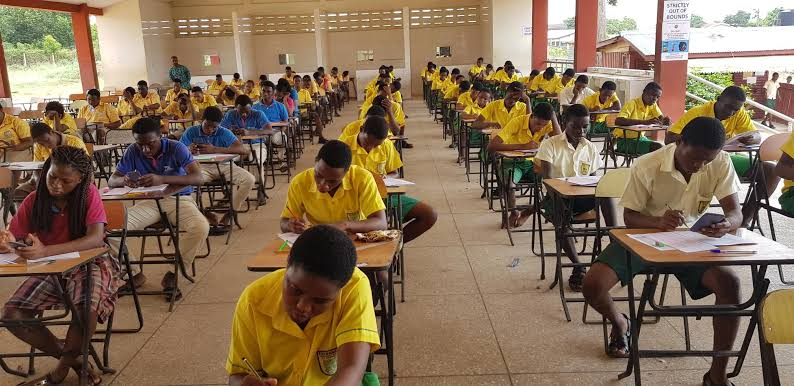
The organisation further noted that many of the affected learners are likely to come from disadvantaged backgrounds and under-resourced schools, urging that their inability to secure placement be understood within the broader context of systemic inequalities in access to quality education, rather than treated purely as an individual academic shortfall.
Concerns Over School Categorisation
School for Life also addressed the intense annual competition for limited spaces within so-called elite or Category A schools, describing it as symptomatic of a deeper structural challenge within the education system.
The organisation argued that continued categorisation of schools, combined with persistent disparities in infrastructure, learning resources and educational outcomes, has created a widespread perception that some schools offer significantly better opportunities than others.
According to the organisation, this perception naturally drives intense competition and widespread disappointment each year when demand for Category A spaces vastly exceeds available capacity.
Rather than concentrating attention and investment on a limited number of schools, School for Life urged government to accelerate efforts to improve conditions across all Senior High Schools, arguing that greater and more equitable investment would help narrow existing disparities over time.
Call for Transparency in Placement Mechanics
The organisation further raised concerns over reports from parents and guardians regarding candidates with single-digit aggregate scores failing to secure admission into their first-choice schools, alongside cases of candidates being placed in schools they did not select, including day schools located far from their home communities.

School for Life argued that these developments raise important questions about how grades, raw scores, school choices and available vacancies interact in determining final placements, calling for a clearer public explanation of this process to help strengthen confidence in the system among parents, students and other stakeholders.
In its concluding remarks, School for Life reiterated its belief that an equitable education system should not merely identify the highest performers, but should create the conditions necessary for every child to learn, thrive and realise their full potential, regardless of their geographical location, socio-economic background or the resources available within the school they attend.
READ MORE: Transcript System Could Help Cut Mass Exam Failures — Former Education Minister