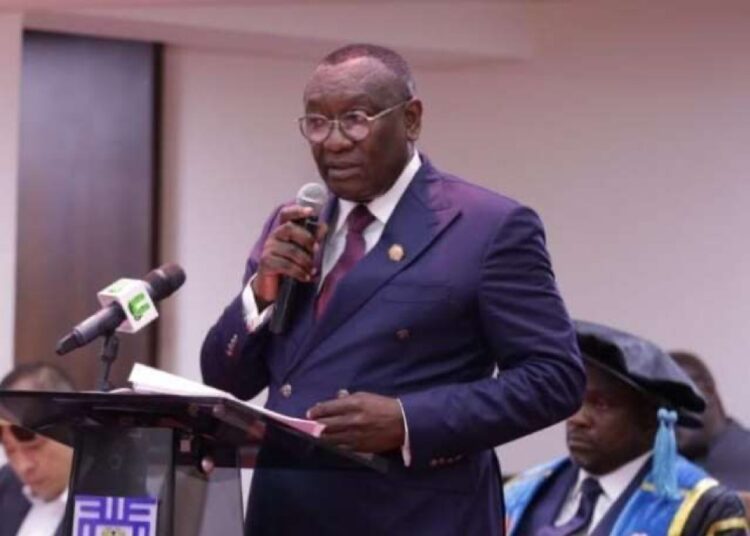
Dr. Ernest Ofori Sarpong, Chancellor of the University of Media, Arts and Communication (UniMAC), has announced plans to provide free professional media training for Ghanaian bloggers. The initiative seeks to promote ethical, credible, and responsible digital journalism across the country.
Speaking to a group of bloggers, Dr. Ofori Sarpong said the university would soon roll out the programme as part of a broader digital media empowerment effort. He urged participants to take full advantage of the opportunity once it becomes available.
The training is designed to build on the skills and knowledge that bloggers already possess rather than requiring them to begin from the basics.
According to the Chancellor, the goal is to strengthen professional standards, improve the quality and credibility of digital content, and enhance the overall impact of online journalism in Ghana. In an era when social media platforms and independent digital publishers increasingly shape public discourse, the programme aims to equip citizen journalists and content creators with tools for verification, ethical reporting, and responsible storytelling.
Dr. Ofori Sarpong was appointed UniMAC’s first-ever Chancellor by the university’s Governing Council on May 26, 2026, with the appointment taking effect on August 1, 2026. A prominent Ghanaian entrepreneur and Chief Executive Officer of the Special Group of Companies, he brings extensive experience in business, media, and corporate leadership to the role.
He is a Chartered Accountant who holds a Master of Science degree in Finance and Investment Management from the University of Salford in the United Kingdom and is pursuing a Doctor of Business Administration. Beyond the Special Group, he has interests in United Television (UTV), Best Point Savings and Loans Limited, and other ventures.
UniMAC itself occupies a distinctive position in Ghana’s higher education landscape. Formed through the merger of key media training institutions, the university specialises in journalism, communication, arts, film, and related disciplines. Under its current leadership, including Vice-Chancellor Professor Eric Opoku Mensah, UniMAC has emphasised practical, industry-relevant training and has pursued partnerships to prepare students for a rapidly evolving media environment marked by artificial intelligence, misinformation, and shifting audience habits.
The free training for bloggers aligns with wider efforts to professionalise digital media in Ghana. Bloggers and social media content creators now reach large audiences and often fill gaps left by traditional newsrooms. Yet concerns about accuracy, sensationalism, ethical lapses, and the rapid spread of misinformation remain persistent challenges.
Capacity-building programmes that focus on fact-checking, source verification, ethical guidelines, and responsible content production are increasingly viewed as essential infrastructure for healthy public discourse.

By offering the training at no cost, UniMAC under Dr. Ofori Sarpong’s chancellorship signals a commitment to extending professional media education beyond formal degree programmes. The initiative recognises that many influential digital voices operate outside conventional newsrooms and that raising standards among them can benefit the broader information ecosystem.
Participant Expectations
Participants are expected to gain structured knowledge that sharpens existing practices while reinforcing principles of credibility and accountability.
Details on the exact curriculum, duration, mode of delivery, and application process have not yet been fully released. University officials have indicated that the programme will focus on practical skills relevant to digital platforms, including verification techniques, ethical decision-making, audience engagement, and content quality.
Bloggers have been encouraged to remain attentive for the official launch and registration announcements.
The announcement comes at a time when media literacy and professional development continue to receive attention from various stakeholders in Ghana. Previous capacity-building efforts involving UniMAC and partners have targeted working journalists with training on modern reporting techniques, fact-checking, and ethical practice.
Extending similar opportunities to the blogging community represents a logical next step given the growing influence of digital-first publishers.
Dr. Ofori Sarpong’s background as a business leader with media interests positions him to bridge academia and industry. Supporters of the appointment have noted that his experience could help attract resources, foster partnerships, and inspire entrepreneurial approaches among students and practitioners. The free training pledge fits within a broader pattern of educational support associated with his public profile.
For Ghanaian bloggers, the programme offers a rare chance to access formal media education without financial barriers. Many content creators operate as independent entrepreneurs or community-focused publishers and may lack systematic training in journalistic standards. Structured instruction could help them produce more reliable material, build audience trust, and contribute more effectively to national conversations on governance, society, and development.
Observers note that the success of the initiative will depend on clear communication of timelines, accessible delivery methods whether in-person, hybrid, or online and content that addresses the specific realities of digital publishing in Ghana.
Topics such as handling online harassment, navigating platform algorithms, monetisation ethics, and distinguishing opinion from verified reporting are likely to prove relevant.
UniMAC’s decision to prioritise bloggers also reflects recognition of how the gatekeeping function in public discourse has shifted. Traditional newsrooms no longer hold exclusive influence over information flows. Training citizen publishers in verification, ethics, and restraint is increasingly seen as a form of public infrastructure rather than optional enrichment.
As the university prepares to implement the programme, attention will turn to how many bloggers take up the offer and what measurable improvements in content quality result. Early indications suggest interest within the digital media community, with the announcement already circulating among content creators.
Dr. Ofori Sarpong’s pledge highlights UniMAC’s ambition to remain central to media development in Ghana and the wider region. By extending professional training to bloggers free of charge, the institution aims to raise the baseline of digital journalism practice and support a more informed public sphere.
Further details on the rollout are expected in the coming weeks as the university finalises arrangements for the digital media empowerment initiative.
READ ALSO: Yamoransa Model Marks 10 Years of Expanding STEM Education