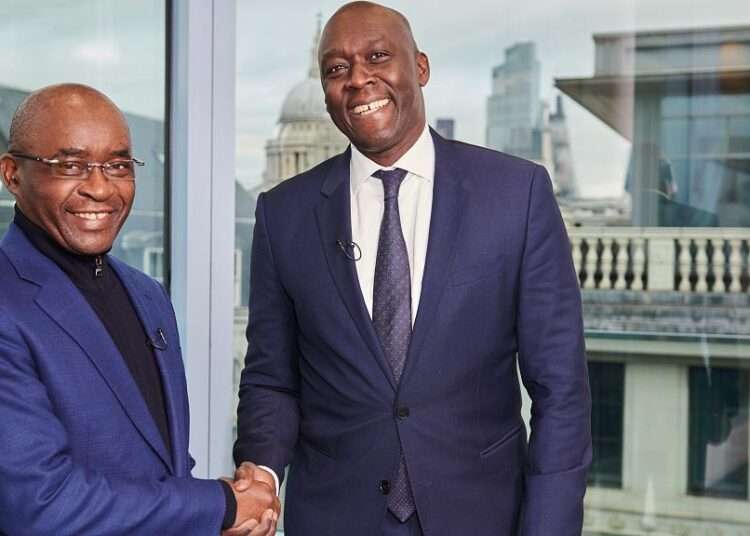
Ghana is preparing for a high-level investment push as International Finance Corporation (IFC) Managing Director Makhtar Diop arrives in the country with a strong focus on unlocking more private capital for businesses and development.
Mr Diop is scheduled to visit Ghana from September 15 to 17, 2026, for engagements with government officials, private sector leaders, entrepreneurs and other stakeholders. His visit comes at a time when Ghana is seeking to deepen private sector participation in economic growth, expand business opportunities and create more sustainable jobs.
The discussions are expected to examine how the World Bank Group can help mobilise investment, strengthen domestic businesses and improve access to finance across critical areas of the economy.
IFC Sets Sights on Ghana’s Private Sector
At the heart of Mr Diop’s visit is a clear message: Ghana’s private sector needs more capital, stronger businesses and better conditions to expand.
The IFC is expected to engage senior government officials and business leaders on the opportunities and challenges confronting private investment in Ghana.
For local businesses, particularly small and medium-sized enterprises, the discussions could prove significant.
Access to affordable and suitable financing remains one of the major constraints facing businesses seeking to expand operations, purchase equipment, enter new markets or employ more workers.
The IFC has increasingly positioned itself as a partner capable of bringing both its own resources and additional private capital into emerging markets.
Its growing financial commitment to Ghana reflects this approach.
The corporation said it committed $670 million through its own account and mobilisation in Ghana in fiscal year 2026, compared with just $61 million in fiscal year 2021.
That represents a dramatic increase and signals how significantly Ghana has risen on the corporation’s investment radar.
$670m Commitment Raises Expectations
The sharp increase in IFC financing could become one of the biggest talking points surrounding Mr Diop’s visit.
Moving from $61 million in fiscal year 2021 to $670 million in fiscal year 2026 represents more than a tenfold increase in commitments through IFC financing and mobilisation.
For Ghana, the significance goes beyond the headline figure.
The real impact will depend on how much of that capital reaches productive businesses, strengthens local supply chains and helps companies expand their workforce.
The IFC has already been active in several areas of the Ghanaian economy.
Its recent interventions have included financing designed to expand credit across the cocoa value chain and support food security. It has also invested in manufacturing, recycling, renewable energy and industrial infrastructure.
The corporation has further provided investment and advisory support aimed at improving financing opportunities for SMEs.
These interventions could provide a foundation for deeper partnerships during the three-day visit.
Agribusiness and Energy Take Centre Stage
Agribusiness is expected to feature prominently in the discussions.
Ghana’s agricultural sector remains critical to employment, exports and rural incomes, but businesses across the value chain often struggle with financing, infrastructure and market access.
Greater private investment could help businesses move beyond raw commodity production into processing, storage, logistics and value-added manufacturing.
The renewable energy sector is another area likely to attract attention.
With businesses facing pressure to improve energy reliability and manage costs, private investment in renewable energy and related infrastructure could provide new opportunities for industrial growth.
The IFC’s interest in renewable energy also fits into its broader strategy of supporting investments that can create markets while addressing development challenges.
Youth Jobs and Skills Also Under Spotlight
Mr Diop’s discussions are also expected to focus on youth employment and skills development.
This is particularly important as Ghana continues to grapple with the challenge of creating enough quality jobs for a growing working-age population.
Private businesses will need to play a central role in absorbing young people into productive employment.
However, companies often point to skill gaps as a barrier to expansion.
Engagements involving education, technical skills and entrepreneurship could therefore help bridge the gap between what businesses need and what young people are prepared to offer.
The creative economy is also expected to receive attention, highlighting the expanding role of creative businesses in Ghana’s economic activity.
Domestic Businesses Could Gain
One of the most important outcomes of the visit could be stronger support for Ghanaian-owned businesses.
While international investment can bring capital and expertise, strengthening domestic companies can create deeper and more sustainable economic linkages.
The IFC has indicated that its work in Ghana has focused on supporting businesses, strengthening domestic value chains and expanding access to finance for farmers, entrepreneurs, women-owned businesses and other underserved groups.
This approach could help more Ghanaian enterprises move from survival to expansion.
For businesses that have struggled to secure financing from traditional sources, greater IFC-backed investment could open new possibilities.
High-Level Partnerships Expected
Beyond discussions, the visit is expected to feature high-level engagements and partnership announcements aimed at supporting investment in priority sectors and strengthening domestic value chains.
The presence of the IFC’s top executive could therefore generate more than diplomatic attention.
It could provide an opportunity for government and private sector leaders to identify projects capable of attracting substantial capital and generating measurable economic benefits.
The challenge for Ghana will be converting investment interest into businesses that grow, employ more people and compete effectively.
Mr Diop’s visit comes with the IFC already demonstrating a much stronger financial commitment to Ghana than it did five years ago.
If the discussions produce concrete partnerships and unlock additional private capital, the visit could mark another significant step in Ghana’s efforts to place private enterprise at the centre of economic growth.