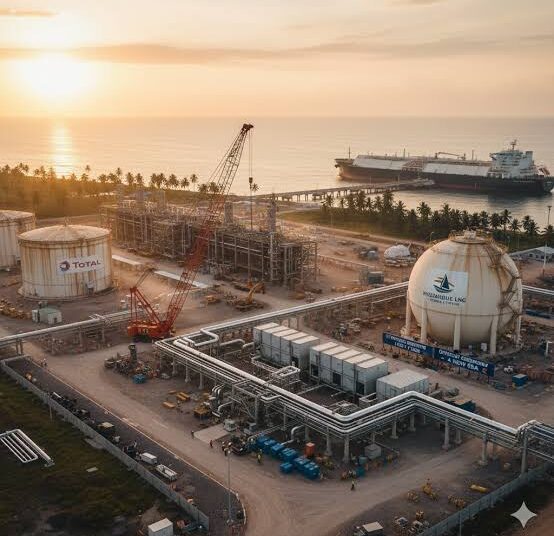
Mozambique’s enormous natural-gas reserves are once again moving towards development, but the latest momentum around the country’s long-delayed Rovuma LNG project offers a lesson that extends far beyond Cabo Delgado.
The lesson for Ghana is straightforward: discovering gas is only the beginning. The harder task is building the infrastructure, investment framework and domestic market needed to convert gas reserves into lasting economic value.
On September 14, 2026, a consortium led by Saipem and Jan De Nul signed a letter of intent with ExxonMobil Mozambique for the engineering, procurement, construction and installation work associated with the offshore infrastructure for the Rovuma LNG Phase 1 development.
The development follows more than $1 billion in pre-investment contracts awarded by ExxonMobil in August for upstream equipment and services associated with the project.
The emerging momentum matters because Rovuma LNG has spent years caught between enormous resource potential and the practical challenges of developing a major gas project in a high-risk operating environment.
Mozambique’s experience consequently offers Ghana something more useful than another African LNG success story.
It offers a case study in what must happen between resource discovery and energy transformation.
From Resource Wealth To Infrastructure
Mozambique’s Rovuma Basin contains some of Africa’s most significant gas resources, and the country has sought to develop those resources through multiple LNG projects.
According to Mozambique’s National Petroleum Institute, Rovuma LNG is located in Area 4 of the Rovuma Basin and is structured around two LNG trains with combined planned production capacity of 15.2 million tonnes per annum.
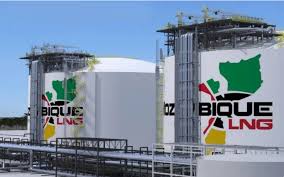
The project’s current status is listed as being under a suspensive condition, reflecting the fact that development still depends on outstanding conditions being resolved.
The project is not occurring in isolation.
Mozambique already has the Coral Sul floating LNG project operating in Area 4, while Coral Norte is being developed following a final investment decision in 2025.
The country’s petroleum authority says Coral Norte is expected to produce 3.55 million tonnes of LNG annually, with domestic gas availability also forming part of the project’s broader development framework.
That emerging LNG ecosystem demonstrates something Ghana can relate to.
Natural gas creates value only when production is connected to processing, transportation, markets and industrial demand.
Ghana’s own gas strategy faces a similar challenge.
Ghana Has Gas, But Infrastructure Determines Value
Ghana’s petroleum sector has moved significantly beyond the discovery phase.
The country has developed offshore oil and gas production, established the Atuabo Gas Processing Plant and built infrastructure to bring processed gas into the power system.
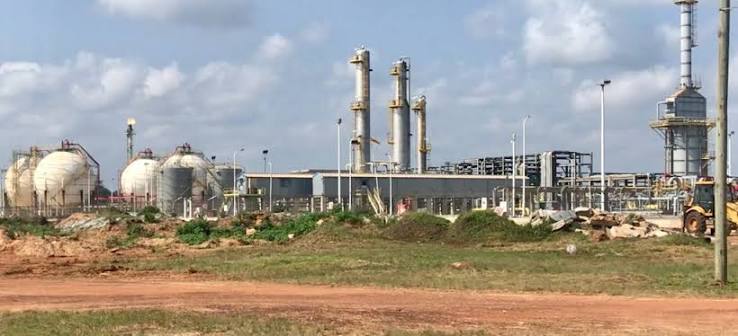
Yet Ghana continues to pursue additional gas-processing and pipeline infrastructure because existing capacity does not automatically eliminate supply constraints.
The proposed second gas-processing plant, for example, has been presented as an important component of the country’s gas-to-power strategy.
The underlying logic is similar to Mozambique’s.
A gas resource sitting offshore is not equivalent to gas available to a power plant, factory or industrial consumer.
Between the reservoir and the end user lies an infrastructure chain involving subsea systems, processing facilities, pipelines, compression, storage, power generation and commercial agreements.
The countries that capture the greatest economic value are those capable of building that chain efficiently.
The Domestic Market Matters
One of the most important lessons from Mozambique’s gas strategy is the need to think beyond LNG exports.
Mozambique’s National Petroleum Institute says the country’s approved LNG developments are expected to make additional gas available for domestic projects.
It estimates that more than 900 million standard cubic feet per day could eventually become available for domestic use following approval of LNG projects in the Rovuma Basin.
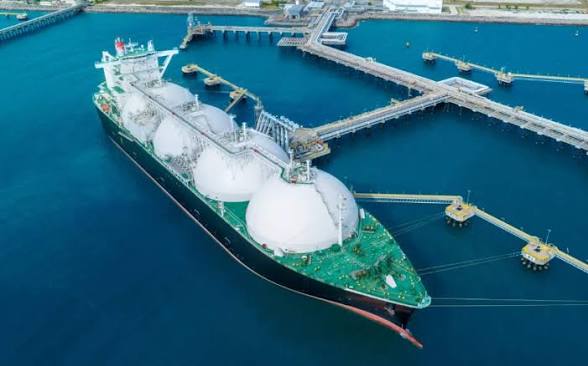
That is significant because the economic value of gas is not limited to export revenue.
Gas can support electricity generation, industrial production, fertiliser manufacturing, petrochemicals and other energy-intensive activities.
Ghana faces the same strategic choice.
Its natural-gas resources can support thermal power generation, but the country can potentially extract greater value by developing industrial demand around reliable gas supply.
That is why Ghana’s midstream gas strategy deserves to be considered alongside its upstream investment agenda.
The objective should be to create a gas economy, not simply a gas production industry.
Security Can Determine Whether Gas Becomes Bankable
Mozambique also demonstrates another reality that Ghana cannot ignore: major energy projects are shaped by factors beyond geology and commercial returns.
The development of Mozambique’s LNG resources has been heavily affected by security conditions in Cabo Delgado.
The country’s Area 1 Mozambique LNG project declared force majeure in 2021 following the deterioration of security conditions, while Rovuma LNG also faced development delays linked to the operating environment.
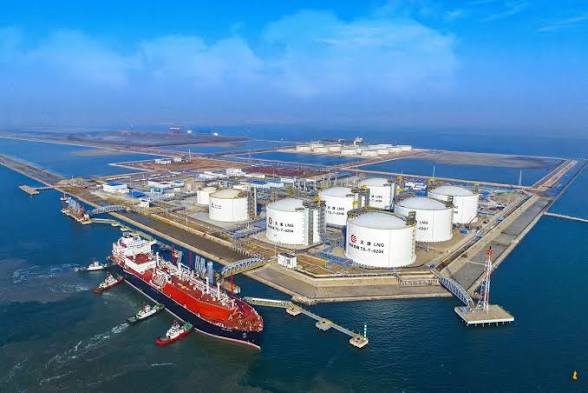
That experience illustrates the importance of political stability, security and institutional capacity to large-scale energy investment.
For Ghana, which is seeking to attract new upstream investors into frontier acreage and deepen exploration, the lesson is relevant.
Investors do not evaluate petroleum acreage only on the basis of geological prospectivity.
They consider regulatory certainty, fiscal terms, infrastructure, security, political stability, access to markets and the ability to move projects from discovery to production.
Ghana’s recent emphasis on upstream reforms therefore has to be accompanied by credible infrastructure and institutional capacity.
The Race May No Longer Just For Oil And Gas
There is another reason Mozambique’s LNG developments deserve attention in Ghana.
The global gas market is changing rapidly.
International LNG prices have recently surged amid disruption to LNG trade through the Strait of Hormuz and tighter global supply conditions.
That makes African gas resources strategically more valuable, but it also increases the risks surrounding large LNG projects.
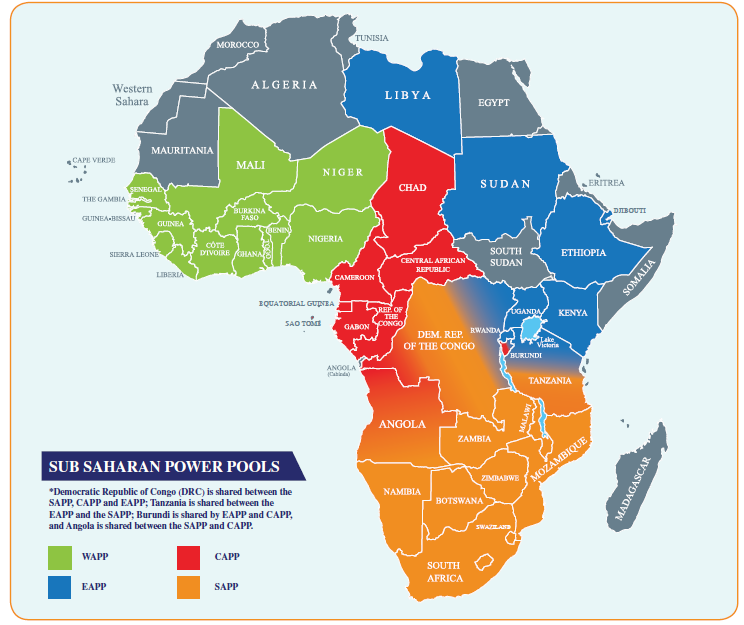
A project that takes years and billions of dollars to construct must ultimately operate within a global market where prices, shipping routes, geopolitical conditions and demand patterns can change dramatically.
For Mozambique, this makes timing and commercial discipline critical.
For Ghana, it reinforces the importance of deciding where gas fits within the country’s long-term energy strategy.
Ghana cannot assume that gas will remain permanently cheaper than every alternative.
But neither can it ignore the role gas can play in supporting electricity reliability while renewable energy and storage capacity expand.
Ghana’s Opportunity Smaller; But More Immediate
Mozambique’s LNG resources are on a vastly different scale from Ghana’s.
That means Ghana should not attempt to replicate Mozambique’s model wholesale.
Instead, Ghana can learn from the infrastructure logic behind it.
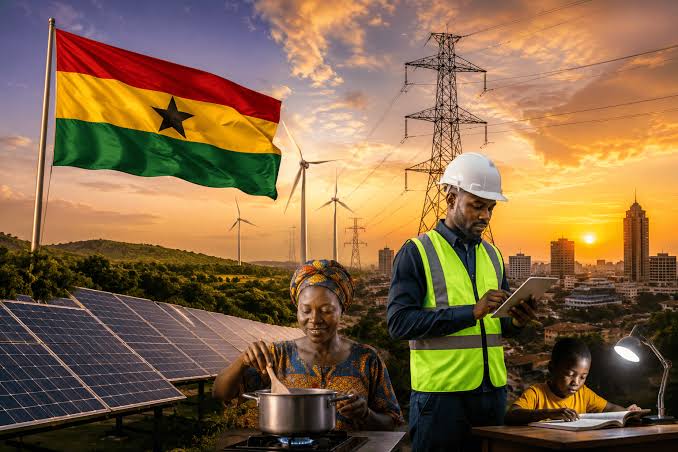
The country needs to ask how its own gas resources can support a more integrated domestic energy economy.
That could mean increasing gas-processing capacity, improving pipeline connectivity, expanding industrial gas use, strengthening gas-to-power arrangements and ensuring that upstream developments are connected to viable domestic and regional markets.
Ghana also has an advantage Mozambique is still building around: an established electricity market and a mature downstream petroleum ecosystem.
The opportunity is therefore to integrate gas into an existing energy system rather than create an entirely new one.
The Bigger Lesson; Value Capture
The ultimate question surrounding Mozambique’s LNG revival is not simply how many tonnes of LNG the country can export.
It is how much economic value Mozambique can retain around that production.
The same question applies to Ghana.
An oil and gas sector can generate impressive production statistics while creating relatively limited domestic industrial capacity if the economy remains concentrated on extraction and exports.
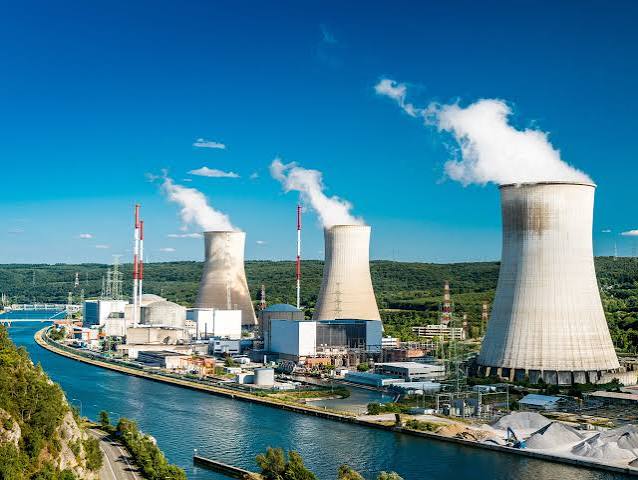
The next stage is therefore about value capture.
For Ghana, that means local companies participating in the petroleum supply chain, Ghanaian engineers gaining specialised technical expertise, domestic infrastructure being expanded and gas being used to support productive sectors of the economy.
The country’s local-content framework already seeks to increase Ghanaian participation in upstream petroleum activities.
But local content becomes more economically meaningful when it evolves from procurement participation into technical ownership, engineering capability, manufacturing and long-term industrial capacity.
Mozambique’s LNG build-out demonstrates the scale of the opportunity.
It also demonstrates the scale of the challenge.
Africa’s Gas Future Will Depend On Execution
Africa is entering a period in which natural gas can play a complicated role.
It is simultaneously an export opportunity, a source of electricity, an industrial feedstock and a potential bridge within the energy transition.
But gas development will not automatically produce development.
The infrastructure has to be built. The projects have to reach financial close. Security has to be maintained. Domestic markets have to be developed. Revenues have to be managed transparently. Local companies have to gain meaningful capabilities.
Mozambique’s latest Rovuma LNG developments suggest that a project once slowed by security and investment uncertainty is gradually regaining momentum.
The new offshore infrastructure agreement is another step towards converting one of Africa’s largest undeveloped gas resources into a functioning energy project.
For Ghana, the message is timely.
The country is pursuing additional upstream investment, expanding its gas-processing ambitions and seeking to make its petroleum sector more competitive.
But the ultimate measure of success will not be the number of exploration agreements signed or the volume of gas discovered.
It will be whether those resources can be connected to infrastructure, markets and industries that create durable economic value.
Mozambique is showing what becomes possible when a major gas resource begins moving through that chain.
Ghana now has the opportunity to learn from that experience, before its own next phase of petroleum and gas investment accelerates.
The competition in Africa’s gas industry is therefore no longer simply about who has the largest reserves.
It is increasingly about who can build the infrastructure, attract the capital, manage the risks and capture the greatest share of value from the molecules beneath the ground and offshore.
READ ALSO: Manchester Derby VAR Officials Snubbed: Is Pro Ref Right to Drop Them?