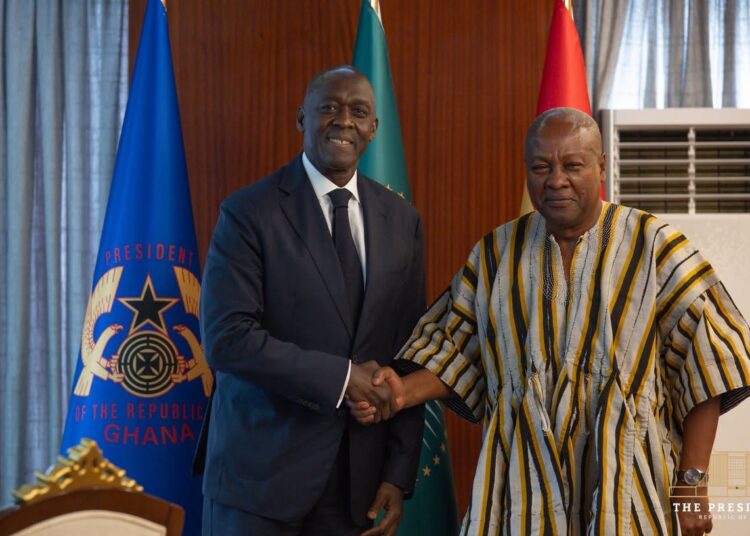
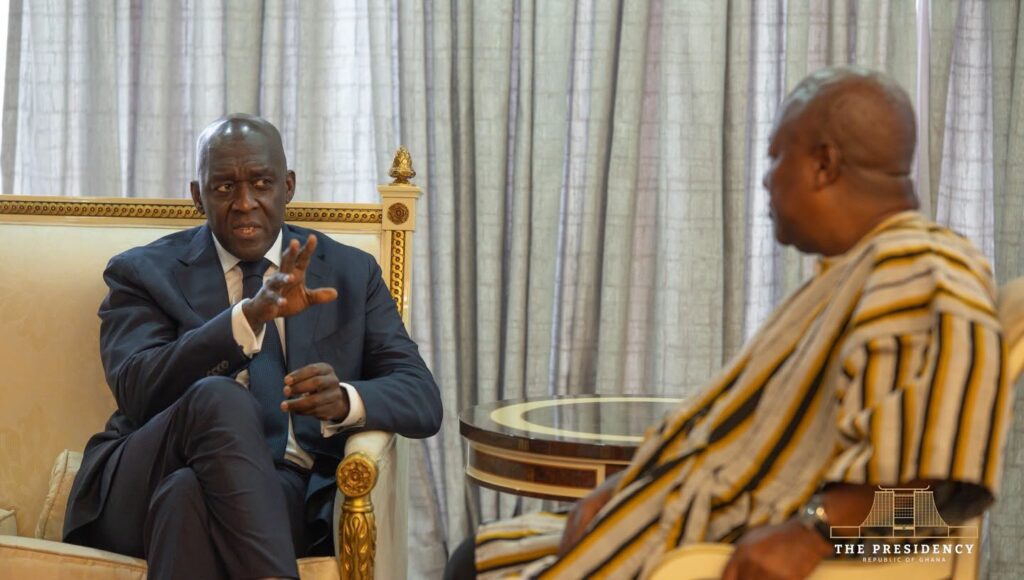
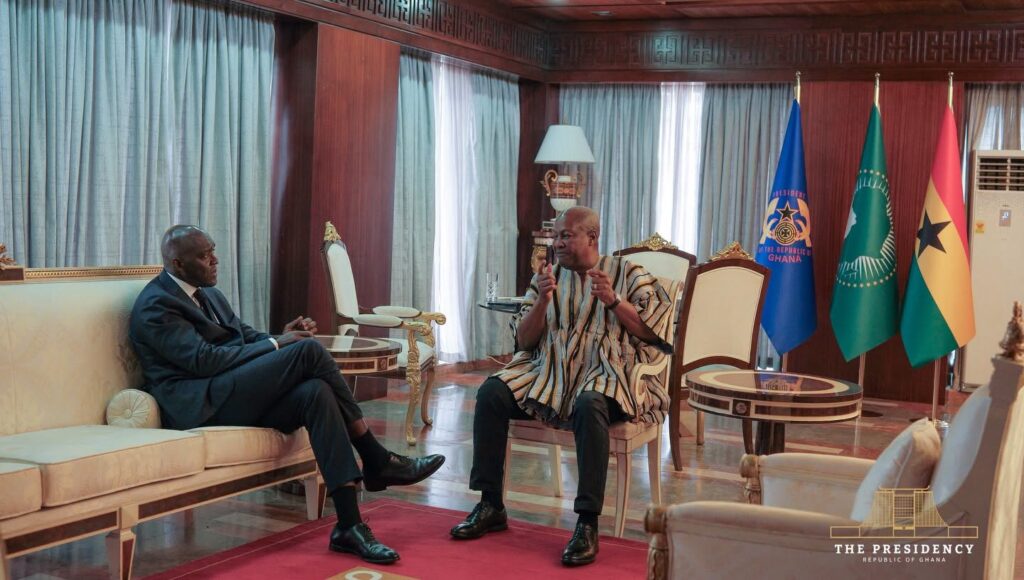
President John Dramani Mahama has held a high-level bilateral engagement with International Finance Corporation (IFC) Managing Director Makhtar Diop at Jubilee House in Accra. The talks centred on deepening the partnership between Ghana and the private sector arm of the World Bank Group to transform the country’s economy.
The President said the discussions placed commercial agriculture, industrialisation and infrastructure at the heart of that partnership. He used the meeting to restate government’s policy of processing at least half of the country’s raw materials locally, arguing that value addition holds the key to creating sustainable jobs for young people.
Commercial Agriculture Tops Mahama and IFC Agenda
Agriculture featured prominently in the engagement, with the two sides identifying specific value chains for investment. “Our discussions focused on deepening our strategic partnership to transform Ghana’s economy, with a strong emphasis on boosting commercial agriculture production in cocoa, oil palm, and poultry,” President Mahama wrote after the meeting.
The focus reflects the government’s drive to move the sector beyond subsistence farming toward large-scale production that can feed local industries and cut food imports. Cocoa remains one of Ghana’s leading export earners, while oil palm and poultry offer room to reduce the country’s reliance on imported vegetable oil and chicken.
50% Local Processing Policy to Create Jobs for the Youth
President Mahama used the engagement to underline his administration’s industrialisation agenda. He told the IFC delegation that the government remains firm on its target for processing raw materials within the country.
“Reaffirming our commitment to industrialisation, I reiterated our firm policy to process at least 50% of our cocoa, farm produce, and mineral resources to create sustainable jobs for our youth”.
President John Dramani Mahama
The policy seeks to end the long-standing practice of exporting raw commodities and importing finished goods. Processing more cocoa, crops and minerals at home would allow Ghana to capture a larger share of the value these resources generate while opening employment opportunities for its growing youth population.
The Big Push Infrastructure Programme in Focus
The talks also covered opportunities for IFC participation in the government’s flagship infrastructure agenda. The President said both sides explored how the programme could deliver improvements across key transport sectors.
“We also explored opportunities under the Big Push programme to overhaul our infrastructure, specifically in railways, aviation, and road network development,” he noted.
According to the President, these transport investments will go hand in hand with critical spending in energy, digital connectivity and education. Private capital from institutions such as the IFC could help the government stretch public resources further as it pursues these projects.
World Bank Funding to End Double-Track System
President Mahama also highlighted the results of Ghana’s wider cooperation with the World Bank Group. He pointed to the US$300 million financing package secured under the Transformative Secondary Education for Access, Results and Relevance for Jobs (STARR-J) Project.
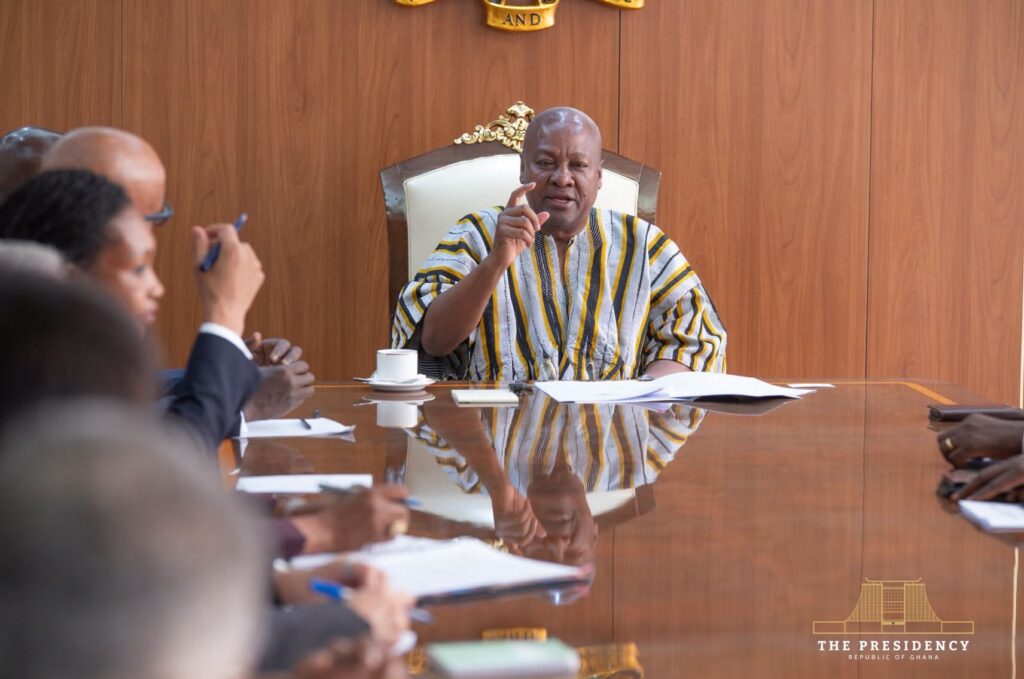
The funding is meant to permanently end the double-track system in Senior High Schools by the end of 2027. The system has operated in many schools since enrolment surged after the introduction of Free SHS, leaving students to attend school in alternating calendars.
Mahama Cites Economic Recovery and Investor Confidence
The President used the engagement to showcase what he described as early gains from his administration’s economic management. “Despite the severe economic crisis we inherited, our commitment to prudent management and fiscal discipline is already yielding positive results,” he wrote.
He pointed to falling inflation, lower national debt levels and renewed confidence among investors as evidence that the recovery is taking hold. These signals matter to development finance institutions weighing where to commit long-term capital.
IFC Eyes Bigger Role in Ghana’s Private Sector
The meeting at Jubilee House came after Mr. Diop held talks with Finance Minister Dr. Cassiel Ato Forson at the Ministry of Finance on September 16, 2026. Those discussions focused on commercial agriculture, value addition and job creation, with sugar, cocoa processing, palm oil and poultry named as priority areas for private-sector investment.
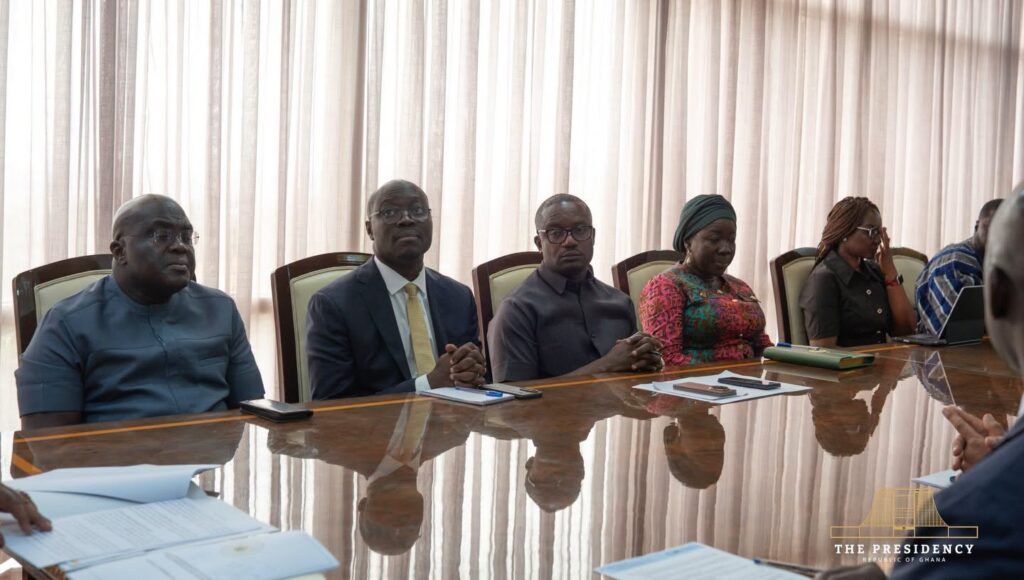
Mr. Diop disclosed that the IFC holds a Ghana portfolio of about US$500 million, with a potential investment pipeline of roughly US$1.2 billion. The pipeline represents projects still under consideration rather than committed funds, so the real test lies in how much of it turns into signed deals.
For government, converting that pipeline into factories, farms and infrastructure would mark a significant step toward the jobs-led transformation President Mahama has promised.
READ ALSO: Flick’s Functioning Machinery: Are Barcelona a Well-Drilled Side or An Early Peak?