

Ghana’s digital political conversation has become measurably more policy-driven without loosening the grip of political personalities, according to the latest PULSE report from IMANI Centre for Policy and Education (IMANI Africa).
The study covers the monitoring period from 8 August to 7 September 2026 and tracks political discussion across Facebook, X, YouTube, TikTok, podcasts, web sources and news feeds.
The finding matters because it complicates a debate Ghanaian analysts have been having all year. IMANI’s May edition reported a shift away from partisan loyalty toward governance performance, while the June edition concluded that personalities were overshadowing policy.
The August data suggests neither reading was complete, because policy and personality are no longer competing for the same space. They now occupy it together.
Governance and the economy carry the largest volumes
Governance and law produced the biggest thematic volume in the dataset at 1,603 mentions, with a substance index of 0.60 and sentiment marginally negative at 0.05. The economy followed with 1,243 mentions and a substance index of 0.73, while foreign policy recorded 1,180 mentions at 0.63.
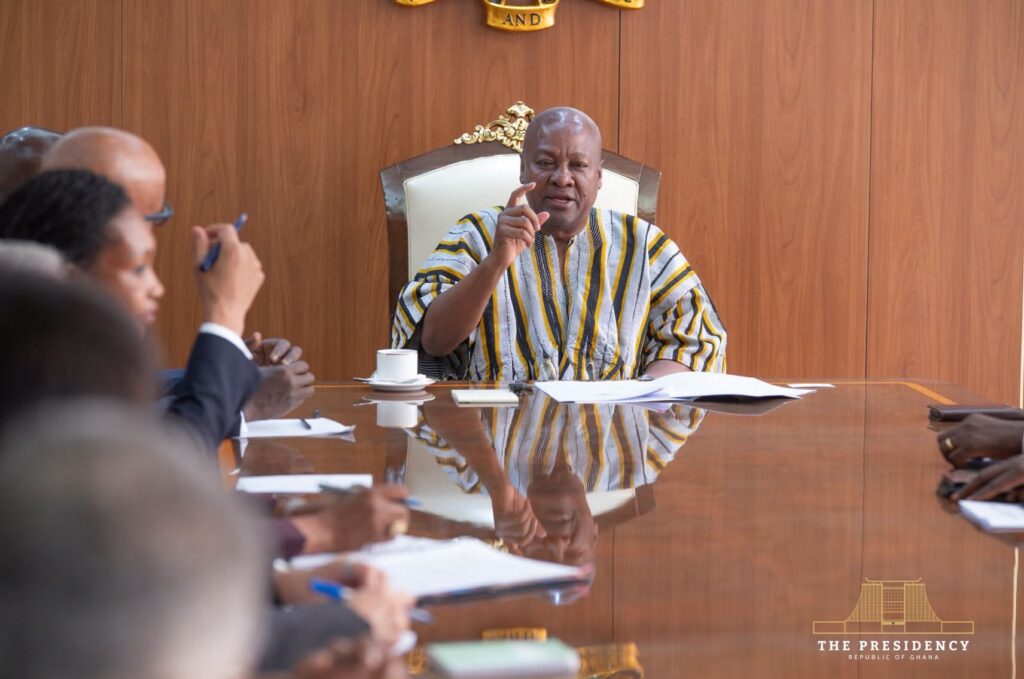
Beneath those headline volumes sit the categories where policy content is densest. Infrastructure registered 512 mentions with a substance index of 0.85, and of 498 classified mentions, 422 were policy-oriented.
Health produced only 143 mentions but scored roughly 0.85 on substance, with 107 of 126 classified mentions concerned with policy. Jobs recorded 212 mentions at 0.84. These three themes carried the most positive sentiment in the dataset, at 0.15, 0.06 and 0.11 respectively.
The strongest policy signals came from government announcements. Financing for the Accra-Kumasi Expressway, the proposed $10 billion New Economy programme, the absorption of 13,500 nurses and midwives onto the government payroll, and plans to expand domestic crude processing and electricity generation drove much of the substantive discussion.
Where personality still sets the frame
The elections and party theme moved in the opposite direction. It recorded 475 mentions, and of 367 classified mentions, 239 were personality-oriented against 128 policy-oriented, a ratio of roughly 1.9 to 1. Sentiment was mildly positive at 0.20, the friendliest reading in the dataset.
IMANI’s broader conclusion is that personality framing has migrated inside the policy conversation rather than disappearing from it. Infrastructure announcements become tests of ministerial credibility.
Economic outcomes are attributed directly to individual leaders. Health results are deployed to defend or attack previous administrations. Accountability allegations attach to reputations and electoral ambitions rather than remaining institutional questions.

The report identifies a second structural divide running through the data.
Government-side conversation is predominantly forward-looking, centred on financing, employment and industrial development, while opposition conversation is split between Mahamudu Bawumia’s forward-looking positioning and a backward-looking critique of the current administration built on the economic record of its predecessor.
In the elections theme, the orientation measured 72 percent forward-looking against 28 percent backward-looking, and in the jobs theme the gap widened to 92 percent against 8.
Engagement does not measure importance
One of the report’s sharpest cautions concerns how these numbers should be read. The Perseus Mining dividend announcement generated 1,307 engagements, while content surrounding Bawumia, Samira Bawumia and the Power Cathedral generated approximately 1,330.
A TikTok post tied to Dr Bawumia’s 2028 positioning drew 961 engagements, ahead of the nurses and midwives payroll story on 935.
IMANI reads that comparison as evidence that identity, loyalty, and controversy can outperform substantive policy developments on reach alone, and warns against treating volume or engagement as a proxy for political significance.
Keyword collisions complicate two themes
The report is unusually candid about the limits of its own instrument. Energy recorded 349 mentions with a substance index of 0.51, but IMANI notes that the multiple meanings of the word power, covering political power, religious power and the Power Cathedral, inflated the personality component without reflecting any real division over electricity policy.
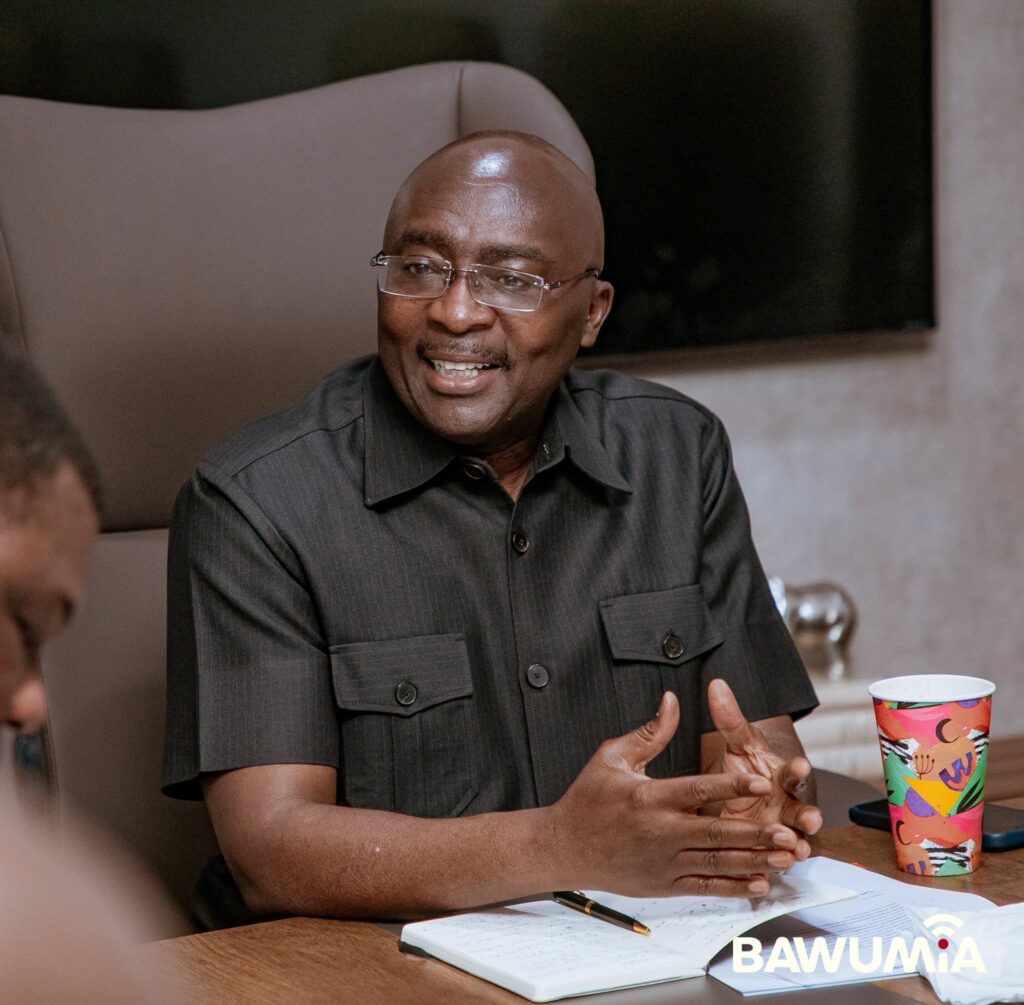
Education showed a similar problem. It recorded 440 mentions and a substance index of 0.65, yet part of that score came from content that was education-adjacent rather than education-focused, including Bawumia’s consultation with nursing and midwifery professionals and keyword matches on a Supreme Court justice’s secondary-school history.
The open question IMANI leaves is whether policy outcomes can eventually acquire enough credibility to reshape the reputations attached to them, or whether personality will continue to supply the lens through which Ghanaians encounter every policy they debate.
READ ALSO: Secured Credit Jumps 73% Despite Fewer Registrations