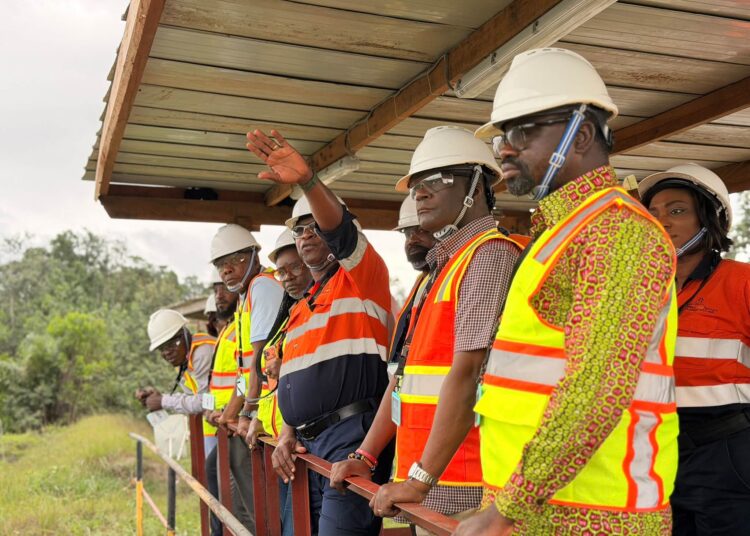
Hon. Joseph Nelson, the Western Regional Minister, has expressed grave concern over the rising encroachment of illegal mining equipment onto industrial mining concessions across the region, identifying operational disruptions as a direct threat to long-term resource investment.
Summarizing the observations made during his recent official familiarization tour of mining firms, the Regional Minister emphasized that the influx of unauthorized heavy machinery undermines lawful operations and compromises the calculated life-of-mine (LOM) projections for corporate producers.
He reiterated that national anti-galamsey enforcement must remain uncompromising, warning that regulatory defaults and asset breaches will no longer be tolerated under current security arrangements.
“The discussions highlighted the growing encroachment of illegal mining equipment onto the company’s concession, operational disruptions and the implications for its life-of-mine (LOM). These challenges demand intelligence-led enforcement, stronger inter-agency coordination and effective protection of licensed mining assets. The law is the law. No individual or interest group is above it.”
Hon. Joseph Nelson
While expanding on the operational risks, Hon. Joseph Nelson detailed how the systemic pressure from unauthorized miners impedes daily extraction schedules and threatens surrounding water bodies, forest reserves, and community health.
The Western Regional Coordinating Council (WRCC) indicated that unchecked concession illegalities severely disincentivize foreign direct investment while jeopardizing state revenue streams derived from legitimate royalty collection.
To combat the situation, state agencies are designing intelligence-led enforcement protocols, seeking direct operational backing from the National Anti-Illegal Mining Operations Secretariat (NAIMOS) to secure registered mining boundaries, dismantle illegal equipment, and restore rule of law across affected zones.
Encroachment and Security Challenges Facing Mining Concessions
The operational strain facing large-scale gold producers in the Western Region underscores a escalating crisis of illegal mining encroachment that demands multi-agency intervention.
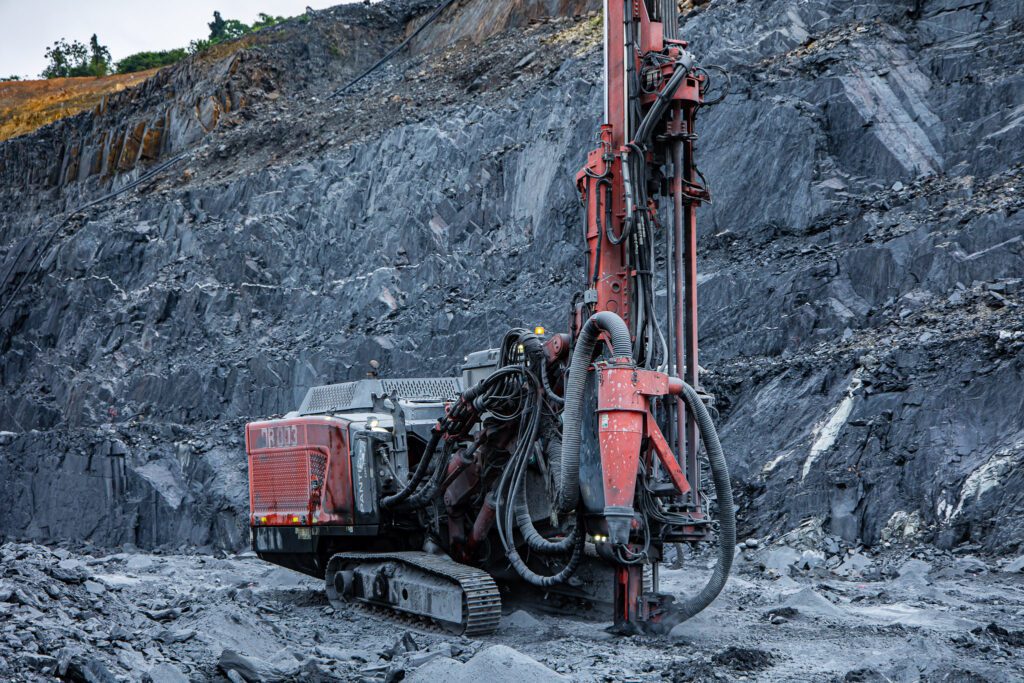
When unauthorized miners enter licensed operational zones with heavy earth-moving equipment, they create severe safety hazards, undermine planned pit expansions, and prematurely exhaust critical reserves.
Minister Nelson noted that “protecting mineral resources, water bodies, forest ecosystems and the integrity of legitimate mining operations is non-negotiable,” pointing out that lawful corporate operations cannot coexist with unchecked environmental degradation.

The security apparatus in the Western Region is consequently aligning with national security frameworks to institute real-time monitoring and swift interdiction measures.
By involving specialized units such as NAIMOS, government aims to establish a robust protective perimeter around industrial concessions, ensuring that commercial entities can operate without constant threat to their machinery, staff, or legal tenure.
Hon. Joseph Nelson commended corporate management for “its continued restraint and commitment to lawful engagement, even in the face of significant operational pressures,” affirming that state enforcement will step in to relieve the burden placed on private security teams.
Sustainable Mining Practices and Institutional Collaboration
To counter the structural roots of illegal extraction, the Western Regional Minister advocated for deeper government-industry partnerships that go beyond law enforcement to deliver tangible public value.
Responsible mineral extraction requires a dual approach: rigorous environmental stewardship on one side, and visible, community-centered social investments on the other.
Through the WRCC, regional leadership is actively cultivating structured dialogues with municipal assemblies and corporate stakeholders to streamline development objectives, ensure regulatory compliance, and align corporate social responsibility (CSR) programs with urgent public needs.

This collaborative framework envisions natural resource wealth acting as an economic engine for regional modernization rather than a source of localized conflict.
By cementing institutional synergy between local authorities and resource developers, the government seeks to foster a predictable investment climate while safeguarding environmental health.
Minister Nelson noted that “our natural resources must create enduring value, not only through production and revenue, but through healthier communities, environmental responsibility and shared prosperity,” outlining a clear paradigm shift toward sustainability.
Critical Healthcare Infrastructure and Social Investment
A key driver necessitating this heightened level of state-industry partnership is the acute deficit in regional specialized medical infrastructure.
As industrial activity and population density expand across the Western Region, local health facilities face severe challenges in managing complex medical emergencies and life-threatening conditions.
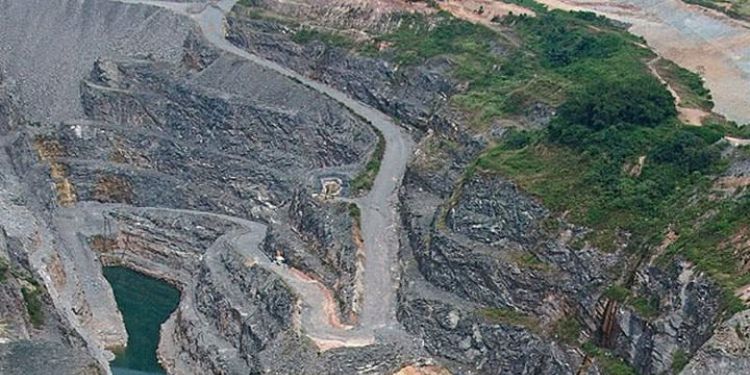
Hon. Joseph Nelson highlighted AngloGold Ashanti Iduapriem Mine’s fully funded commitment to establish a modern Intensive Care Unit (ICU) for the region as a primary example of impactful corporate intervention.
This critical healthcare investment directly addresses long-standing gaps in emergency response and specialized critical care across mining communities.
Equipping regional facilities with an ICU builds human capital resilience, enhances the overall capacity of public health systems, and ensures that natural resource wealth is converted into accessible, life-saving services.
As Hon. Joseph Nelson concluded, “it is the joy of seeing progress that I aspire for,” emphasizing that sustainable public infrastructure remains the true metric of natural resource management.
READ ALSO: Accra-Kumasi Expressway Dominates Ghana’s Economic Conversation Online, IMANI PULSE Finds