Ghana’s renewed scrutiny of the failed Power Distribution Services (PDS) concession is raising a broader question for the electricity sector: can the state recover any legitimate losses while also confronting the much larger financial and operational weaknesses that continue to burden the power system?
The debate has resurfaced as investigators examine events surrounding PDS and claims of money allegedly owed to the state.
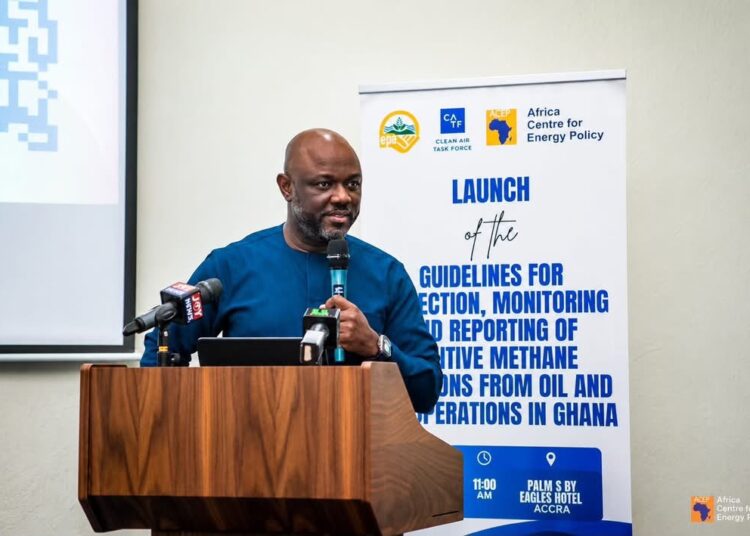
But energy-policy expert Ben Boakye, Executive Director of the Africa Centre for Energy Policy (ACEP), argues that accountability must begin with a clearly established financial claim.
Establishing The Actual Loss
Boakye’s position is not that PDS should be beyond investigation. Rather, he argues that enforcement should follow evidence showing precisely what public interest has been harmed, how much money is involved and who is responsible.
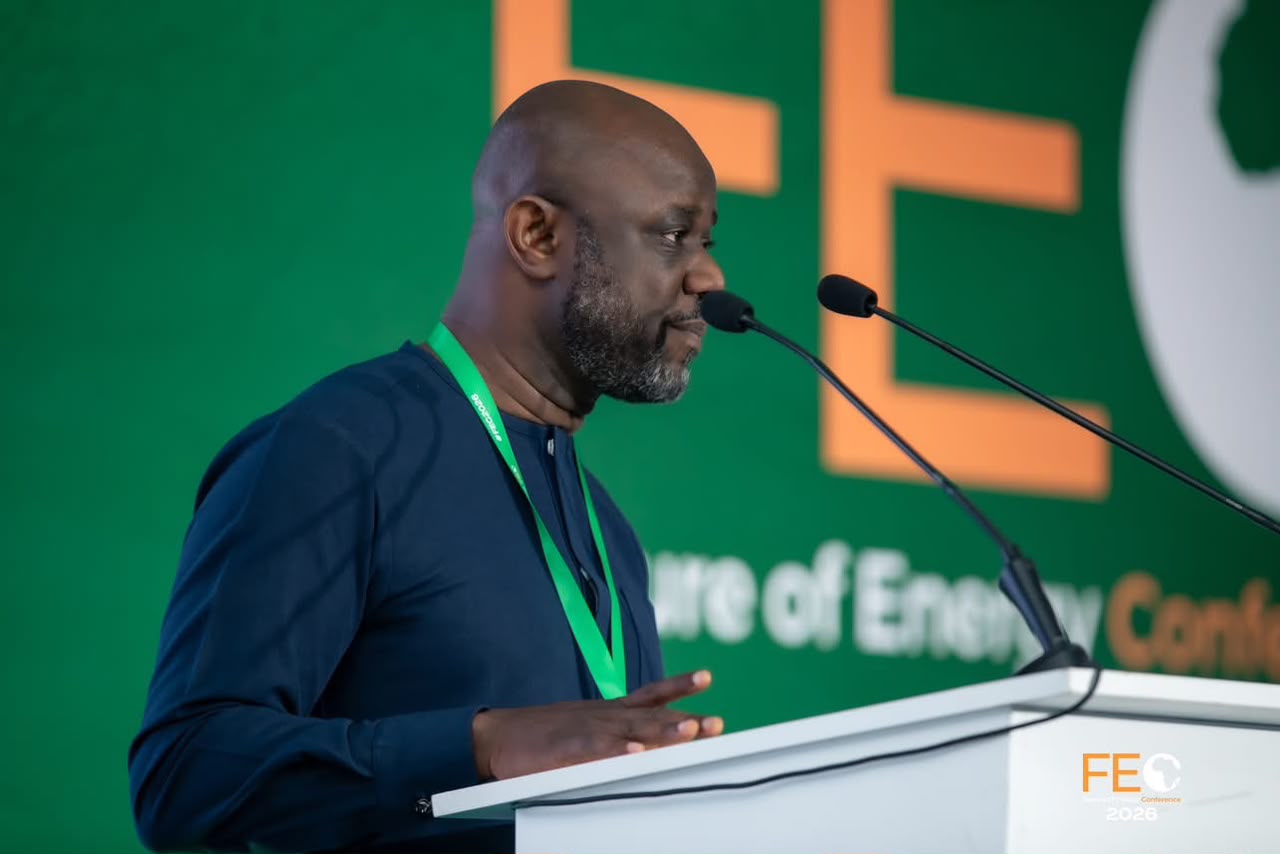
“We cannot stop state institutions from doing what they have to do at all times if there is fresh evidence that suggests that the state interest is still in question. But somebody must tell you where the state interest is suffering for you to make that intervention.”
Ben Boakye, Executive Director, ACEP
That distinction matters because several figures have circulated publicly around the PDS controversy, including amounts in the region of GH¢800 million, GH¢850 million and GH¢1 billion.
Boakye questioned whether those figures have been reconciled into an official claim by ECG or another state institution.
The issue is particularly important in the electricity sector because collections are not automatically equivalent to profit or money owed to ECG.
A distribution company operates within a wider value chain involving generators, transmission and other contractual obligations.
What matters, therefore, is the final reconciled balance after legitimate obligations have been accounted for.
Arbitration Already Changed The Picture
The PDS controversy has also passed through international arbitration, making the legal history relevant to any renewed enforcement action.
A London-seated tribunal in 2025 substantially rejected PDS’s approximately US$390 million claim following the termination of the concession and upheld ECG’s right to terminate the arrangement.

That does not necessarily prevent the state from pursuing separate claims where new evidence establishes outstanding liabilities.
But it does raise the importance of distinguishing between matters already determined through arbitration or court processes and genuinely new allegations.
Boakye argued that authorities should begin from the existing legal record before launching further action.
“For a matter that has gone to court, gone to arbitration, and has been ruled on, at least understanding what the court said, or understanding the outcome of the arbitration, is the starting point of any other investigation.” Ben Boakye
For an infrastructure sector that increasingly needs private capital, that distinction is significant.
Investors need to know that the state can enforce contracts and protect public assets, but also that disputes are handled through predictable legal and financial processes.
The Larger Cost Sits Beyond PDS
The more consequential part of Boakye’s argument is that Ghana’s power-sector losses did not begin with PDS and did not end with its exit.
ECG remains at the centre of a financially strained electricity value chain characterised by high distribution losses, collection challenges and recurring funding gaps.
The state ultimately carries much of that burden.

That means even if Ghana succeeds in establishing and recovering a legitimate PDS-related claim, it would address only one episode within a much wider fiscal problem.
Boakye has argued that losses across the electricity sector since the end of the PDS arrangement could be far larger than the amounts currently associated with the investigation.
His much broader estimates, however, require independent reconciliation against official fiscal transfers, sector liabilities and operational losses before they can be treated as established figures.
The underlying point remains difficult to ignore: a power sector that repeatedly requires state support creates a larger and more persistent financial exposure than any single failed concession.
Reform Must Reach ECG
This is where the PDS debate becomes an energy-policy issue rather than simply a legal or political controversy.
The central question is whether Ghana can improve electricity distribution without repeatedly shifting the cost of inefficiency onto taxpayers.
Some of the management principles associated with the PDS period, greater attention to collections, workplace discipline and revenue performance, have remained part of the wider conversation about ECG’s efficiency.
The challenge is translating those principles into a sustainable institutional model.
Government has already moved towards greater private-sector participation in electricity distribution, with private operators expected to bring capital and management expertise while public ownership of strategic assets is retained.
That approach will ultimately be judged by whether it reduces losses, improves collections and strengthens service quality rather than by the identity of the operator.
Accountability And Investment Confidence
There is also a second risk in the way the PDS investigation is handled.
Strong enforcement can strengthen confidence in Ghana’s institutions when it demonstrates that public resources and contracts are protected.
But uncertainty over the basis for financial claims, asset freezes or other interventions can have the opposite effect if investors perceive the operating environment as unpredictable.
This matters because Ghana needs private capital to modernise transmission and distribution infrastructure and support the broader energy transition.
The state cannot finance every investment required by the electricity sector from the public purse.
A credible investment environment therefore requires two things at once: the willingness to investigate genuine wrongdoing and the discipline to establish liabilities before imposing extraordinary measures.
That balance becomes particularly important where investigations involve companies, directors, advisers or lawyers whose legal rights remain protected until allegations are determined.
PDS Cannot Become The Whole Reform Agenda
The danger for Ghana is allowing the PDS controversy to become a substitute for deeper electricity-sector reform.
Recovering money that is demonstrably owed to the state matters. So does establishing responsibility where evidence supports wrongdoing.
But the bigger policy prize lies in fixing the conditions that repeatedly generate losses: weak collections, distribution inefficiencies, inadequate investment and a sector financing structure that leaves government repeatedly covering the gap.
The PDS episode should therefore be treated as one part of a broader accountability exercise.

Ghana’s electricity challenge is no longer simply about producing enough power. It is increasingly about whether the system can collect enough revenue, control losses and attract enough investment to deliver that power sustainably.
That is the test that will ultimately determine the cost of electricity to consumers and the burden carried by taxpayers.
If the state establishes a legitimate PDS-related claim, it should pursue recovery. But the more important measure of success will be whether Ghana can ensure that the next electricity-sector arrangement does not create another controversy while the underlying financial leakages remain unresolved.
In that sense, the PDS investigation is less important for what it says about one failed concession than for what it reveals about the unfinished work of reforming Ghana’s power-distribution system.
READ ALSO: Asamoah Gyan Lands Black Stars Role as GFA Reshapes National Teams Setup