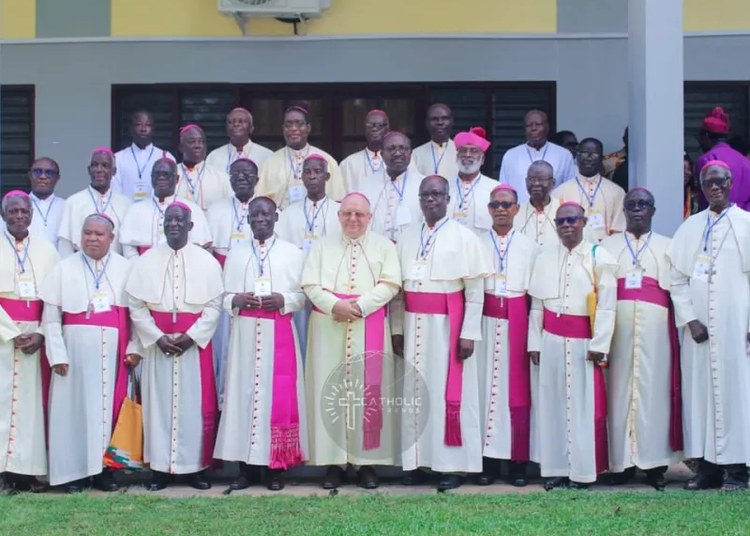
Ghana Catholic Bishops’ Conference (GCBC) has issued a strongly worded appeal to government, security agencies, the Church and Ghanaian families to confront what it describes as an escalating national drug crisis, warning that illicit trafficking and abuse now pose a direct threat to the country’s moral fabric and security.
The bishops said they could no longer remain silent in the face of a problem they characterised as both a serious national concern and a profound moral crisis rather than a routine criminal matter.
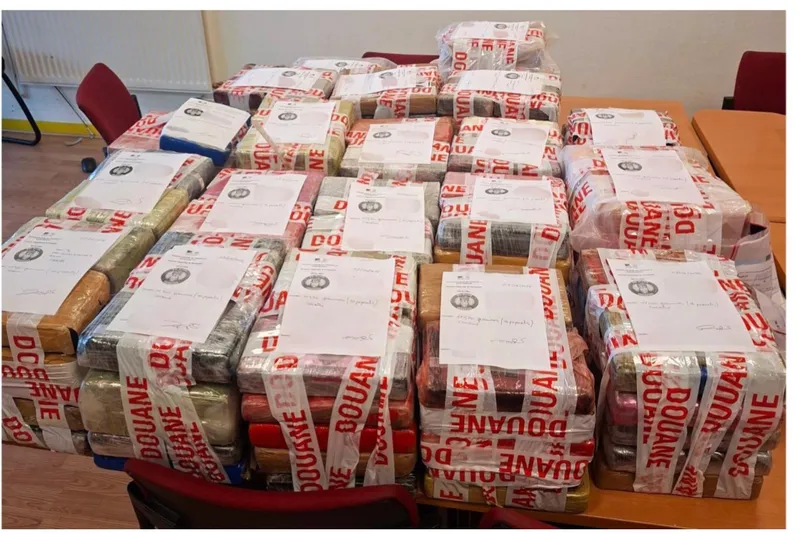
The statement was prompted by a major drug bust in France. On 10 September 2026, French customs officials at Dunkirk intercepted nearly 3.9 tonnes of cocaine, valued at an estimated €225 million, hidden inside a container of plastic waste shipped from Ghana, with part of the consignment reportedly bound for Antwerp, Belgium.
Four Ghanaians were subsequently arraigned before the High Court in Accra on 16 September 2026, facing charges of conspiracy to export narcotic drugs without a licence and unlawful exportation of narcotics. They were remanded to reappear on 13 October 2026, while a fifth suspect, a Dutch national, remains at large.
While acknowledging that the accused are presumed innocent until proven guilty, the bishops described the scale of the alleged shipment as deeply troubling and called for full investigations into how such a consignment could leave Ghana through legitimate commercial channels.

They commended the Narcotics Control Commission and other agencies for their work and welcomed the President’s formation of an inter-agency task force to tackle trafficking through the country’s ports, airports and borders.
Pattern of Incident
The bishops situated the Dunkirk case within a broader pattern documented in a memorandum submitted by more than forty Members of Parliament, who invoked constitutional provisions to petition the Speaker to recall Parliament from recess.
Memorandum traces a string of incidents since March 2025, including a 3.3-tonne cocaine haul concealed in a tipper truck at Pedu Junction near Cape Coast, another consignment intercepted along the Takoradi–Cape Coast highway, Cocaine parcels found packed among sacks of gari at a Tema Harbour warehouse, an unresolved case involving a flight from Gran Canaria, a vessel released after a partial fine payment and later seized abroad, and methamphetamine hidden in a charcoal shipment intercepted by Australian customs.
According to the memorandum, high-profile seizures linked to Ghana over the past two years exceed US$1 billion in value, while the Narcotics Control Commission recorded 217 arrests and 165 prosecutions, alongside the interception of more than 8.5 tonnes of assorted narcotics and 45.4 million tramadol tablets during the review period.

The bishops also flagged concerns raised in the memorandum that, more than a year after the Pedu Junction seizure, only a driver, a housemaid and a few peripheral suspects had been arraigned, while the financiers and principal traffickers behind the operation remained unidentified.
Appeal to Government
The bishops urged government to treat the fight against narcotics as an urgent national concern, calling for a coordinated strategy involving the Police Service, NACOC, Customs, port authorities, the judiciary and schools, alongside timely prosecution of persons against whom credible evidence exists.
They pressed for stronger cooperation with INTERPOL and Europol on transnational networks and insisted that investigations follow the money to identify complicit businesses and officials “regardless of rank.”
They welcomed Parliament’s oversight role and backed the memorandum’s proposal that the Ministers for the Interior, Transport and National Security, together with heads of relevant agencies, be summoned to account for security procedures at Ghana’s ports and airports, urging that this proceeds “without delay.”
Shared Responsibility
The bishops stressed that the battle cannot be left to government alone. They called on parishes, schools and youth organisations to intensify drug-prevention education and mentorship and urged parents to remain closely engaged with their children’s lives.
“do not be deceived by the temporary gains promised by the drug trade. Choose life.”
GCBC
On the moral dimension, the bishops described the trade as one that “exploits human vulnerability, damages human health and dignity, and places profit above persons,” while insisting that those struggling with addiction deserve medical, psychological and spiritual support rather than condemnation.
READ MORE: Investing in Teachers is Nation-Building, Not Expenditure – Gapson