
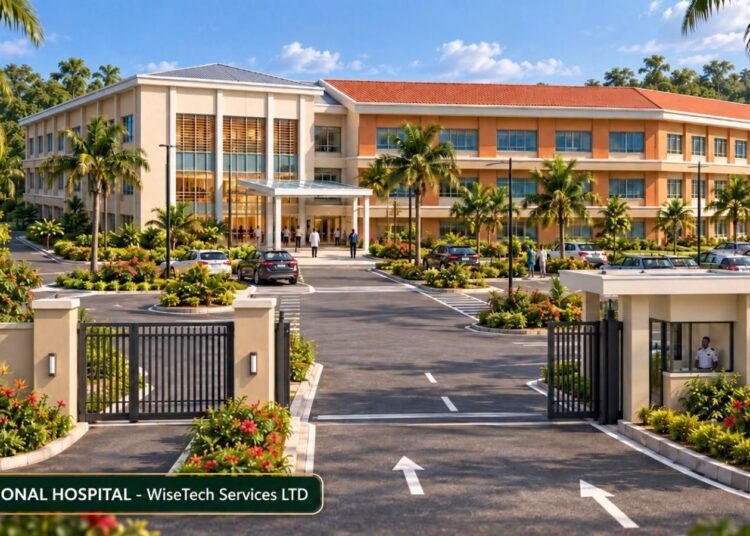
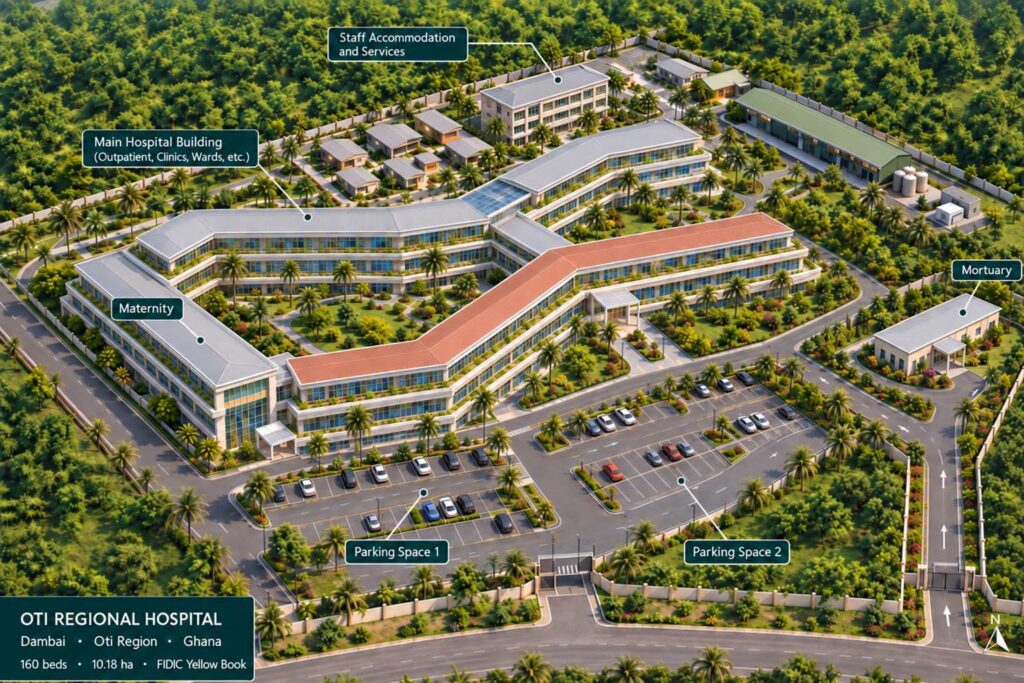
President John Dramani Mahama will cut the sod in the coming weeks for three 160-bed regional referral hospitals in the Oti, Savannah and Western North Regions. The announcement came from Presidential Spokesperson and Minister for Government Communications, Felix Kwakye Ofosu, who also released the architectural design for the Oti facility.
The projects move a pledge made in May, when the government began procurement for the hospitals, a step closer to construction. They target three of the six regions created in 2018 and 2019, whose residents have long depended on referral facilities outside their own administrative boundaries for specialist care.
Hon Kwakye Ofosu described the hospitals as part of “a broader strategy to improve healthcare in Ghana,” signalling that the sod cutting belongs to a wider programme rather than a standalone project.
The groundwork was laid in May, when President Mahama used the commissioning of a PET scan facility at the Swedish Ghana Medical Centre to announce that procurement had begun.
“Government is investing in improving the quality of health care for our people. We have commenced the procurement processes for the construction of three new regional hospitals in three of the newly created regions to improve health care outcomes for the people who live there,” he said at the time.
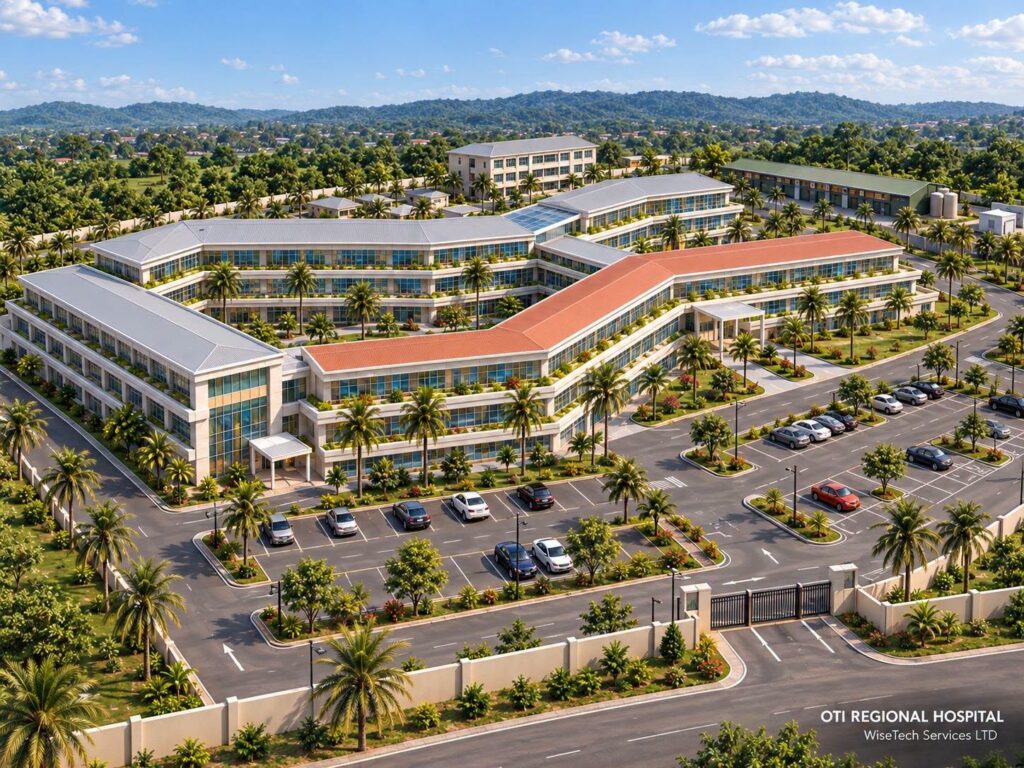
Four months on, the move from procurement to sod cutting suggests contractors and designs are now in place for the first phase.
Referral Care Closer To Home
Each of the three regions was carved from an older one. Oti was created from the Volta Region, Savannah from the Northern Region and Western North from the Western Region, but the referral infrastructure did not follow the new boundaries.
Patients needing surgery, advanced diagnostics or specialist consultations have therefore travelled long distances to regional hospitals in Ho, Tamale or Sekondi-Takoradi, or further still to teaching hospitals in Kumasi and Accra. For emergencies such as complicated deliveries, road trauma and strokes, those hours on the road can decide outcomes.
A regional referral hospital sits at the top of a region’s public health system, receiving cases that district hospitals cannot manage. At 160 beds each, the three facilities would give their regions a dedicated referral point for the first time.
Three More Hospitals By 2028
The three hospitals are the first half of a larger commitment. When he announced procurement in May, President Mahama set a deadline for the rest. “By the end of 2028, we will provide three more regional hospitals for the remaining three new regions,” he said.

Those remaining regions are Ahafo, Bono East and North East, which face similar gaps in referral care. The regional hospitals sit alongside several other health infrastructure commitments made this year.
In May, the President announced that government would complete 35 Agenda 111 hospitals already at advanced stages, rather than pursue all 111 at once. He was direct about the programme he inherited.
“With the Agenda 111 hospitals, I do not think it was a very prudent idea to start 111 hospitals at the same time,” he said, adding that the Economic and Organised Crime Office was pursuing contractors who collected mobilisation payments without doing the work.
Faith-based health providers have also been invited to adopt and complete some of the stalled facilities. Government has also procured catheterisation laboratories for the Korle Bu, Komfo Anokye and Tamale Teaching Hospitals, and is building a cardiothoracic centre in Tamale, with further cardiac centres planned for Wa and Cape Coast.
In June, the President announced a retooling programme under the Ghana Medical Trust Fund, beginning with CT scanners, MRI machines and mammography units for the Sunyani Teaching Hospital.
The Test Beyond The Sod
A sod cutting is the easiest milestone in a hospital project, and Ghana’s recent history shows how far it can sit from a working facility. The Agenda 111 experience, which the President himself criticised, left structures across the country at various stages of completion and contractors under investigation.
The three regional hospitals will be judged on whether they are completed, equipped and staffed on schedule, and whether funding holds through successive budgets. The phased approach adopted for Agenda 111 offers a template, since concentrating resources on fewer projects is precisely the lesson government says it has drawn.
Whether that discipline carries through to Oti, Savannah and Western North will determine if the sod cutting marks the start of better care or the start of another wait.
READ ALSO: Trump Claims US Has Weakened Iran’s Power In Middle East