Iran has maintained its demand that the United States end its blockade on Iranian ports and release frozen Iranian assets as part of any potential diplomatic settlement.
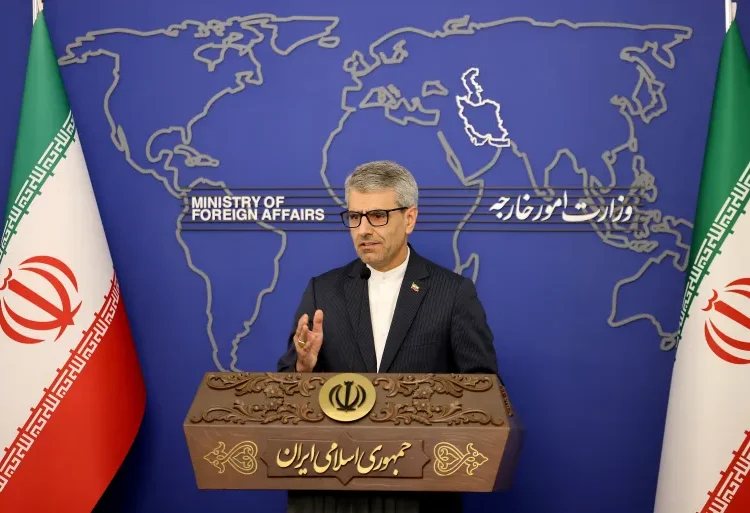
According to a Spokesperson for the country’s Foreign Ministry, Esmail Baghaei, the demands were reiterated during indirect talks between Iranian and US officials held through Qatari mediators on the sidelines of the United Nations General Assembly in New York.
Referring to Iran’s conditions for negotiations with Washington, Baghaei said, “This was not anything new.” The talks were the first indirect engagement between US and Iranian officials since a June ceasefire broke down, with tensions continuing to affect security around the Strait of Hormuz.
Intermittent attacks have continued in the strategic waterway off Iran’s coastline, while commercial shipping activity remains below levels recorded before the war.
Baghaei’s comments indicate that Tehran continues to link any progress in negotiations to the lifting of US restrictions affecting Iranian ports and the release of assets frozen under American measures.
The latest diplomatic contact comes as both sides continue to exchange threats and warnings amid the prolonged conflict.
US President Donald Trump has defended the US military campaign against Iran and said during his address to the UN General Assembly that he faced a choice between reaching an agreement with Tehran and taking further military action. Trump warned that the United States could “annihilate the Islamic Republic” if a settlement could not be reached.
The latest diplomatic contact therefore comes against a backdrop of continuing military confrontation, with negotiations taking place alongside heightened rhetoric from both sides.
Baghaei’s remarks also suggest that Tehran’s core negotiating demands have remained consistent despite the resumption of indirect contacts.
Qatar has played a role in facilitating communication between Washington and Tehran, while regional governments have separately pursued efforts aimed at reducing tensions and creating conditions for dialogue.
The diplomatic efforts come as the conflict continues to affect regional security and international shipping, particularly around the Strait of Hormuz, one of the world’s most important energy transit routes.
Later, Baghaei said in remarks quoted by another news agency that there is no weapon that can replace dialogue and peace.
“Peace means more than just the absence of war; it encompasses tranquillity and prosperity. There is no weapon that rivals dialogue and peace in undermining the effectiveness of the adversaries’ offensive tools.”
Esmail Baghaei
Iran Dismisses Trump’s Threat to ‘Annihilate’ Islamic Republic
Iran’s military has dismissed Trump’s threat to “annihilate” the Islamic Republic, warning that Tehran is prepared to respond with attacks it says would be more severe than those carried out earlier in the conflict.
In a statement carried by Iranian state media, the country’s General Staff accused Trump of using his address to the UN General Assembly to justify what it described as US “aggression” against Iran. “Such words demonstrate America’s strategic dead end in its aggression against the Iranian nation,” the statement said.
The General Staff further described Trump’s repeated threats as “not a sign of power but a sign of their strategic desperation.”
Iran’s military also warned that its armed forces were prepared to launch strikes against the United States and Israel that would be “more crushing and less predictable” than earlier attacks during the war.
The warning was reinforced by comments from Brigadier General Mohammad Karami, Commander of the ground forces of Iran’s Islamic Revolutionary Guard Corps.
Karami made the remarks while inspecting operational bases in northwestern Iran, according to Iranian state media.
“With the grace of God, we will not yield an inch to the enemy, just as we did during the Sacred Defence period [1980-1988 Iran-Iraq War], and the future belongs to the esteemed Islam and the heroic Iranian nation.”
Mohammad Karami
Karami also stressed the continuation of what he called the “path of resistance and steadfastness.”
The statements show the difficult environment surrounding the latest diplomatic contacts, with Tehran maintaining its negotiating demands while simultaneously warning against further military escalation.