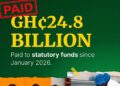
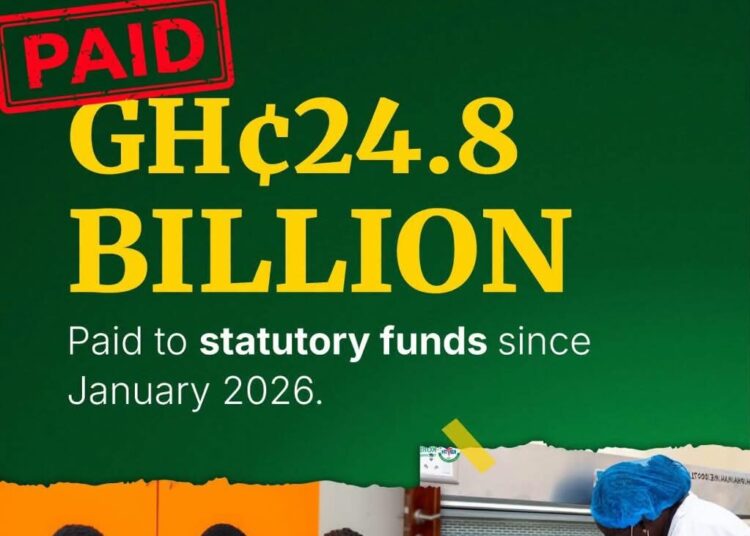
Finance Minister Dr Cassiel Ato Forson has disclosed that the government has paid GH¢24.8 billion to statutory funds since January 2026, describing the transfers as timely and essential to delivering public services across Ghana.
The minister stated that the payments are intended to support education, healthcare, road maintenance and local development, arguing that the government has moved away from previous practices characterised by delays, payment caps and accumulated arrears.
“We have paid GH¢24.8 billion to statutory funds since January 2026 to support schools, healthcare, roads and local development,” Dr Forson wrote. He added that the funds were now being released “on time and in full,” enabling the institutions to access resources required to perform their legally mandated responsibilities.
GH¢63.6bn Earmarked in 2026 Budget
The payments form part of the government’s broader 2026 fiscal commitments. The 2026 Budget Statement provides for GH¢63.6 billion in allocations covering grants to statutory funds, energy payments and other critical earmarked expenditures.
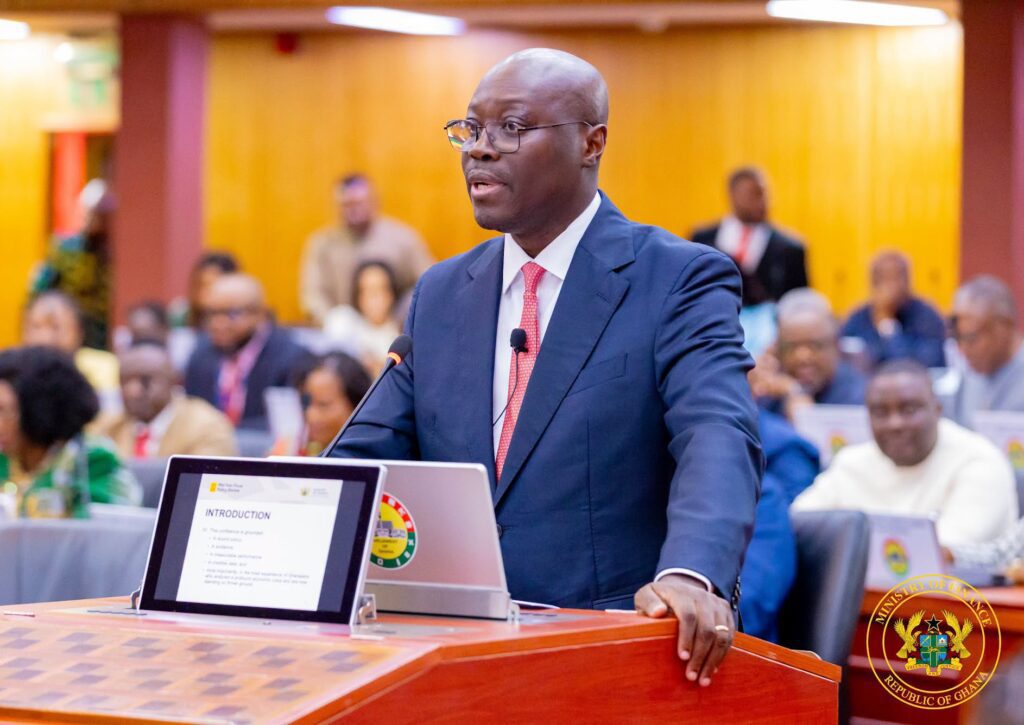
Against that allocation, the GH¢24.8 billion reported by the Finance Minister represents a substantial amount already transferred during the year. However, the overall budget figure covers several expenditure categories, and the available information does not establish how much of the GH¢24.8 billion has gone to each individual fund.
The payments are significant because statutory funds are intended to finance specific public functions under legal and budgetary arrangements. Their timely release can help public institutions and local authorities plan expenditure, meet obligations and support the delivery of services.
Dr Forson’s statement places particular emphasis on the difference between the current payment arrangements and previous periods, when statutory transfers were reportedly affected by delays, capping and arrears.
He argued that releasing the funds on time and in full would help ensure that the institutions receive the resources required to carry out their responsibilities.
Eight Statutory and Earmarked Allocations
The statutory and earmarked payments identified in reports on the minister’s disclosure cover several areas of public spending, including decentralisation, education, healthcare, infrastructure, natural resources and pensions.
They include the District Assemblies Common Fund (DACF), which supports local governance and development; the National Health Insurance Fund, which helps finance healthcare access; and the Ghana Education Trust Fund (GETFund), which supports educational infrastructure.
Other allocations include the Road Maintenance Trust Fund, designated for road maintenance, and transfers associated with the Ghana National Petroleum Corporation (GNPC). The Mineral Development Fund and Minerals Income Investment Fund also feature among the listed allocations connected to the management and distribution of mineral revenues.
The list further includes Social Security and National Insurance Trust (SSNIT) and Tier 2 pension contributions.
These allocations serve different purposes, making the timing and distribution of payments important to the institutions and beneficiaries that depend on them. However, the information provided does not include a fund-by-fund breakdown of the GH¢24.8 billion or the amount transferred to each beneficiary institution since January.
Timely Transfers and Public Service Delivery
The government’s stated position is that the payments will help statutory funds provide essential services and meet obligations established by law. Education-related transfers can support infrastructure needs, while health financing and road maintenance allocations are intended to sustain services in their respective sectors.
Transfers to local development and natural resource-related funds also have implications for communities and local authorities that depend on public allocations to finance development activities.
Dr Ato Forson’s emphasis on timely and full releases highlights the importance of predictable public financing. When statutory transfers are delayed or reduced, institutions may face difficulties planning projects and meeting expenditure commitments. More predictable payments can make it easier for them to organise spending around their mandates.
Nevertheless, the total amount paid does not, on its own, establish whether every fund has received its full entitlement or whether the transfers have already translated into improved services. Assessing those outcomes would require detailed payment records, allocations to individual funds and evidence of expenditure.
Accountability for Statutory Fund Payments
The GH¢24.8 billion disclosure provides an indication of the scale of statutory and earmarked payments reported by the Finance Ministry during 2026. It also raises questions about the distribution of the funds, the timing of individual transfers, and how the money is being used to meet public needs.
A detailed breakdown of payments against budgeted entitlements would help clarify the progress made across the various funds. Such information would allow Parliament, public institutions and citizens to assess whether transfers are being made as scheduled and whether the intended beneficiaries are receiving the expected support.
For now, Dr Forson’s announcement centres on the government’s commitment to releasing statutory funds without the delays, caps and arrears he associated with earlier arrangements.
The key test will be whether the reported payments translate into reliable financing for public institutions and measurable improvements in education, healthcare, roads and local development.
READ ALSO: Ghana’s Producer Inflation Jumps to 4.8% in September