

Ghana’s attempt to build a stronger domestic refining industry is bringing an often-overlooked part of the petroleum value chain into sharper focus: how local refineries finance the crude they process.
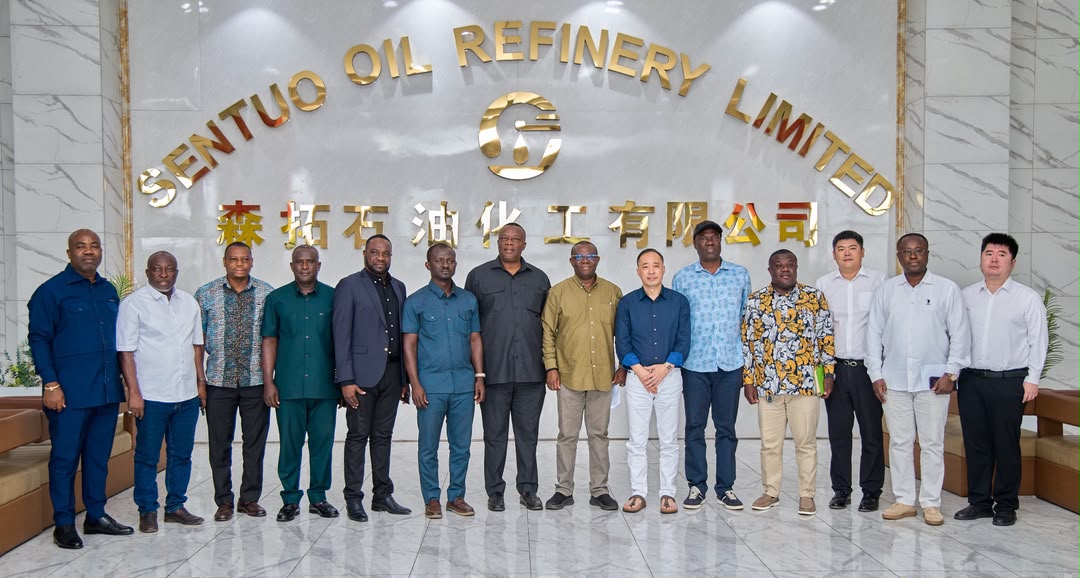
The issue surfaced during Parliament’s Energy Committee’s engagement with Sentuo Oil Refinery in Tema, where lawmakers examined the refinery’s operations, expansion plans and contribution to Ghana’s downstream petroleum industry.
Committee Chairman Emmanuel Kwasi Bedzrah indicated that the matter will receive further consideration when Parliament resumes in October.
The proposed review comes at a time when Ghana is simultaneously seeking to expand domestic refining, reduce dependence on imported petroleum products and retain more economic value from its own crude resources.
Refinery Economics Meet Foreign Exchange
The difficulty is straightforward but consequential.
A refinery purchasing crude in US dollars while selling most of its finished products into Ghana’s cedi-based domestic market is exposed to exchange-rate movements throughout its operating cycle.

When the cedi weakens, the local-currency cost of crude rises. Unless the increase can be recovered through product pricing, margins and working capital come under pressure.
That exposure becomes particularly important for Ghana because the country is trying to make local refining a larger part of its petroleum-security strategy.
Bedzrah said Parliament intends to examine the payment arrangement in October alongside proposed changes to relevant petroleum legislation.
“The Committee will look at the issue when Parliament resumes in October, particularly within the context of the proposed changes to the petroleum-sector laws.”
Emmanuel Kwasi Bedzrah, Chairman, Parliamentary Select Committee on Energy
The review could therefore become part of a wider question about whether Ghana’s regulatory and fiscal framework is adequately aligned with its objective of processing more crude domestically.
Industry Calls For A More Supportive Framework
Sentuo’s management used the engagement to argue that domestic refining requires policy consistency over the long term.
Executive Chairman and President Xu Ningquan questioned the logic of requiring dollar payments for crude that is ultimately processed into products intended for Ghana’s domestic market.
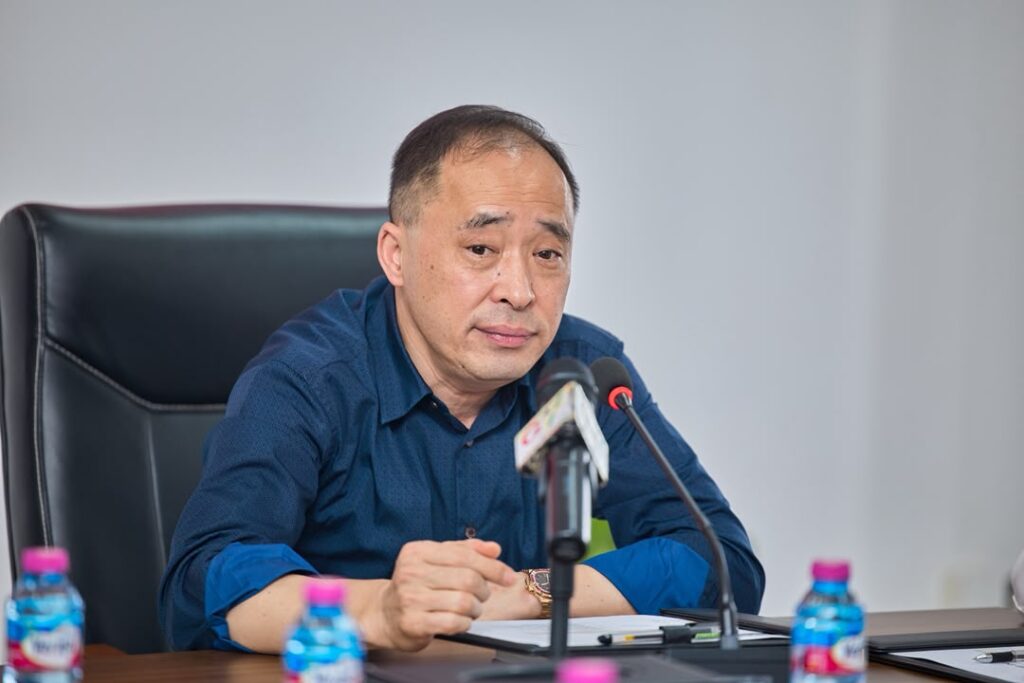
His argument goes beyond the immediate currency issue: if Ghana wants local refining to expand, the policy environment must account for the financing conditions under which refineries actually operate.
“The policies should support local value addition and create an environment in which refineries can sustain their operations over the long term.”
Xu Ningquan, Executive Chairman and President, Sentuo Group
The Ranking Member of the Committee, George Kwame Aboagye, similarly called for an approach that supports local processors while preventing the cost of that support from being transferred disproportionately to consumers.
That balance will be central to any reform.
Local Refining Carries Strategic Value
The debate matters because Ghana’s petroleum security remains closely tied to developments outside the country.
International crude prices, freight costs and exchange-rate movements can all affect the domestic cost of petroleum products.

Increasing domestic processing does not eliminate those exposures, but it can create greater control over part of the supply chain.
There is also an industrial dimension.
A refinery does more than produce petrol and diesel. A functioning domestic refining ecosystem can support storage, transportation, engineering services, maintenance, logistics and other downstream businesses.
This explains the emphasis on Sentuo’s expansion and employment contribution during the parliamentary engagement.
President John Dramani Mahama’s June commissioning of the second phase of Sentuo’s expansion, following the delivery of Jubilee crude for processing, has further strengthened the government’s emphasis on domestic refining.
Cedi Settlement Could Change The Equation
The currency debate is not entirely new.
Energy and Green Transition Minister John Jinapor disclosed in August that the President had directed officials to examine whether Ghanaian crude supplied to domestic refineries could be settled in cedis.

If implemented, such an arrangement could reduce the direct foreign-exchange requirement associated with acquiring locally produced crude.
But it would not make refining immune to currency pressures.
Refinery operators would still need dollars for some imported equipment, services, chemicals, financing obligations and potentially other inputs.
The broader economics would therefore depend on how comprehensively the policy addresses foreign-exchange exposure.
Consumer Protection Remains The Hard Part
There is also a potential tension between supporting domestic refining and maintaining competitive petroleum prices.
Government assistance that improves refinery viability could strengthen local supply and employment.
But if the resulting costs are eventually incorporated into fuel prices or absorbed through public finances, consumers could bear part of the adjustment.
That makes the October parliamentary review particularly important.
The question is not simply whether domestic refineries should receive preferential treatment. It is whether Ghana can design a commercially credible system in which local crude, local refining, foreign exchange, taxation and fuel pricing work together rather than pulling in different directions.
If that alignment is achieved, expanding refining capacity could become more than a fuel-security project.
It could form part of Ghana’s broader effort to retain value from its petroleum resources and deepen domestic industrial activity.
If it is not, additional refinery capacity risks existing alongside the same financial and foreign-exchange constraints that have historically limited the performance of Ghana’s downstream petroleum infrastructure.