
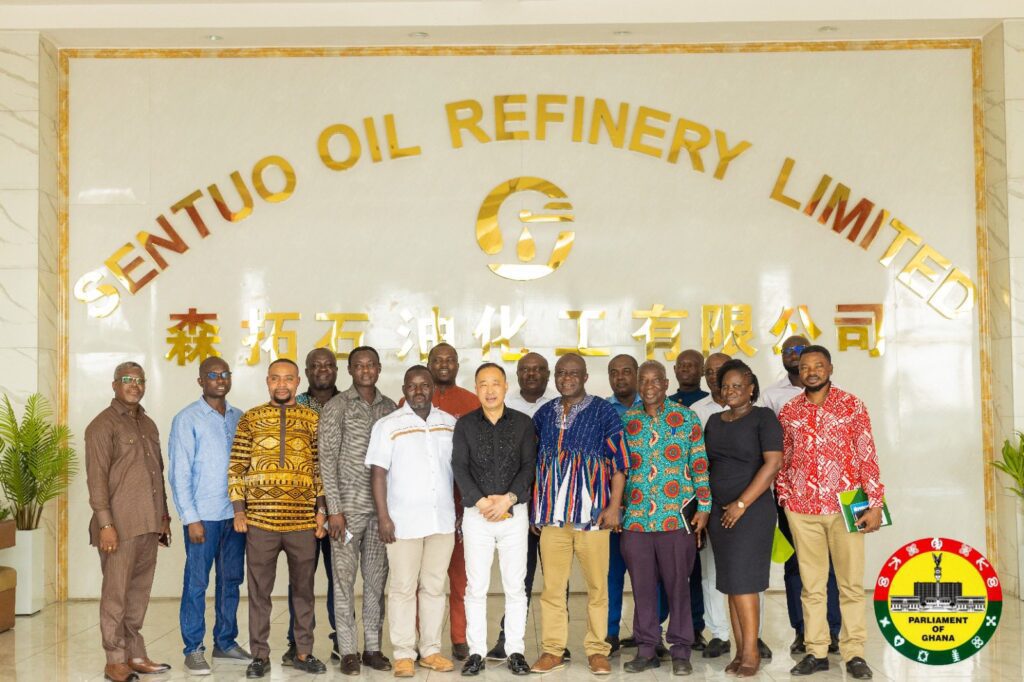
The Committee on Environment, Science and Technology of the Parliament of Ghana has extended a pivotal monitoring visit to the Sentuo Oil Refinery in Tema, reinforcing the legislative body’s oversight role in guaranteeing that industrial operations adhere to national environmental sustainability standards.
This strategic inspection serves as a critical check to ensure that the facility’s output and internal processes align with the stringent requirements designed to safeguard public health and ecological integrity.
By conducting this onsite review, the Committee sought to bridge the gap between regulatory policy and industrial execution, particularly within the sensitive petrochemical sector.
Parliament aims to provide a robust framework of accountability, ensuring that private sector players do not merely promise compliance but actively integrate high-level safety mechanisms such as the advanced flare systems and comprehensive groundwater monitoring protocols currently utilized by the refinery into their daily workflows to mitigate environmental degradation.
“The Committee on Environment, Science and Technology today undertook a monitoring visit to Sentuo Oil Refinery in Tema as part of its mandate to oversee environmental sustainability practices. The Chairman of the Committee, Hon. Addo Frimpong Yaw, expressed satisfaction with the Refinery’s commitment to environmental and worker safety. He further urged the Refinery to engage the Environmental Protection Agency (EPA) to support enhanced operational capacity.”
Parliament of Ghana
Strengthening Accountability and Environmental Stewardship

The oversight visit serves as a cornerstone for enhancing sustainable operations by fostering a culture of transparency between industry giants and the state.
When Parliament physically tours facilities, it forces a higher level of “operational vigilance” on the part of the refinery management.
This process involves scrutinizing how the facility manages potential spillages and hazardous gas emissions.
By demanding evidence of “advanced flare systems to detect spillages and safely decompose harmful gases,” the committee ensures that technology is not just installed for show but is functioning at the capacity required to protect surrounding communities.
Such visits effectively transform abstract regulatory standards into actionable, site-specific safety cultures.
Furthermore, the act of oversight prevents the “regulatory lag” that often occurs when agencies rely solely on self-reported data from industrial operators.
Harmonizing Industrial Growth with Compliance

For the energy sector, balancing national development with green transition goals is a precarious task. Parliamentary oversight acts as a harmonizing agent that encourages industrial entities to go beyond basic compliance.
Hon. Addo Frimpong Yaw’s directive for the refinery to “engage the Environmental Protection Agency (EPA) to support enhanced operational capacity” signifies a shift toward proactive collaboration rather than reactive enforcement.
This approach ensures that refineries are not operating in isolation but are constantly updated on global best practices regarding carbon footprint reduction and waste management.
When industries maintain a symbiotic relationship with regulators, it creates a “de-risked” environment that invites sustainable investment.
It reassures the public that the government is actively monitoring the potential impacts of heavy industry, thereby reducing the friction between economic industrialization and the need for a cleaner, safer, and more sustainable Ghanaian environment.
The Impact on Future Regulatory Frameworks

The information gathered by the Committee during this firsthand tour provides essential data for future legislative debates and potential amendments to existing environmental laws.
These field visits inform parliamentarians about the practical challenges refineries face in implementing high-cost green technologies.
By witnessing the scale of operations in Tema, lawmakers are better equipped to craft policies that provide the necessary incentives for oil and gas firms to invest in carbon-capture initiatives and renewable energy integrations.
As the nation navigates the complexities of an energy-dependent economy, this rigorous monitoring ensures that growth does not come at the cost of the environment.
The commitment displayed by the Sentuo Oil Refinery, bolstered by legislative oversight, serves as a blueprint for other industrial actors.
This model of engagement combining strict adherence to environmental protocols with active collaboration with oversight bodies like the EPA is essential for sustaining the country’s industrial ambitions while remaining steadfast in the pursuit of long-term environmental protection.
READ ALSO: CalBank’s Strong NPL Recovery Overshadowed By Sharp Loan Book Decline