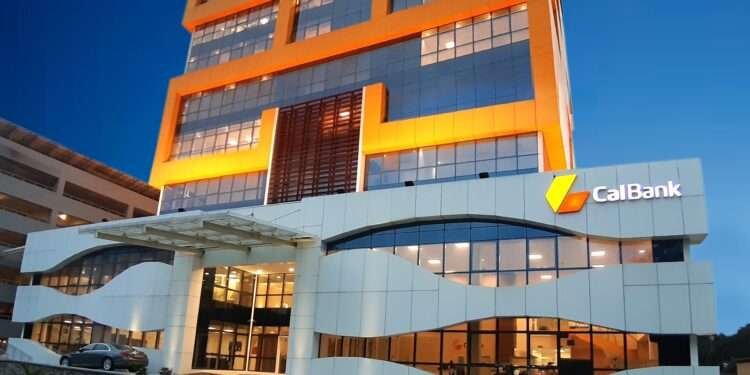
For years, non-performing loans have remained a persistent challenge within Ghana’s banking sector, particularly among indigenous banks.
Against this backdrop, the first quarter 2026 performance of CalBank PLC has delivered what many analysts describe as a remarkable turnaround in asset quality.
According to the bank’s unaudited financial results for the period ended March 31, 2026, its non-performing loan ratio declined sharply to 15.1 percent from 45.5 percent recorded in the same period last year. This dramatic improvement signals a significant shift in the bank’s risk profile and reflects deliberate efforts to clean up its loan book.
The bank has attributed this progress to aggressive recoveries and regulator-approved write-offs of legacy loans that had already been fully provisioned. These actions have helped to cleanse the balance sheet and reposition the institution for stability. Management has also set an ambitious target, stating that it aims to reach the benchmark NPL ratio of 10 percent set by the Bank of Ghana by the end of 2026.
Capital and Liquidity Strength Rebound
Beyond the improvement in asset quality, CalBank’s capital position has also seen a strong recovery. The Capital Adequacy Ratio moved from a negative 7.1 percent in 2025 to a healthy 17.2 percent in the first quarter of 2026. This turnaround follows a successful capital raise that restored the bank’s balance sheet and enabled it to exit regulatory restrictions.
Liquidity levels have equally strengthened, with the liquidity ratio reaching 90.7 percent. These improvements suggest that the bank is now operating from a position of renewed financial stability, a development that has helped rebuild depositor confidence.
The significance of these gains extends beyond the numbers. High levels of non-performing loans have historically triggered regulatory interventions and shaken customer trust within the local banking sector. CalBank’s recovery therefore represents a broader signal that disciplined credit risk management can help indigenous banks recover from distress.
Profitability Surges on Improved Performance
The bank’s financial performance also reflects this recovery. Group net profit for the quarter tripled to GH¢106.76 million, up from GH¢35.58 million in the same period last year. This marks one of the strongest quarterly profit performances in recent years for the institution.
Additionally, the bank recorded a net impairment gain on financial instruments of GH¢3.4 million. This indicates that the pressure of provisioning for bad loans has eased, further supporting profitability.
The surge in earnings provides CalBank with the financial flexibility to strengthen its balance sheet, build additional provisions if necessary, and cautiously expand its lending activities.
The Loan Book Contraction Raises Concerns
Despite these impressive gains, a closer examination of the bank’s balance sheet reveals a critical concern. Loans and advances to customers declined significantly to GH¢1.15 billion, down from GH¢2.22 billion a year earlier.
This contraction introduces an important caveat to the narrative of recovery. A declining NPL ratio can be easier to achieve when the overall loan book is shrinking. Write-offs and recoveries reduce the stock of bad loans, while a smaller loan portfolio reduces the base against which these loans are measured.
As a result, analysts are questioning whether the current improvement in asset quality can be sustained once the bank begins to expand its lending operations again. The key issue is whether the decline in NPLs reflects a genuine transformation in credit risk management or is partly a function of reduced lending activity.
Deposits Grow as Lending Slows
Interestingly, while lending has declined, the bank has continued to record growth in its deposit base. Customer deposits increased to GH¢10.3 billion, contributing to a rise in total assets to GH¢13.4 billion.
However, much of these deposits have been allocated to investment securities rather than loans. This strategy has allowed the bank to benefit from high yields in the current market environment, supporting income growth.
While this approach strengthens short-term profitability, it also postpones the more challenging task of rebuilding a robust and sustainable lending portfolio. The real test for CalBank will be its ability to balance asset quality with credit growth as it seeks to reassert its role in financing the economy.
Balance Between Growth and Risk
CalBank’s management appears aware of this challenge. The bank has indicated that its strategy for 2026 will focus on lending to high-quality borrowers and ensuring that exposures are well collateralised.
This cautious approach suggests that the bank is prioritising asset quality over rapid expansion. While this may limit short-term credit growth, it could help sustain the gains made in reducing non-performing loans.
The coming months will be critical. As the bank gradually rebuilds its loan book, it will need to demonstrate that its improved credit risk culture is durable and capable of withstanding the pressures of expansion.
Outlook for Sustainable Recovery
CalBank’s first quarter 2026 performance represents a genuine milestone for an institution that faced significant challenges just two years ago. The sharp decline in non-performing loans, improved capital position, and strong profitability all point to a bank that is firmly on the path to recovery.
However, the contraction in its loan book introduces an element of uncertainty. The sustainability of its turnaround will depend largely on how effectively it can grow its lending portfolio without compromising asset quality.
As the market watches closely, the key question remains whether this recovery marks the beginning of a new era for CalBank or reflects a temporary phase driven by portfolio adjustments.
READ ALSO: NAFAG Backs Marine Protected Areas to Restore Stocks