Ghana is pursuing at least six new petroleum agreements with international oil companies, with the government expecting negotiations to produce agreements for signing by the first quarter of 2027 as it seeks to revive exploration activity and strengthen the country’s position as an investment destination.
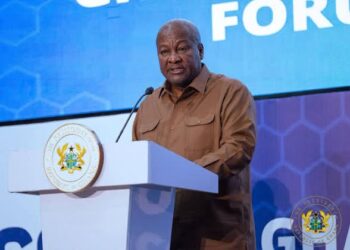
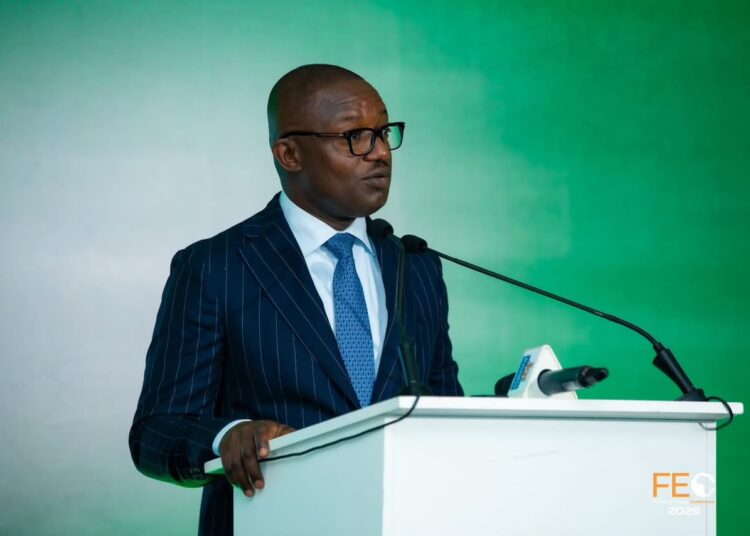
Minister for Energy and Green Transition Dr John Abdulai Jinapor announced the development at the 2026 Local Content Conference and Exhibition in Takoradi on November 10, identifying ongoing engagements with companies including ENI, Vitol, Shell, Chevron, Petrobras and ExxonMobil as part of efforts to attract fresh capital into the upstream petroleum sector.
The announcement signals a renewed effort to expand Ghana’s exploration portfolio after years of declining production and reduced investment activity. However, the minister was careful to distinguish between securing petroleum agreements and achieving the actual results expected from them.
He said the country’s performance should ultimately be judged by drilling activity, discoveries and the approval of projects for development, rather than the number of agreements signed.
“Our success will be measured by the number of wells that we drill, the discoveries that we make, and the development sanction to create jobs.”
Minister for Energy and Green Transition, Dr John Abdulai Jinapor
That distinction is important for an industry in which investment announcements do not automatically translate into additional barrels, employment or government revenue.
An agreement can establish the conditions for exploration, but its economic value depends on whether companies commit capital, undertake drilling, establish commercially viable discoveries and proceed with development.
Government Reconsiders The Terms Of Investment
Alongside the negotiations, Jinapor disclosed that government is reviewing the Petroleum Exploration and Production Act, 2016 (Act 919), to make Ghana more attractive to investors.
The legislation provides the framework for petroleum exploration and production, including the rights and obligations associated with upstream operations. A review could therefore influence the commercial conditions under which companies assess new opportunities in Ghana.
The minister’s remarks suggest that government is prepared to reconsider aspects of the investment framework rather than rely exclusively on the country’s geological prospects to attract companies.
He argued that Ghana must be flexible when negotiating its share of petroleum returns, particularly where a lower percentage of a larger commercial opportunity could generate more revenue than a higher percentage of a much smaller investment.
“I prefer to have 10% of $1 billion,” he said, explaining the thinking behind the government’s approach to negotiations.
The argument reflects a wider policy question confronting petroleum-producing countries: how to balance state revenue and ownership interests against the need to provide investors with sufficient incentives to undertake expensive and uncertain exploration.
However, flexibility in negotiations also creates a responsibility to demonstrate that the terms offered produce measurable national benefits.
A more attractive fiscal arrangement is not automatically a better deal for Ghana if it results in limited investment, weak domestic participation or inadequate public returns.
The proposed review of Act 919 will therefore be important not only for attracting capital but also for maintaining a framework that protects the country’s long-term interests.
Agreements Must Translate Into Drilling
Ghana’s challenge is not simply to attract companies willing to discuss prospective acreage. It must secure commitments that move projects through exploration and development.
Jinapor’s emphasis on wells, discoveries and development sanctions points to the difference between investment interest and actual petroleum activity.

Exploration requires companies to commit substantial resources before they know whether a commercially recoverable discovery exists. Even after a discovery, additional appraisal work may be needed to establish its size, production potential and commercial viability.
Development approval is another important stage. It indicates that a project has progressed beyond identifying hydrocarbons and is moving towards the infrastructure and investment required for production.
This is why the government’s proposed agreements will need to be assessed against their work programmes, exploration commitments and timelines.
The number of agreements alone will provide only a limited indication of whether Ghana’s upstream recovery is gaining momentum.
The minister acknowledged that the country has an opportunity to attract fresh exploration capital, commercialise stranded discoveries, strengthen domestic gas supply and create a new generation of Ghanaian petroleum companies.
These objectives connect upstream investment to the wider economy. More exploration could support demand for local engineering, logistics, fabrication, maintenance and technical services, while additional gas resources could strengthen the country’s domestic energy supply.
But the scale of these benefits will depend on whether new investment creates opportunities for Ghanaian firms rather than concentrating the most valuable contracts and technical capabilities among international operators.
Local Content Must Remain Part Of The Bargain
The renewed investment push also raises questions about how Ghanaian companies will participate in the next phase of petroleum development.
Jinapor stressed that local businesses must not be left behind as government negotiates with international operators. His position was that local content should not be treated solely as a mechanism for increasing the proportion of contracts awarded to domestic firms.

He linked local participation to the public’s sense of ownership of petroleum resources and the stability of the industry.
“If the people feel part of the resource, then they see that the resource is beneficial,” he said.
That argument places local content within the broader debate about the social and economic legitimacy of petroleum production. Where communities and domestic businesses see little benefit from resource extraction, the industry can face resentment even when production and investment are increasing.
For Ghana, the challenge is to ensure that the expected agreements support genuine capacity development. Domestic companies need opportunities to build technical expertise, improve their competitiveness and participate in increasingly complex petroleum operations.
The minister also pointed to government’s decision to direct petroleum revenues towards the Big Push programme as an approach intended to make the use of resource income more visible to citizens.
The broader objective is to connect investment in the upstream sector to benefits beyond the petroleum industry.
The Measure Of Success Will Be Implementation
Ghana’s ambition to secure at least six new petroleum agreements by early 2027 could broaden the country’s exploration pipeline and improve investor interest.
Yet the more difficult task will begin after the agreements are signed. Government will need to monitor whether companies meet their exploration obligations, whether drilling produces commercially viable discoveries and whether projects progress towards development.
The review of Act 919 will also need to strike a careful balance between competitiveness and public interest. Attracting investment is important, but the terms must preserve the country’s ability to secure meaningful revenue and domestic economic benefits.

Jinapor’s announcement therefore represents an investment ambition rather than a guarantee of increased production.
Ghana’s upstream prospects will ultimately depend on whether negotiations produce sustained exploration activity and projects capable of delivering jobs, revenue and stronger domestic participation.
For the government, the next milestone is not merely the signing ceremony. It is evidence that the agreements are producing the drilling, discoveries and development decisions that the country needs.
READ ALSO: Minority Describes Government’s New Economy As A “Scam”