Dr. Catherine Gegout, Associate Professor of International Relations at the University of Nottingham, has described the proposed move towards Canada becoming the European Union’s first associate member as a significant development for multilateralism amid growing global power competition.
In comments to The Vaultz News, Dr. Catherine Gegout, Associate Professor of International Relations at the University of Nottingham, described the development as significant not only for Canada and Europe but for the wider international system.
“This is an important development for the EU, Canada, and multilateralism in times of power politics, and American, Chinese and Russian unilateralism. Other states such as Australia, New Zealand and Japan which already have trade agreements with the EU are also likely to enhance their cooperation with the EU.”
Catherine Gegout
The proposal is notable because associate membership is not an existing status under the EU treaties. European Commission officials have acknowledged that the concept still needs to be developed, with discussions expected to continue between EU member states and Canada ahead of the EU-Canada summit in Montreal at the end of October.

A Commission briefing on September 18 described the summit as the first major opportunity for both sides to discuss the parameters of the proposed relationship and determine how the idea could be taken forward. That leaves considerable scope for negotiation over what associate membership would actually mean.
Gegout opined that the EU could draw on the different arrangements it has developed with countries around the world. Among the possibilities, she identified Canadian participation in EU Council meetings, deeper defence cooperation, including potential participation in the Permanent Structured Cooperation framework, and Canadian troops taking part in EU security missions.
The relationship could also extend well beyond defence. Gegout pointed to cooperation on critical minerals, artificial intelligence, energy security, space and payments, as well as discussions over Canadian participation in the EU’s Erasmus+ and Horizon programmes.
The EU and Canada already have a substantial economic relationship through the Comprehensive Economic and Trade Agreement, or CETA, which has been provisionally applied since 2017 but has not yet been fully ratified by every EU member state. Canada’s government describes the EU as its second-largest trading partner for goods and services, with bilateral trade reaching C$178.6 billion in 2025.
The proposed new relationship would therefore build on existing structures rather than begin from scratch. In March, Canada and the EU also launched negotiations for a digital trade agreement, while both sides have continued work on regulatory cooperation and trade diversification.
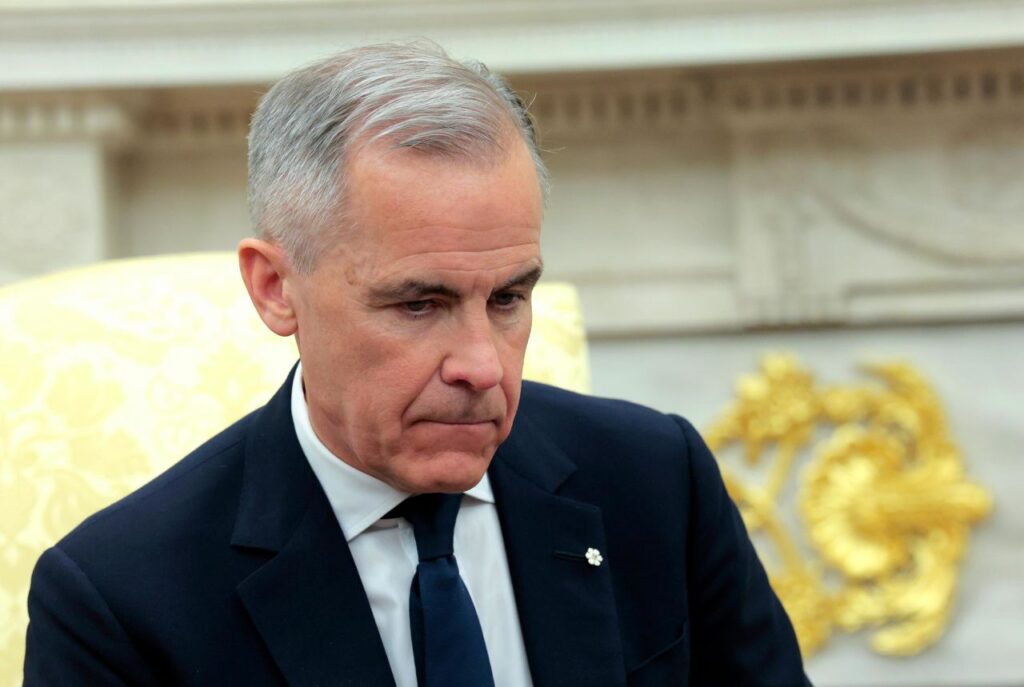
For Canadian Prime Minister Mark Carney, the strategic context is particularly important. His government has sought to reduce Canada’s exposure to external economic pressure at a time when relations with the United States have become more difficult. U.S. President Donald Trump has imposed tariffs on Canadian goods and has repeatedly raised the possibility of Canada becoming the 51st U.S. state, while the proposed Canada-EU relationship has drawn his criticism.
Trump called the EU proposal “laughable” and said that if he considered an agreement between Canada and Europe a hostile act, the United States could impose “very heavy tariffs” on Europe or restrict trade.
Changing Canada’s Economic Orientation To Take Time
Gegout argued that the uncertainty surrounding U.S. policy makes diversification increasingly important, although she acknowledged that changing Canada’s economic orientation cannot happen quickly.
“In 2026, six per cent of Canada’s exports of goods and services go to the EU, and ten per cent of its imports come from the EU. Changing this will take time, but change is essential…”
Catherine Gegout
Official Canadian trade data illustrate the scale of the challenge. The United States accounted for 72% of Canada’s goods exports and 53% of its services exports in 2026 data cited by Global Affairs Canada.
That level of integration means an expanded relationship with Europe would not rapidly replace the United States as Canada’s principal economic partner. Instead, the proposed EU arrangement could provide an additional market and strategic network over time.
The political dimension may prove just as complicated as the economic one. Gegout stated that the main challenge to establishing a durable associate membership model would be political, pointing to the possibility that changes in European governments could affect future agreements.
She specifically cited the prospect of the Rassemblement National coming to power in France in 2027 as a potential obstacle to deeper cooperation with Canada.
“The main challenge is political. Extreme-right governments could be a threat to any further trade and/or political agreements between the EU and other states such as Canada. The Rassemblement National could be in power in France in 2027, and it is unlikely it would accept further cooperation with Canada.”
Catherine Gegout
The EU has already indicated that it is prepared to explore an unprecedented model. Canada, meanwhile, has signalled that it is willing to pursue it. The details of that relationship and its implications for Canada’s ties with both Europe and the United States remain to be negotiated.
The October summit in Montreal is expected to provide an important test of whether the political momentum behind the proposal can be translated into concrete arrangements.
READ ALSO: Waltz Condemns Walkout During Netanyahu’s UNGA Speech