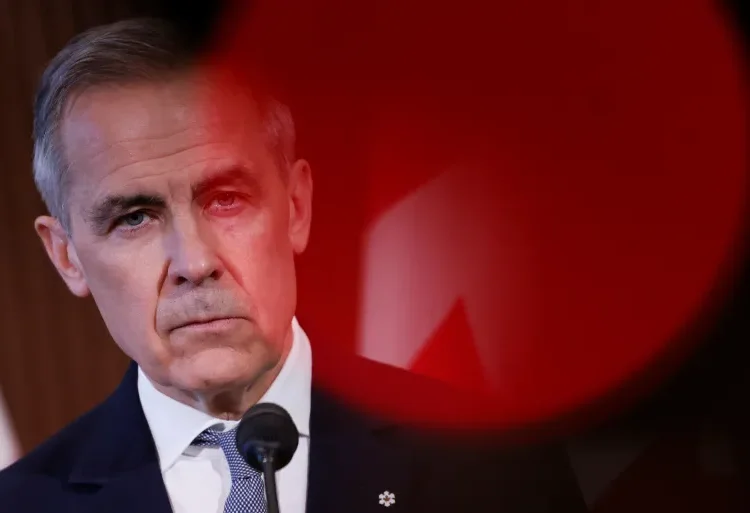
Canadian Prime Minister, Mark Carney has embraced the prospect of Canada becoming the European Union’s first associate member, saying that deeper ties with Europe would strengthen his country’s sovereignty and reduce its vulnerability to external economic and geopolitical pressure.
Addressing the European Parliament, Carney welcomed European Commission President Ursula von der Leyen’s proposal, which was unveiled a day earlier as Canada seeks to deepen its relationship with Europe amid deteriorating ties with the United States.
Referring to von der Leyen’s proposal for associate membership, Carney said, “Canada welcomes this ambition.” The proposed status does not currently exist within the EU treaties and its precise structure remains to be negotiated.
Carney nevertheless signalled strong support for exploring a new form of partnership between Canada and the bloc. “An alliance for the future is a unique, positive approach that we will define together,” he said.
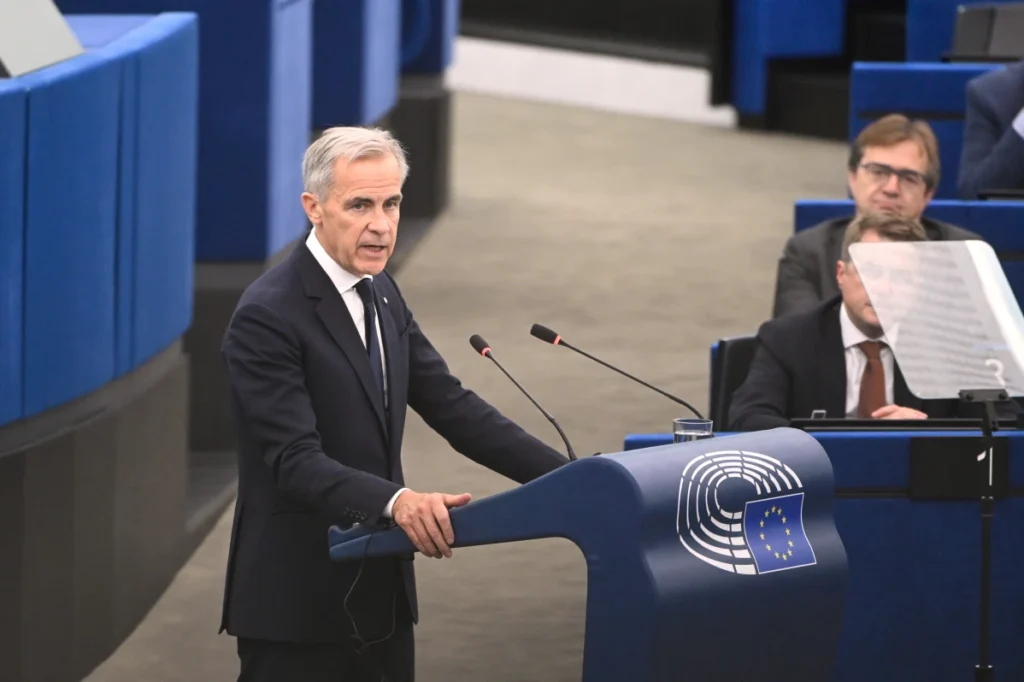
Carney outlined a broad vision for the proposed Canada-EU relationship, calling for deeper integration across trade, defence, critical minerals, artificial intelligence, energy, space, research and financial services.
He said that greater cooperation in these areas would help Canada and Europe strengthen their strategic autonomy while reducing their exposure to economic and geopolitical disruptions. The Canadian Prime Minister specifically highlighted critical minerals as an area where closer cooperation could support both sides’ strategic interests.
He also pointed to potential cooperation in clean energy and technology, saying Canada could benefit from European leadership in clean energy technologies while both sides could pool technological resources. Among the areas he highlighted was the development of more secure broadband connections between Europe and Asia, taking advantage of Canada and Europe’s geographic positions.
Carney stated that the proposed partnership would ultimately be aimed at improving the resilience of both economies while delivering tangible benefits to their citizens. “Deepening and widening our relationship will strengthen our sovereignty and improve affordability, opportunity and security for our citizens,” he said.
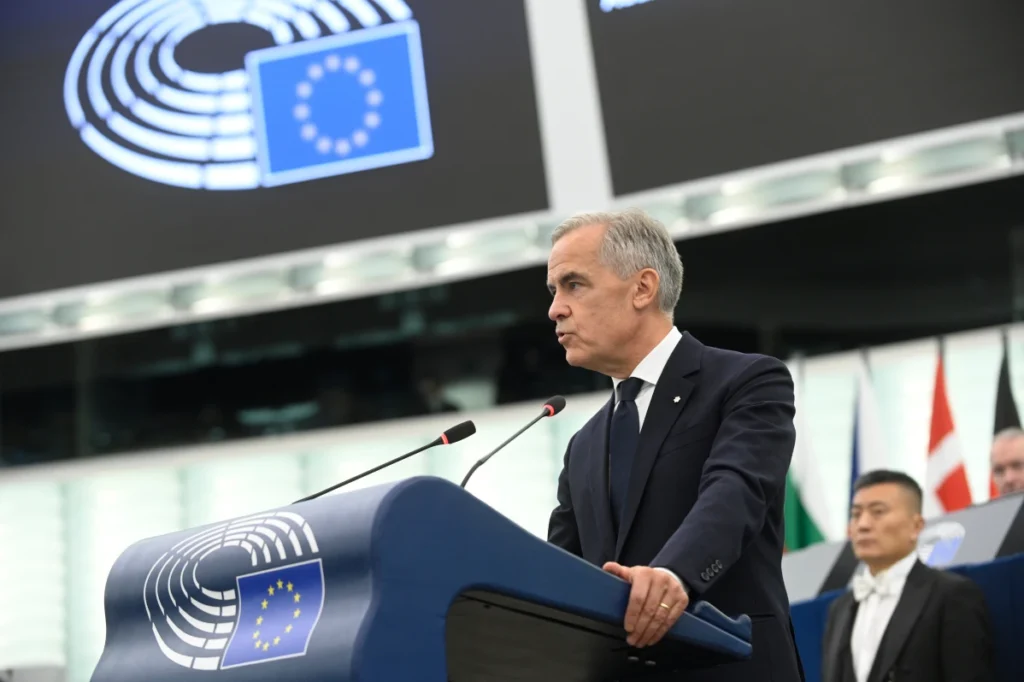
His address came as Canada continues to reassess its longstanding economic dependence on the United States.
For decades, the U.S. has been Canada’s dominant trading partner, with roughly 70% of Canadian exports destined for the American market. However, trade tensions have intensified under U.S. President Donald Trump, whose administration has imposed tariffs on Canadian goods and repeatedly raised the possibility of Canada becoming the 51st U.S. state.
The strained relationship with Washington was a recurring backdrop to Carney’s speech, even as he focused on the potential for stronger cooperation across the Atlantic.
Carney said that Canada’s proposed relationship with Europe was not intended to replace its existing international partnerships, but to give the country greater resilience and room to pursue its own interests.
Carney noted that today’ societies are being “battered by new storms” including climate change, “the erosion of democratic norms [and] the weaponisation of trade.”
Nodding to US President Donald Trump’s use of tariffs, Carney said, “Economic integration is now being weaponised, tariffs being used to exert pressure.” “Financial mechanisms have been used for coercion. Supply chains constitute weak points to be exploited,” he added.
Carney Rejects Idea Of A “Third Bloc”
Carney sought to clarify that the proposed Canada-EU alliance was not an attempt to establish another geopolitical power bloc. “I want to be precise about what I’m not proposing,” he said, before making clear that Canada was not seeking to create “a third bloc” designed to become “a great power rival only with better manners.”
Instead, Carney said that the proposed alliance should be built around resilience, cooperation and the protection of democratic institutions.
“We do not seek power to dominate others. On the contrary, we are pursuing resilience so that no one can control our open markets, impair our sovereignty, threaten our territorial integrity, or undermine our freedoms, our democracies, our rule of law.”
Mark Carney
Carney said that a stronger Canada-EU relationship could also provide a model for cooperation among other democratic countries. “A Canada-EU alliance would create a beacon for other democracies,” he said, describing freedom, solidarity and sustainability as principles that could define the partnership.
He concluded his address with a call for Canada and Europe to deepen their relationship and build a stronger transatlantic connection. “It is time to deepen our roots,” Carney said, calling for the partners to “grow a transatlantic forest under which our citizens can flourish as free people on free ground every single day.”
Carney’s endorsement gives political momentum to the EU’s proposal, although the practical details of associate membership remain to be negotiated. Canada and EU leaders are expected to discuss the proposed relationship further at a Canada-EU summit in Montreal on October 29-30.
READ ALSO: Carney To Address European Parliament Amid EU Overture