The Chief Executive Officer of the Minerals Commission, Mr. Isaac Tandoh, has advocated for the urgent creation of a Pan-African Critical Minerals Charter to establish standardized regulatory frameworks across the continent.
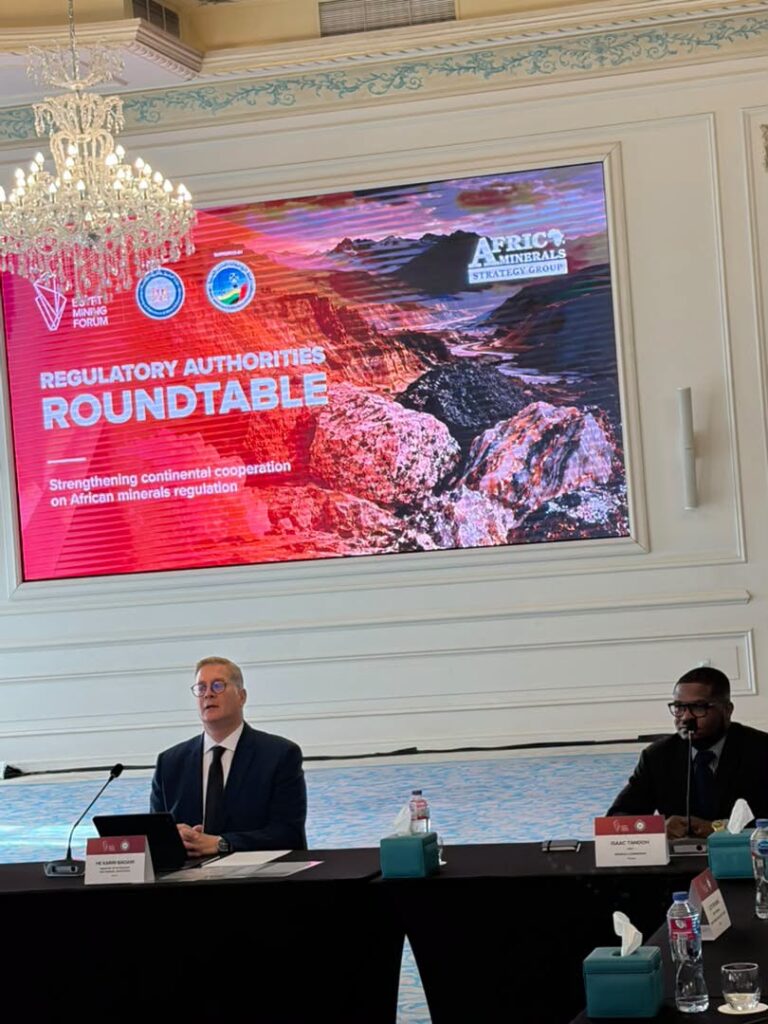
Speaking at the Regulatory Authorities Roundtable during the Egypt Mining Forum in Cairo, Mr. Tandoh asserted that African nations must discard fragmented policies in favor of unified resource strategies.
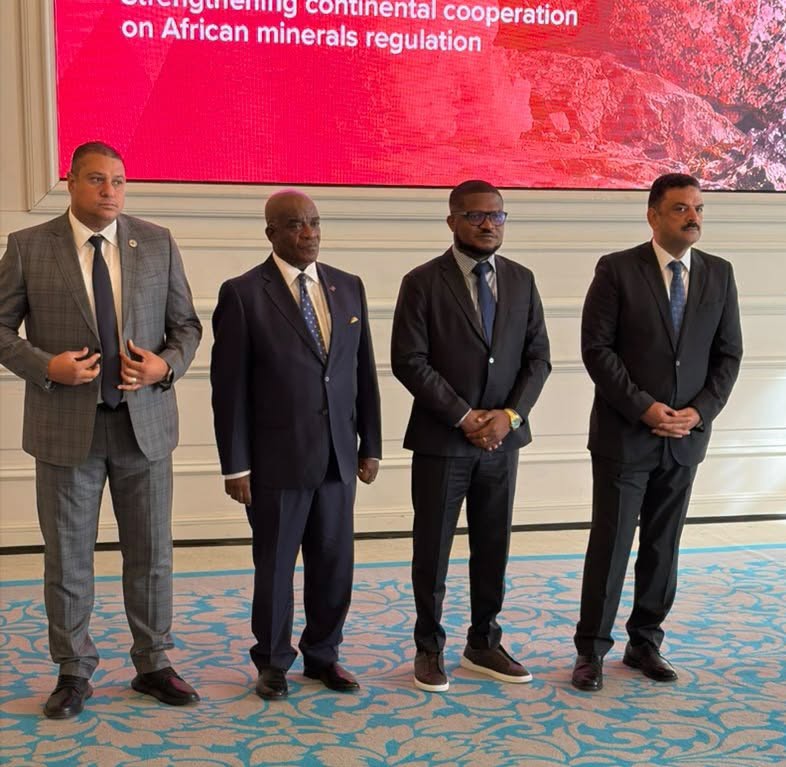
The high-level gathering, convened by the Africa Minerals Strategy Group under the theme “Strengthening Continental Cooperation on African Minerals Regulation,” served as a platform for regulators to address cross-border resource governance.
“Africa’s minerals are critical not because global markets say so, but because they hold the key to our continent’s economic sovereignty and industrial future. If we define our resource value on our own terms, mining becomes a true driver of broad-based domestic growth; if we fail to unite, we risk remaining merely a raw-material warehouse for other nations’ green energy transitions.”
Minerals Commission,
While expanding on the initiative, the Minerals Commission Chief emphasized that regulatory harmonization remains essential to safeguard the continent’s vast mineral wealth from external exploitation.
He noted that operating under isolated national frameworks exposes individual countries to aggressive tax competition and exploitative legal loopholes.
By standardizing mineral policies, African states can establish a formidable collective bargaining position, ensuring that transnational extraction agreements prioritize domestic value addition, community development, and equitable state revenue share.
Overcoming Structural Vulnerabilities and Foreign Exploitation
The push for a continental mining charter stems from long-standing structural vulnerabilities that have historically plagued Africa’s resource sectors.
For decades, multinational extraction entities have capitalized on disparate national legal systems, pitting neighbor against neighbor in a high-stakes competition for foreign direct investment.
This dynamic frequently triggers a detrimental “race to the bottom,” where individual governments undercut one another through excessive tax concessions, royalty waivers, and relaxed environmental standards.

Without a cohesive regulatory umbrella, individual African nations lack the leverage to enforce strict local content mandates or ensure that processing facilities are built within their borders.
Consequently, vast volumes of unrefined critical minerals essential for global technologies leave the continent with minimal economic capture.
A standardized Pan-African charter effectively eliminates these regulatory loopholes, closing arbitrations that foreign investors exploit and creating a predictable, transparent investment landscape across all signatory states.
Ghana’s Domestic Reforms as a Framework for Continental Alignment
To model the core objectives of the proposed charter, Mr. Tandoh highlighted Ghana’s ongoing regulatory overhaul aimed at maximizing state returns and fostering sustainable operational practices.
The Minerals Commission has moved decisively to discontinue automatic contract renewals and unmonitored privileges for extraction firms operating within its jurisdiction.
Instead, the regulatory body is tying mining rights strictly to verifiable commitments, including targeted local job creation, mandatory technology transfer, and direct reinvestment into host communities.

These national interventions demonstrate how regulatory vigilance can shift the paradigm from mere raw material export toward comprehensive value addition.
Ghana’s regulatory framework prioritizes environmental compliance and strict oversight, establishing a practical model for peer African nations seeking to fortify their own resource governance.
Aligning these national-level reforms across borders ensures that extraction activities directly fund local infrastructure and support long-term economic diversification.
Charting the Path Toward Economic Sovereignty and Industrialization
The necessity of continental regulatory unity becomes even more critical as global demand for key energy transition minerals continues to surge.
African jurisdictions hold significant reserves of lithium, cobalt, nickel, manganese, and rare earth elements, placing the region at the heart of the global green technology supply chain.
However, without synchronized regional policies, the continent risks repeating the historical patterns of the traditional extractive sector, where wealth accumulation occurs largely in industrial economies overseas while local communities bear the environmental burdens.
A unified charter equips African governments with the collective authority to mandate local processing, refining, and industrial manufacturing prior to export.
Delegates at the Egypt Mining Forum recognized that multilateral cooperation is no longer optional, but a prerequisite for economic survival.
By securing a unified front, African regulatory authorities aim to transform raw mineral wealth into durable domestic capital, infrastructure, and regional industrial powerhouses.
READ ALSO: 10-Man Aduana End Five-Year Wait for Away Win Against Kotoko