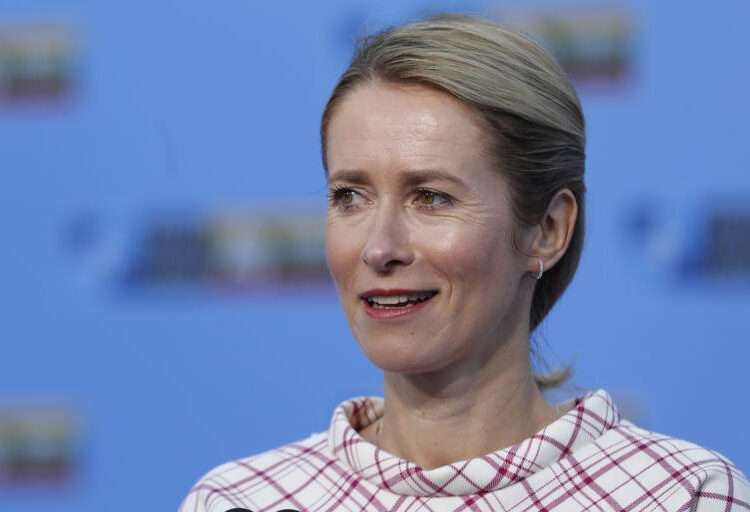
European Union Foreign policy Chief, Kaja Kallas has called on member states to accelerate defence investment and strengthen military capabilities, warning that Europe must prepare more effectively for growing security threats from Russia.
Speaking after a meeting of EU Defence Ministers in Brussels, Kallas stressed the need for a faster and more coordinated approach to European defence, highlighting Russia’s continuing attacks, alleged acts of sabotage and violations of European airspace. “Europe needs to rearm more quickly and more effectively to meet our target of 2030,” Kallas said, emphasising the need for significant changes in the bloc’s defence investment and industrial capacity. “Europe needs decisive change in the scale and pace of defence investment, capability development, innovation and industrial capacity,” she added.
The meeting focused on strengthening Europe’s defence readiness, supporting Ukraine and addressing the growing threat posed by Russia’s military and non-military activities.
Kallas said that the bloc needed to address existing gaps in its defence capabilities while accelerating investment in military equipment, innovation and industrial production to meet its 2030 readiness target.

She also called for greater support for Ukraine, particularly through increased missile production and the provision of air defence systems to protect the country against Russian attacks.
Kallas urged European countries with available air defence equipment to consider supplying Ukraine with the systems it urgently needs, while working to replenish their own stocks through subsequent deliveries.
The EU Foreign Policy Chief also highlighted the need to strengthen cooperation among member states to address Europe’s defence requirements more efficiently.
Russia’s continuing activities across Europe featured prominently in the discussions, with Kallas citing what she described as sustained acts of sabotage and airspace violations.
She said that the EU was examining additional measures to respond to such incidents, particularly those that fall below the threshold of an armed attack but nevertheless threaten European security.
The discussions included a proposed emergency security protocol intended to improve coordination among EU institutions and member states when responding to so-called grey zone attacks.
Kallas said that the proposal remained at an early stage, with further discussions required to determine its precise scope and implementation.
The Ministers also discussed developments in the Strait of Hormuz and the wider Middle East, reflecting the range of security concerns facing the bloc.
EU Weighs Emergency Protocol for Russian ‘Grey Zone’ Attacks
EU Defence Ministers have begun discussions on a proposed emergency security protocol designed to strengthen the bloc’s response to threats that fall below the threshold of armed aggression.
Kallas said that the proposed mechanism would address security incidents that existing EU and NATO arrangements may not adequately cover, particularly sabotage and other forms of hybrid activity.
She described the discussions as an initial exchange of views, noting that member states had yet to reach agreement on the proposal. “It was the first discussion on it, very initial,” she said, adding that further talks would be necessary to establish how the mechanism could operate.
Some Ministers supported the creation of a mechanism to address threats that fall below the threshold for invoking Article 42.7 of the EU treaties, which provides for mutual assistance when a member state suffers armed aggression.
However, Kallas said that several Ministers had emphasised the importance of ensuring that any new arrangement complemented NATO’s existing security framework rather than duplicating it.
Kallas said she had been in contact with NATO Secretary-General Mark Rutte to ensure that the proposed mechanism would not create overlapping responsibilities between the two organisations.
She explained that NATO’s Article 4 provides a framework for consultations when a member believes its security, territorial integrity or political independence is threatened, but does not prescribe specific military action.
Article 5, by contrast, establishes NATO’s collective defence commitment in the event of an armed attack against a member state.
The proposed EU protocol would focus on incidents that fall below the threshold of an armed attack, allowing member states to coordinate their responses to emerging threats before they escalate.
Kallas said the initiative was intended to identify which tools the EU could deploy in response to such incidents while maintaining close cooperation with NATO.
Beyond the proposed protocol, Kallas said that the EU was continuing to examine measures to strengthen its capacity to respond to such threats while accelerating investment in defence capabilities.
She also addressed Russia’s war in Ukraine, stressing the need for continued military assistance and greater pressure on Moscow.
Kallas called on Russia to demonstrate its commitment to peace by ending attacks on civilians and engaging directly with Ukraine in negotiations.
She also expressed concern about conditions in the Russian-occupied Ukrainian city of Oleshky, saying the situation illustrated the difficulties facing people living in occupied territories. She said the EU was working to facilitate humanitarian assistance and strengthen Ukraine’s ability to defend its population.
READ ALSO: A Rocha Ghana Disputes Mahama’s Position On Galamsey Measures, Calls For Review