French President, Emmanuel Macron and Pope Leo XIV have called on Europeans to defend unity, democracy and multilateralism, warning against rising nationalism, hostility and growing international divisions.
Speaking in Metz during the Pope’s visit to France, Macron urged Europe to resist what he described as a “return of nationalisms” and rediscover the courage demonstrated by the continent’s founding fathers.
He said that Europe must continue to stand for peace, independence and democracy, cautioning against a retreat into isolationism and growing hostility towards other nations.
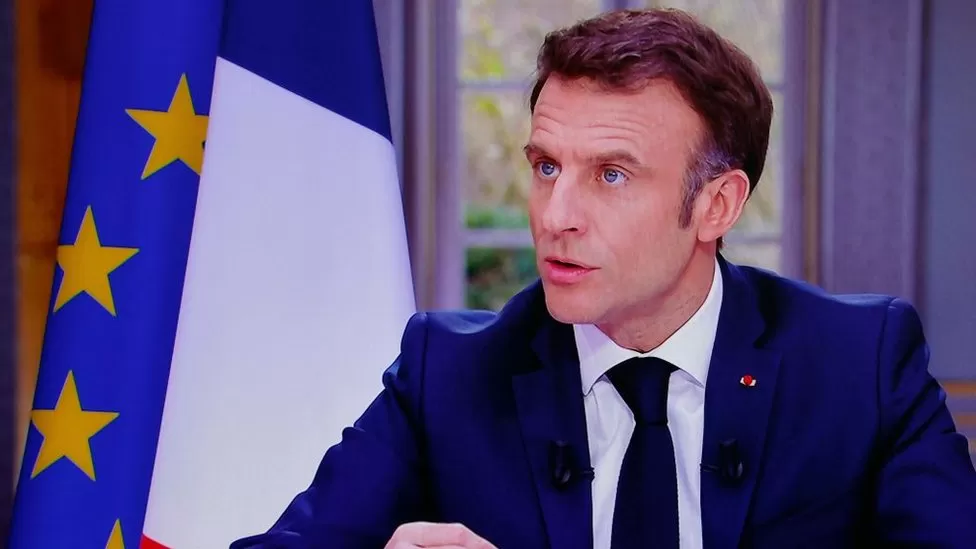
The French President’s remarks came as Pope Leo XIV delivered an address highlighting the importance of multilateralism, dialogue and respect for the rule of law in addressing the challenges facing Europe and the wider international community.
The Pontiff described multilateralism as “the best defence against the desire for dominance,” warning that the world was increasingly being shaped by conflict, mistrust and deteriorating relations between individuals and nations.
He lamented what he called an “increasingly uncivilised” international climate, citing war, hunger and growing divisions as evidence of the challenges confronting humanity.
Leo also criticised the “lies and deception” he said were contributing to rising distrust between citizens and governments, arguing that Europe had a responsibility to demonstrate how disagreements could be resolved through dialogue rather than confrontation.

“Europe can break this cycle by upholding the principle of respect for others, which it has successfully cultivated and maintained, having demonstrably shown over the past eighty years that it is possible to express divergent opinions, demands, and interests through dialogue rather than confrontation.”
Pope Leo XIV
Delivering his address in French in the presence of Macron, the Pope urged European leaders to demonstrate greater commitment to negotiations and peaceful conflict resolution.
He called for patience in diplomatic engagements and encouraged parties involved in disputes to demonstrate the willingness to compromise when necessary to achieve lasting peace. “It is necessary to engage in patient dialogue, to show courage in negotiations, and to be willing to compromise on certain positions for the greater good of peace,” Leo said.
Although the Pope did not explicitly mention Russia’s war against Ukraine, he condemned what he described as a new “pointless massacre” on European soil, underscoring the continued threat posed by armed conflict to the continent.
His remarks came amid broader concerns about international instability and the challenges facing Europe as it seeks to preserve peace and strengthen cooperation among its members.
The Pontiff also called on Europeans to recognise the continent’s Christian heritage, describing Europe as more than a geographical entity but a cultural and historical reality shaped by its traditions. “We cannot speak of Europe, then, without mentioning Christianity,” he said, arguing that the continent’s religious and cultural foundations could remain relevant as Europeans work towards shaping their collective future.
He added that Europe had made significant progress when it drew on the strengths of its past while remaining open to new ideas and relationships. Europe, he said, “has flourished and progressed when it was able to draw on the best aspects of its past and reinvent them in new and creative ways through encounter with others.”
The visit also provided an opportunity to highlight Europe’s historical experience of conflict and reconciliation, with Metz selected as the venue for the Pope’s address because of its symbolic significance.
The Élysée Palace said today’s programme was intended to highlight the “European and cross-border dimension” of Lorraine, a region whose history reflects both the divisions and shared experiences of neighbouring European countries.
Metz, located in northeastern France near the German border, is the birthplace of Robert Schuman, one of the principal architects of European integration. Schuman’s contribution to the development of European cooperation has made the city an important symbol of the continent’s post-war efforts to establish lasting peace.
The city’s history also reflects the devastating consequences of European conflict. Metz changed hands several times between France and Germany and was annexed by Nazi Germany in 1940 following France’s defeat and occupation during the Second World War.
Its selection as the venue for the Pope’s address therefore carried particular significance, linking Europe’s history of division with its subsequent pursuit of cooperation and integration.
EU leaders and Heads of European institutions were invited to attend the event, although only a limited number joined Macron, including representatives from Monaco, Andorra and Luxembourg.
The gathering brought together religious and political perspectives on Europe’s future, with both Macron and Leo emphasising the importance of preserving democratic values, peaceful coexistence and cooperation.
Their remarks also highlighted the continuing relevance of Europe’s post-war commitment to integration at a time when nationalism, geopolitical tensions and international conflicts are placing renewed pressure on established systems of cooperation.
As Europe confronts these challenges, both leaders stressed the importance of maintaining a shared commitment to peace, dialogue and democratic principles.
Pope Calls For Dialogue, Compromise To Preserve Peace In Europe
Pope Leo XIV urged European leaders to prioritise diplomatic engagement and compromise, warning that growing conflict and mistrust threaten the continent’s commitment to peaceful coexistence.
Addressing an audience in Metz, France, the Pontiff said that Europe could help counter international divisions by upholding the rule of law, respecting differences and resolving disputes through dialogue.
He called for patient negotiations and a willingness to make concessions in pursuit of peace, while condemning what he described as a “pointless massacre” on European soil.
Although he did not directly name Russia or its war against Ukraine, his remarks highlighted the continuing consequences of conflict in Europe and the need for diplomatic efforts to prevent further bloodshed.
READ ALSO: A Rocha Ghana Disputes Mahama’s Position On Galamsey Measures, Calls For Review