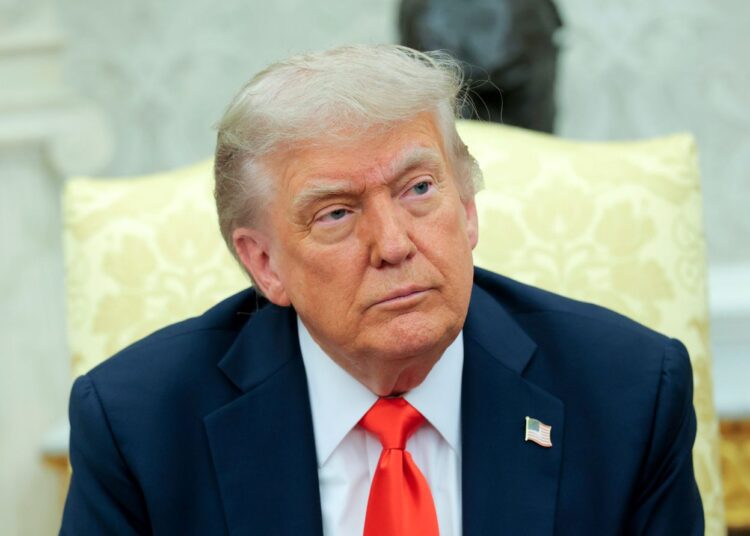
The Trump administration has finalised new fuel economy standards that ease requirements for automakers to improve the efficiency of gasoline-powered cars and light trucks, reversing key regulations introduced under former President Joe Biden.
The Department of Transportation (DOT) announced the revised Corporate Average Fuel Economy (CAFE) standards, reducing the efficiency targets automakers must meet by 2031 and giving manufacturers greater flexibility to produce conventional vehicles.
Under the revised standards, the National Highway Traffic Safety Administration (NHTSA) estimates that the combined fleetwide average fuel economy for passenger cars and light trucks will reach approximately 34.9 miles per gallon by the 2031 model year.
This represents an improvement on the 30.1 miles per gallon recorded for the 2024 model year but is substantially lower than the 50.4 miles per gallon projected for 2031 under the Biden administration’s previous regulations.
The revised requirements fulfil President Donald Trump’s pledge to reverse policies he has criticised as an attempt to force automakers to manufacture more electric vehicles.

Transportation Secretary, Sean Duffy said that the changes would end what the administration described as an unnecessary regulatory burden on manufacturers and consumers. “Thanks to President Trump’s leadership, we have finally ended the illegal mandate that forced automakers to produce more expensive electric vehicles that American families didn’t want,” Duffy said in a statement.
The administration maintains that relaxing the standards will make vehicles more affordable, expand consumer choice and give manufacturers greater flexibility to respond to market demand.
The Transport Department has projected that the revised rules will reduce the average cost of a new vehicle by approximately $1,300 and generate substantial savings for American households.
The announcement comes amid heightened energy market uncertainty following the ongoing war involving Iran and disruptions to global oil supplies. Trump’s rejection of an Iranian proposal to reopen the Strait of Hormuz has added to concerns over fuel prices and energy security.
The administration has argued that its revised fuel economy standards will help address consumer affordability while maintaining improvements in vehicle efficiency over time.
The CAFE programme, established in the 1970s following the energy crisis, requires automakers to meet fuel economy targets across their vehicle fleets. The standards have been progressively tightened over the decades to encourage improvements in fuel efficiency and reduce dependence on petroleum.
The Biden administration’s 2024 regulations sought to accelerate those improvements, setting targets that NHTSA estimated would produce an average fleetwide fuel economy of 50.4 miles per gallon by 2031.
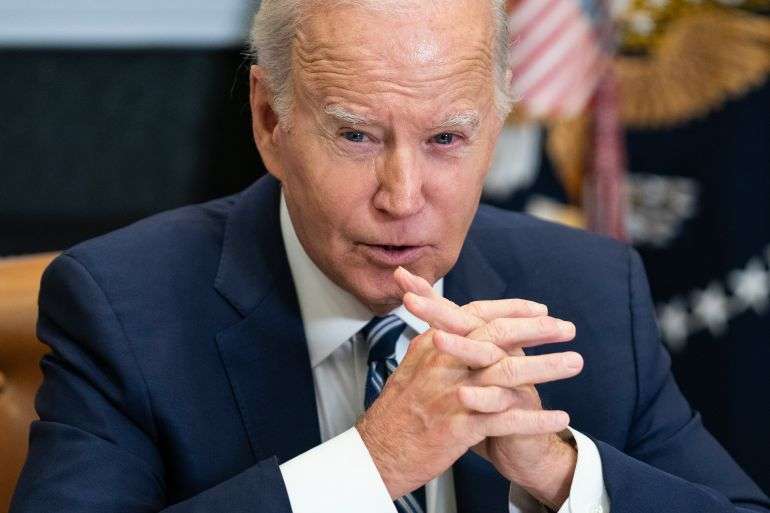
The Trump administration has argued that those requirements were too stringent and effectively pressured manufacturers to increase electric vehicle production beyond what consumers were willing to purchase.
The Alliance for Automotive Innovation, which represents major domestic and international automakers, welcomed the revised regulations, saying they better reflected market conditions and the industry’s requirements. “NHTSA made the right call to better align fuel economy standards with the law and current market conditions,” John Bozzella, the organisation’s President and Chief Executive, said.
He argued that the previous standards effectively required a transition towards electric vehicles that did not adequately reflect consumer demand or prevailing market conditions.
Bozzella described the revised regulations as an appropriate adjustment, adding that the industry needed long-term regulatory stability to maintain competitiveness and preserve consumer choice.
“What the industry needs is long-term regulatory stability that includes balanced, durable and achievable fuel economy standards that continue to reduce emissions and improve fuel economy.
“This is the formula for preserving consumer vehicle choice and keeping the U.S. auto industry globally competitive.”
John Bozzella
The Department Of Transport has maintained that the new rules will reduce annual oil consumption by approximately 1.3 billion barrels in 2050 compared with consumption in 2024.
However, environmental advocates have challenged the broader implications of the policy, arguing that less stringent standards could result in higher fuel consumption and increased emissions compared with the previous regulations.
The Biden-era standards had been projected to save approximately 14 billion gallons of gasoline by 2050, with NHTSA estimating that motorists would recover the higher upfront costs of fuel-efficient vehicles through long-term savings at the pump.
The revised requirements have raised concerns that motorists could face greater fuel expenses over the lifetimes of their vehicles, particularly if they purchase less efficient models.
The transportation sector already accounts for a substantial share of US greenhouse gas emissions. According to the most recent estimate cited in the draft, it was responsible for approximately 28 per cent of the country’s emissions in 2022.
Environmental Groups Vow To Fight Trump’s Fuel Economy Rollback
Environmental organisations have criticised the Trump administration’s decision to relax fuel economy standards, warning that the revised regulations could increase vehicle emissions and undermine efforts to improve air quality across the United States.
The Center for Biological Diversity’s Safe Climate Transport Campaign said the administration’s decision overlooked the potential of existing clean technologies and the environmental benefits of more fuel-efficient vehicles.
Dan Becker, the campaign’s Director, criticised the revised standards, saying the decision “ignores the feasibility of clean technology and the millions of fuel-efficient cars already on the road.”
The Sierra Club also condemned the changes, warning that less stringent fuel economy requirements could increase gasoline consumption and expose communities to higher levels of air pollution.
Katherine García, Director of the organisation’s Clean Transportation for All campaign, pledged to challenge the administration’s decision. “Less fuel-efficient cars mean more gas burned, spending more at the pump, and dirtier air in our communities,” García said.
Environmental groups have also highlighted projections suggesting that the revised standards could result in additional carbon dioxide emissions and higher levels of soot and smog-forming pollutants compared with the Biden-era requirements.
READ ALSO: Sánchez Rules Out Moroccan Role In Ceuta Migrant Surge