The Labour party is facing growing pressure over the future of the state pension triple lock as Prime Minister Andy Burnham considers how to finance plans for a new National Care Service, with senior party figures declining to rule out changes to the long-standing pension guarantee.
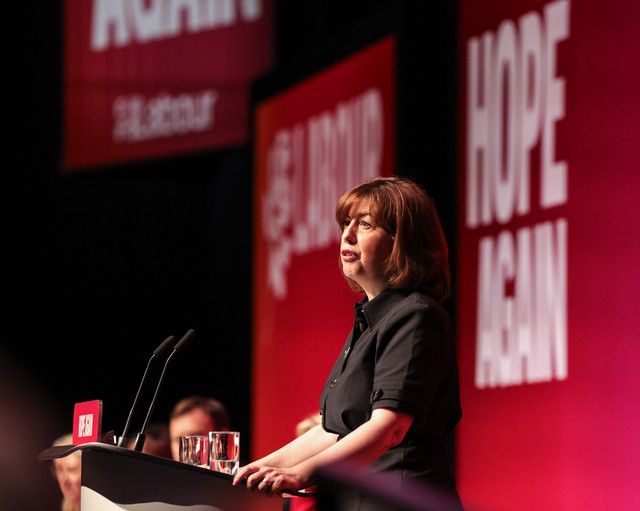
Labour’s Deputy Leader and Education Secretary Lucy Powell reaffirmed the party’s formal commitment to the triple lock but stopped short of confirming whether Burnham and Chancellor John Healey are considering changes to the mechanism as part of wider discussions about funding social care.
Speaking in an interview, Lucy Powell stressed that the triple lock remains Labour policy and pointed to its inclusion in the party’s 2024 manifesto.
“We are committed to the triple lock. It’s in our manifesto. The triple lock has has really delivered for pensioners, in this country, over the course of this Parliament.”
Lucy Powell
She added that pensioners could expect their incomes to continue rising during the current parliamentary term.
“I think we’re going to see the state pension rising by about £2,000-a-year significantly, and that’s really important, so pensioners watching your show today can know that their income is secure and will continue to rise over the course of this Parliament.”
Lucy Powell
However, Powell did not provide a direct assurance that the mechanism would remain untouched if the government ultimately decides that additional funding is required for its social care ambitions.
The triple lock determines the annual increase in the state pension by applying whichever is highest among inflation, average earnings growth or 2.5%. The mechanism was introduced under the Conservative-led government and has become a significant component of the UK’s pension policy.
Labour’s room for manoeuvre is constrained by the political importance of pensioners and the established perception of the triple lock as a safeguard for pension incomes. Any attempt to change the system would therefore carry consequences beyond the immediate question of public spending.
At the same time, social care has become an increasingly pressing policy challenge as demand for care services grows and questions persist over how the system can be placed on a more sustainable financial footing.
Powell acknowledged the scale of the challenge, arguing that resolving the social care crisis would require an honest discussion about the resources needed.
“I don’t know what Andy’s going to say about that today, but I know that what he’s talking about is this big conversation about solving these big problems, but being really honest with people that they they come at a cost.”
Lucy Powell
She added, “They do come at a cost. You can’t just solve the social care crisis without having the big conversations about how you’re going to do this.”
Social Care Funding Tests Labour’s Pension Promise
The concerns over the triple lock has been sharpened by the absence of a clear alternative funding mechanism for Burnham’s proposed National Care Service.
Labour has ststed that its social care proposals will form part of its next manifesto following a national consultation and consideration of recommendations from Baroness Louise Casey’s review of the sector.
Powell noted that the government is not yet at the stage of finalising the system and emphasised the need for a broader political discussion before decisions are made.
According to the Deputy Labour Leader, Burnham “wants to build consensus” around the future of social care.
Meanwhile, a leader of trade union Unite, Sharon Graham, strongly rejected the prospect of changing the pension guarantee to fund social care, arguing that pensioners should not be targeted to finance a system intended to provide universal care.
“Instead of going and trying to pick the pocket of pensioners, we need to move over to the other side of the equation and look at things like wealth taxes, way before we try to stop something like the triple lock.”
Sharon Graham
She maintained that Burnham himself had not proposed such a change during discussions with the union.
Moreover, Graham argued that the government needed to demonstrate that its policies continued to protect working-class people.
The Union Leader also framed social care as a universal service rather than a programme that should be financed by reducing the income security of pensioners.
She argued that pensioners should not bear the cost of establishing such a system.
READ ALSO: Malaysia Begins Repatriating Myanmar Nationals Despite Safety Concerns