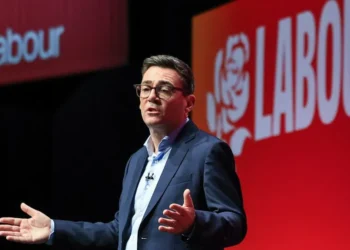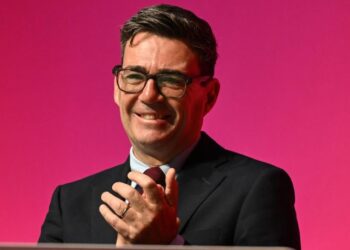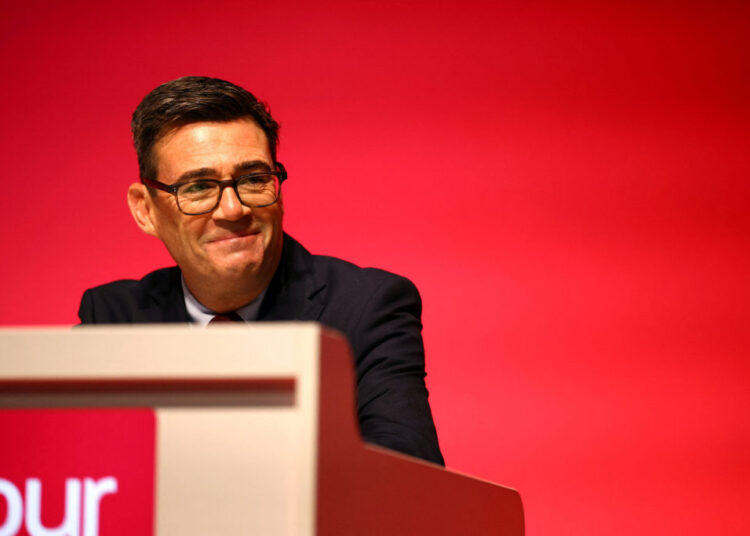
UK Prime Minister Andy Burnham is expected to signal a significant reset in Labour’s approach to Britain’s post-Brexit relationship with the European Union when he addresses the party conference in Liverpool for the first time as Prime Minister.
According to government officials, discussion inside government has moved from whether Labour should consider rejoining the EU to how such an ambition could be expressed in its next election manifesto.
The emerging discussion comes a decade after the 2016 Brexit referendum and as Burnham seeks to establish a distinct political direction for his government.
The Prime Minister has already warned of “drift and division” since Brexit and is expected to use his conference speech to argue that Britain needs a new direction.
Burnham has not formally committed Labour to rejoining the EU. When questioned about whether rejoining could appear in the party’s next manifesto during his recent visit to the United Nations in New York, he declined to rule out the possibility.
The issue has gained momentum as senior Labour figures increasingly discuss the limitations of the existing post-Brexit settlement and the possibility of rebuilding closer institutional and economic ties with the EU.
According to a senior minister, “there is a lot of momentum around rejoining again. The economic data is there and we are feeling more relaxed about talking about Brexit as being a failure.”
Another senior minister outlined the political calculation facing the government, noting that “If there was no political risk I think we would rejoin tomorrow, but we have to be mindful of Nigel Farage and revitalising Reform.”
“That said, if we want to grow the economy then we have to rejoin we all know that. From the discussions taking place, it is not ‘if’ but ‘how’ we do it. Do we put it directly as a pledge in the manifesto or do we use a more indirect form of words about having a debate? That is the conversation now.”
A Senior Minister
Moreover, Former Prime Minister Tony Blair has argued that Britain should develop a plan to rejoin a “reformed EU” within 10 years. The proposal has added to pressure within Labour for a longer-term European strategy, while also raising questions about whether Britain could or should seek the same membership terms it previously enjoyed.
Foreign Secretary Ed Miliband reinforced that argument in his Labour conference speech, telling delegates that Britain’s future lies in a “stronger, deeper partnership with the European Union.”
“This is our continent, and if there is one lesson that I have seen demonstrated to me again and again in this job, it is this: Europe is not just our geography, but so much more. It is how we pursue our values from climate to the Middle East. It’s how we pursue our interests from trade to defence.
“It’s where we build and protect our alliances, so it is not simply Britain acting alone, but Britain with others. And on economics, on defence, on security, I say to this conference: our future lies in a stronger, deeper partnership with the European Union.”
Ed Miliband
Miliband’s intervention does not amount to a formal Labour commitment to rejoin the EU, but it provides an indication of the broader direction of foreign policy under Burnham.
Brexit Returns to Centre Stage
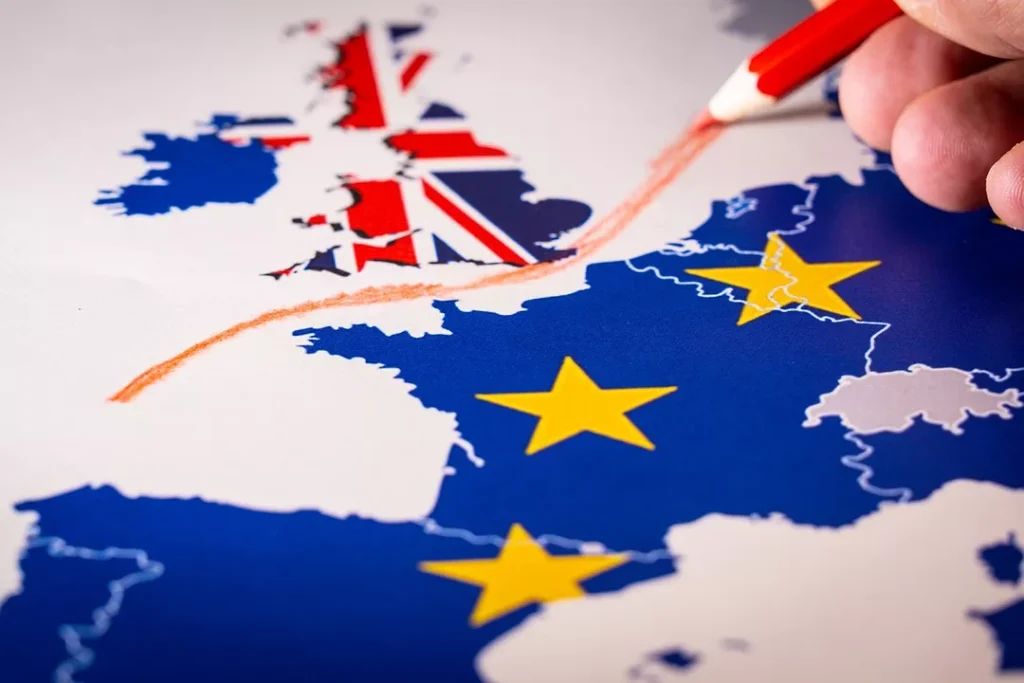
For much of the period following the 2016 referendum, the question of Britain’s EU membership remained politically sensitive across both major parties. Labour governments and opposition leaders subsequently sought to navigate the divisions created by Brexit while avoiding an immediate commitment to reversing the referendum result.
Burnham has described the decade since Brexit as one of “too much drift and too much division” and has argued that Britain needs to draw a line under the period and establish a new direction.
Speaking before the conference, the Prime Minister indicated that, “we need to set out a new direction for the country and I will set that out on Tuesday.”
Under the previous Labour government’s approach, the party had ruled out rejoining the single market, customs union and EU, as well as a return to free movement.
Stella Creasy, Chair of the Labour Movement for Europe, has called for UK to begin examining how it could rejoin within the next six months.
Government officials have also expressed concern about the European Union’s emerging “Made in Europe” approach and its potential implications for British access to European trade and defence markets.
Meanwhile, ministers have acknowledged the potential for a renewed Brexit argument to strengthen Nigel Farage and Reform UK, particularly if Labour were perceived as seeking to overturn the result of the 2016 referendum without a fresh electoral mandate.
That concern is one reason some ministers favour carefully worded manifesto language rather than an immediate commitment to full membership.
The Prime Minister is expected to use his conference speech to argue that Britain cannot continue with “politics-as-usual”, while presenting greater public control over energy, water and housing as part of a wider programme of institutional and economic change.
Brexit therefore forms one part of a much larger political argument about Britain’s direction after years of economic pressure, political instability and changing international alliances.
READ ALSO: BoG Governor Signals Sharp Drop in Ghana’s Borrowing Costs