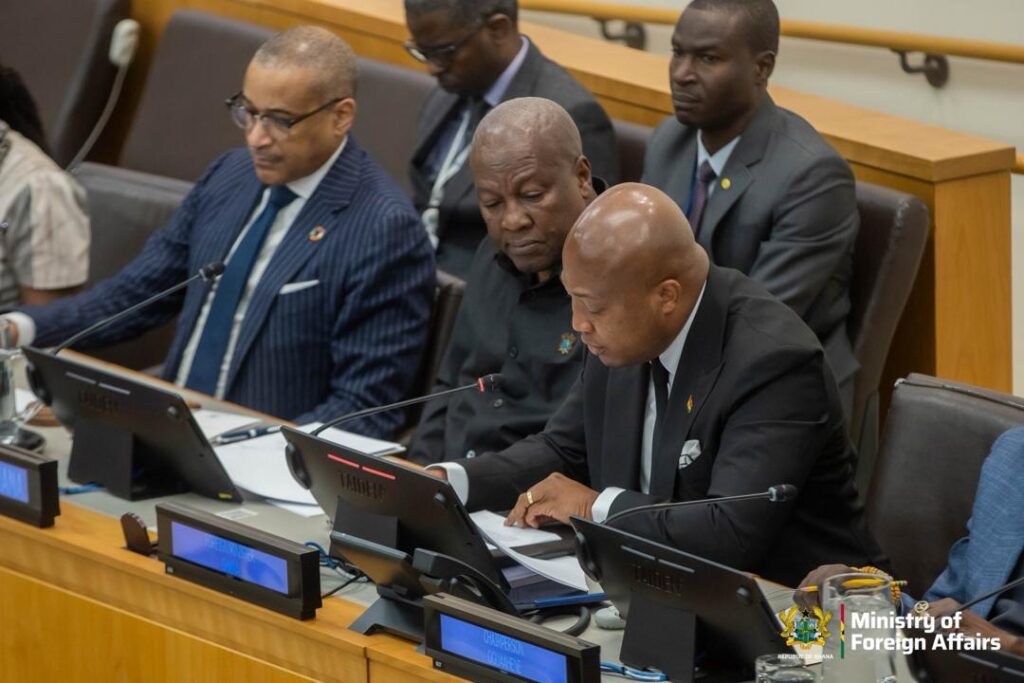
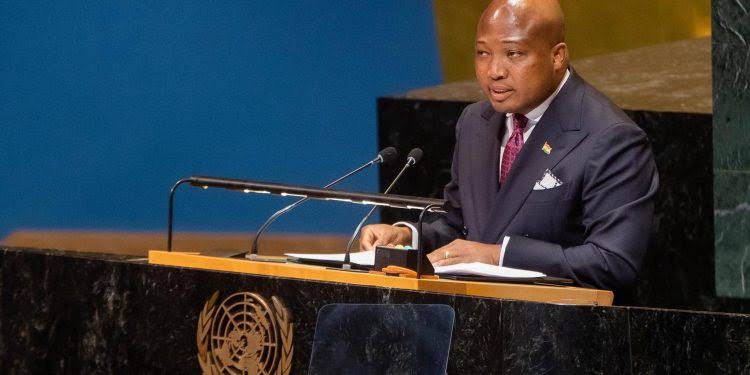
Foreign Affairs Minister Samuel Okudzeto Ablakwa has declared Ghana strongly opposed to attempts to abolish the International Criminal Court. He made the declaration at the United Nations in New York, at a special commemoration marking twenty-five years since the adoption of the Durban Declaration against racism, racial discrimination, xenophobia and related intolerance.
The position places Ghana against a campaign the United States has been waging since July to dismantle the court. Hon Ablakwa framed it as a matter of consistency, arguing that a world which condemns crimes against humanity must also maintain the institution capable of punishing them.
The Minister linked the two arguments directly. “Ghana takes the firm view that there must be severe consequences for those who flagrantly violate the Durban Declaration and commit crimes against humanity. Ghana is therefore strongly opposed to attempts to abolish the International Criminal Court,” he said.
Ghana has standing to make the point. It ratified the Rome Statute in December 1999, among the earliest states to do so, and has consistently supported the court through successive governments of both main parties.
What Ghana Is Opposing
The campaign Hon Ablakwa referred to began in earnest in July, when Secretary of State Marco Rubio announced in a Wall Street Journal opinion piece that Washington would dismantle the court brick by brick if necessary, describing the effort as a choice of sovereign states over globalism.
State Department officials have said the instruments under consideration include travel bans, visa revocations and expanded sanctions against the court and organisations affiliated with it, alongside diplomatic pressure on member states to withdraw. One official warned that nations refusing to reject the court’s authority while relying on American assistance were likely to come under increased scrutiny.
The pressure has been building for longer. An executive order signed in February 2025 provided the basis for sanctions that have since been applied to more than a dozen judges and prosecutors, including the court’s president, Tomoko Akane, and senior trial lawyer Abdoulaye Seye.
Reports on 20 and 21 September indicated that sanctions against the institution as a whole had been prepared, though none had been announced by the end of the month. President Donald Trump took the campaign to the General Assembly itself on 22 September, calling on all 125 parties to the Rome Statute to withdraw.
Chad has since announced its exit, while European leaders publicly rejected the call, and the State Department has set out its case in a formal campaign statement. Washington’s argument rests on jurisdiction and sovereignty.
The United States is not a party to the Rome Statute, and successive administrations have objected to the court asserting authority over nationals of non-member states, an objection that hardened after the court authorised an investigation covering Afghanistan and again after it issued arrest warrants in November 2024 for the Israeli prime minister and his former defence minister.
Legal analysts note that the court is a treaty body only its member states can dissolve, so the campaign amounts to disabling it rather than abolishing it. Human rights groups argue the objective is immunity for American personnel and allies, while the administration’s defenders say it is shielding citizens from a tribunal their country never joined.

Twenty-Five Years After Durban
The ICC position closed a speech built around unfinished business. Hon Ablakwa said the anniversary demanded decisive action rather than further political declarations, then listed what a quarter century has failed to settle.
Twenty-five years after Durban, he said, the world still needs reminding that all men and women are created equal, and still has to proclaim that black lives matter.
He said the Assembly watches helplessly as a genocide unfolds in Palestine while the two-state solution it adopted grows more distant, that the people of Sudan cannot be saved, and that xenophobic attacks have become a recurring feature in South Africa.
His use of the word genocide is notable, since President John Dramani Mahama stopped short of it in his own address two days earlier, telling the Assembly instead that if something looks like a duck it must be a duck.
Hon Ablakwa also returned to the Security Council, arguing that the United Nations cannot uphold Durban’s principles while a continent of 1.4 billion people has no permanent seat.
From Should Have Been To Is
On reparations, he pointed to a specific correction. Paragraph 13 of the Durban Declaration stated that slavery should have been a crime against humanity, a formulation he said this year’s Ghana-led resolution removed by declaring the trafficking of enslaved Africans the gravest crime against humanity.
What follows, in his account, is what justice has always required: a sincere apology, the return of cultural heritage, repair for harm that still lives on, and a real promise that it will never happen again.
He also quoted his own President, recalling Mahama’s line in the same chamber days earlier that no race is superior and no nation is inferior.
Ghana’s defence of the court carries a calculable risk given the warnings issued to states dependent on American assistance. Accra has already refused the health compact Washington offered to replace withdrawn aid, and takes the chairmanship of the African Union in January, where this position will stop being one country’s and become a continent’s to settle.
READ ALSO: Diesel Price Set For Sharp October Increase- COPEC