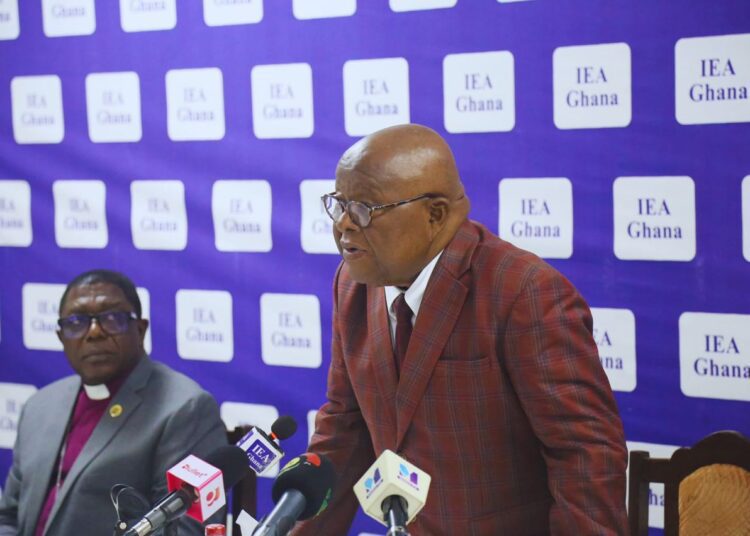
Former Speaker of Parliament and Institute of Economic Affairs (IEA) Fellow, Rt. Hon. Prof. Aaron Mike Oquaye, has issued a passionate call for Ghana to enact constitutional reforms aimed at securing state ownership and direct control over its vast natural resources, including oil, gold, bauxite, and lithium.
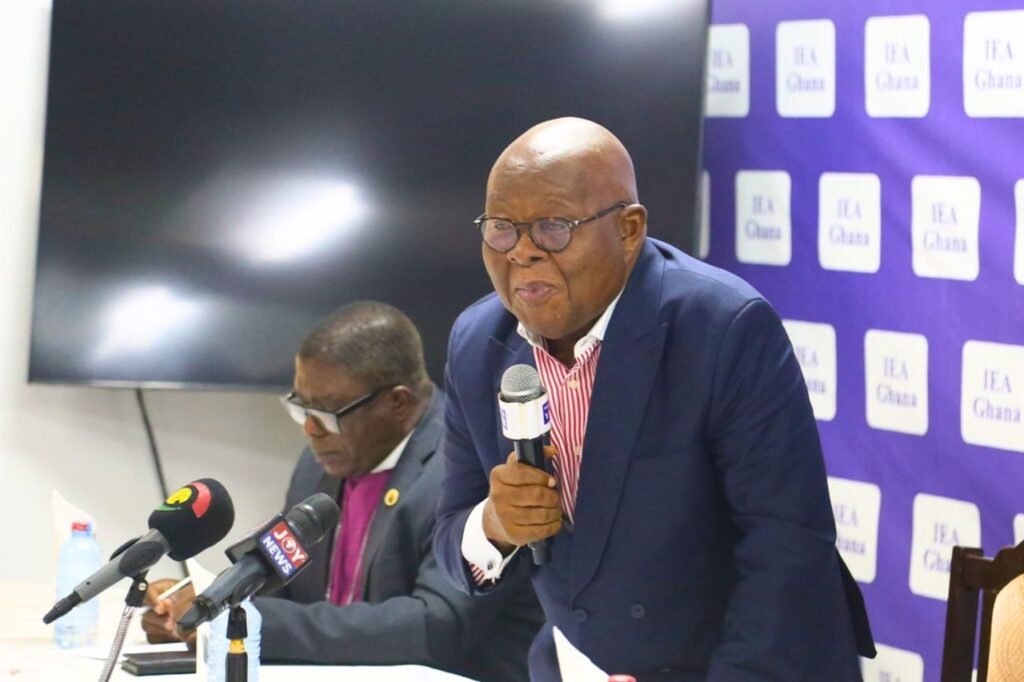
Speaking at the Institute of Economic Affairs (IEA) press conference regarding the government’s position on the Constitutional Review Committee recommendations, the veteran statesman emphasized that the nation’s perpetual struggle with socioeconomic underdevelopment exemplified by expectant mothers forced to deliver on bare hospital floors stems from a systemic failure to leverage indigenous mineral wealth for public benefit.
He argued that codifying state ownership within the supreme law of the land is an urgent imperative to ensure that resource extraction yields tangible dividends for ordinary citizens rather than foreign entities.
“Let us own our resources i.e oil, gold, bauxite, lithium etc. As we watch and our women are delivering on the floor, then we must do something about it. Let us talk about it and say in order to do that, we need state-owned institutions which can be managed by proper international practices.”
Rt. Hon. Prof. Aaron Mike Oquaye
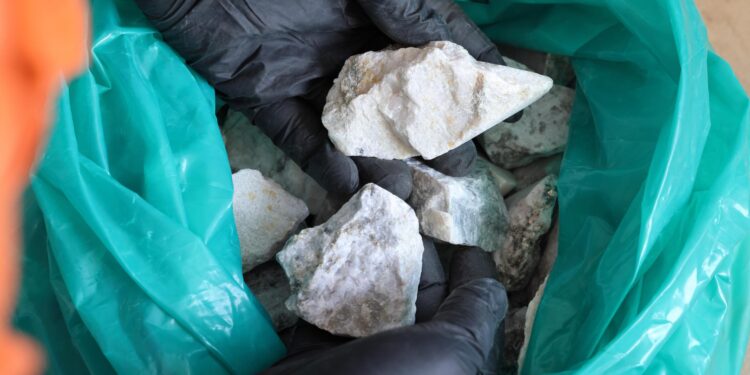
Expanding on this foundational premise, Prof. Oquaye asserted that constitutional amendments must mandate the establishment and reliance on robust state-owned institutions to oversee the extraction and management of mineral deposits.
He countered long-standing skepticism regarding public sector efficiency by highlighting that state enterprise can achieve operational excellence if anchored in proven international best practices and transparent corporate governance frameworks.
According to the former Speaker, adopting established global paradigms will prevent political patronage, eliminate financial leaks, and create a sustainable financial backbone capable of funding critical public infrastructure, healthcare systems, and economic expansion across the country.
The Paradox of Resource Wealth and Infrastructure Deficits
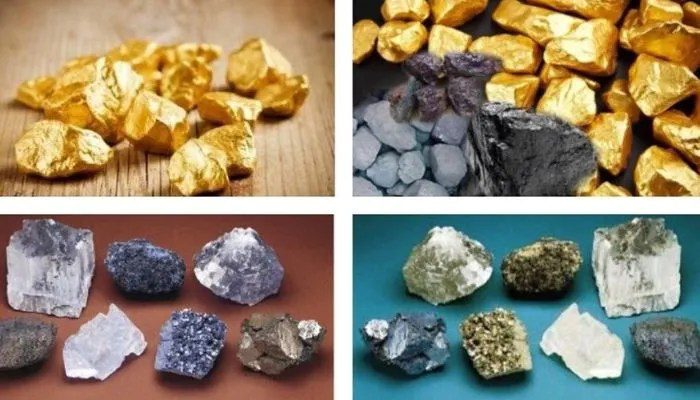
Ghana’s extractive sector presents a stark, frustrating paradox that underscores the urgent necessity of Prof. Oquaye’s proposal. Despite being one of Africa’s premier gold producers and holding substantial reserves of crude oil, bauxite, and critical green minerals like lithium, the domestic economy remains severely constrained by revenue capital flight and unfavorable concession agreements.
Under current fiscal regimes, a vast majority of the equity and high-margin profits generated from resource extraction are repatriated by foreign multinational corporations, leaving the sovereign state with modest royalties and taxes.
This structural imbalance leaves vital social sectors, particularly public health infrastructure, grossly underfunded and ill-equipped to serve the populace.
The human toll of this wealth drain is visibly mirrored in the nation’s healthcare facilities, where severe resource deficits directly compromise basic medical delivery.
When primary health centers lack sufficient beds, force maternal care onto concrete floors, and struggle with shortages of basic medical equipment, it reflects a fundamental failure to convert non-renewable geological wealth into human capital development.
Policy analysts argue that continuing on this current path without statutory intervention perpetuates economic dependency.
Re-engineering extractive governance through state-backed vehicles promises to plug these revenue leaks, ensuring that mineral proceeds directly finance emergency obstetric care, modern clinics, and nationwide social safety nets.
Institutional Frameworks and International Best Practices
Establishing sovereign, state-owned extractive entities does not require reinventing the wheel, as successful international blueprints already exist globally.
Nations such as Norway, through its State’s Direct Financial Interest (SDFI) and Equinor, alongside Botswana’s strategic equity holdings in Debswana, demonstrate how direct state participation under stringent commercial discipline can transform natural endowments into long-term national prosperity.
By adopting professional management standards, independent auditing, and strict operational transparency, Ghana can build public institutions capable of competing globally while retaining high-value extraction revenues within the domestic banking system.
To prevent past governance pitfalls that have plagued statutory corporations across the sub-region, the proposed reforms must insulate these state institutions from partisan interference.
Implementing legal safeguards that mandate merit-based executive appointments, public financial reporting, and adherence to International Financial Reporting Standards (IFRS) will build investor confidence while upholding sovereign interests.
By aligning public ownership with international corporate practices, the state can effectively negotiate equitable joint ventures, retain higher net cash flows, and redirect surplus capital toward national industrialization initiatives.
Constitutionalizing Ownership as a National Imperative
For resource governance to remain resilient across changing political administrations, state ownership must be enshrined directly within the national constitution.
Statutory enactments alone remain vulnerable to legislative shifts and policy reversals by successive governments; constitutionalization guarantees an enduring socio-economic compact that binds all future leaders to prioritize sovereign resource protection.
This constitutional mandate will serve as an unyielding framework, ensuring that licensing, concession contracts, and mineral rights concessions strictly serve the collective interest of current and future generations.
Moving forward, achieving this transformative mandate demands national consensus, rigorous policy discourse, and active citizen participation.
As intellectual leaders, legal scholars, and eminent figures prepare to lead broader public consultations, the dialogue must transition from theoretical debate into concrete legislative action.
By heedfully reflecting on historical missteps in resource management and embracing a constitutional paradigm shift, the country can finally break the cycle of poverty amid abundance, ensuring that its precious gold, oil, bauxite, and lithium directly elevate the living standards of every citizen.
READ ALSO: Ghana Strongly Opposes Attempts To Abolish The ICC, Ablakwa Tells UN