The Member of Parliament for Old Tafo, Honourable Vincent Ekow Assafuah has described the Speaker’s rejection of the Minority’s motion for a parliamentary probe into recent narcotics seizures as a predetermined decision. He expressed surprise at the ruling, particularly after the Minority and Majority Leaders were invited to comment before the Speaker proceeded with his decision.
Honourable Assafuah explained that the sequence of events during the emergency sitting raised concerns about the opportunity given to members to respond to the ruling. He argued that the Speaker’s decision appeared to have been settled before the leaders were allowed to make theiintended submissions.
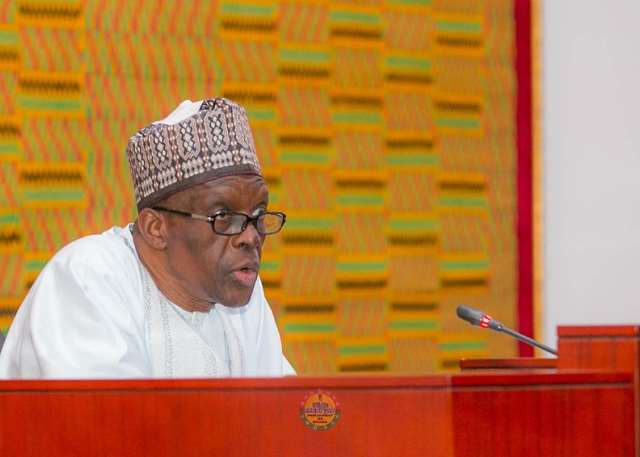
The Old Tafo MP further challenged the reliance on the sub judice principle to prevent Parliament from examining the institutional issues raised by the Minority. He distinguished a parliamentary inquiry into the operations of state institutions from a judicial process determining criminal responsibility.
He pointed to Article 103 of the 1992 Constitution, arguing that Parliament has a constitutional responsibility to investigate matters within its oversight mandate. Meanwhile, the courts retain responsibility for determining criminal liability and guilt where such matters are properly before them.
Honourable Assafuah said the proposed inquiry was focused on Ghana’s systems for preventing and detecting narcotics trafficking. He identified airport and port scanning procedures, border security, institutional coordination and the conduct of government agencies as areas the Minority wanted examined.
“The motion that we took to Parliament had some few focuses. The focus was to ensure that there is an inquiry as to how scanning and inspection systems are operated at the airport and at the port, how border security is also governed, the actions and omissions of government agencies and institutional coordination.”
Honourable Vincent Ekow Assafuah
The Old Tafo MP stressed that the proposed probe was not designed to determine the guilt or innocence of individuals connected to the narcotics cases. He argued that its purpose was to identify institutional weaknesses that could have contributed to Ghana’s growing concerns over drug trafficking.
Directing attention to the constitutional framework, Honourable Assafuah argued that Parliament’s oversight mandate could not be removed through the application of Standing Orders. He emphasised that parliamentary rules derive their authority from the Constitution and therefore could not supersede powers expressly granted under the supreme law.

He further expressed concern about Ghana’s reputation in relation to narcotics trafficking. The MP referenced concerns raised by the Catholic Bishops’ Conference as evidence of the seriousness of the issue within the country.
Honourable Assafuah consequently argued that the Speaker’s interpretation of Standing Order 103 F has restricted Parliament’s constitutional oversight function. Therefore, the proposed investigation could have examined institutional efficiency without determining matters reserved for the courts.
Constitutional Oversight Debate Deepens After Narcotics Probe Rejection
Honourable Assafuah also argued that the Speaker’s interpretation of Standing Order 103 F creates a conflict between parliamentary oversight and the constitutional authority of the House. He added that Parliament’s investigative powers under Article 103 should remain distinct from judicial proceedings concerning criminal liability.
The Old Tafo MP explained that the Constitution establishes separate responsibilities for Parliament and the courts. He argued that while Parliament may investigate the performance of public institutions, the courts retain the authority to determine whether an accused person is criminally liable.
The Speaker, however, dismissed the Minority’s motion during the emergency sitting after considering its terms of reference and the pending criminal proceedings. He ruled that the proposed inquiry substantially overlapped with issues before the courts and could prejudice the interests of parties involved in those proceedings.
The ruling also relied on Standing Orders 5, 6 and 103, as well as Orders 192 and 233. The Speaker consequently declared the motion inadmissible and the House was subsequently adjourned until further notice.
Honourable Assafuah challenged that interpretation, arguing that Parliament could investigate administrative systems without determining the outcome of criminal cases. He said the proposed inquiry was concerned with how public institutions handled scanning, inspection, border control and related security responsibilities.
On this basis, the Old Tafo MP insisted that the Minority’s motion did not require Parliament to establish whether any individual was guilty of a crime. Instead, he argued that lawmakers sought to examine institutional weaknesses and determine how existing systems could be strengthened.
“It was a wrong interpretation by the Speaker. The Speaker interpreted Standing Order 103 F to mean that because the matter is sub judice, because the matter is before the court, Parliament is estopped from dealing with the matter.”
Honourable Vincent Ekow Assafuah
Honourable Assafuah further argued that the constitutional hierarchy must guide the interpretation of parliamentary procedures. He explained that Chapter Five of the Constitution establishes the supremacy of the Constitution over other laws and institutional rules.

Meanwhile, the MP indicated that the Minority would consider other parliamentary mechanisms when the House reconvenes. He explained that Parliament is currently on recess, leaving members to assess the available procedures before deciding on their next course.
Pointing to the scheduled return of Parliament on 15 October as the next significant opportunity for the Minority to examine its options, the MP said members would consider the parliamentary tools available to them in pursuing the concerns raised by the narcotics seizures.
He also stressed that the dispute extends beyond the immediate motion and concerns Parliament’s wider oversight responsibility. The MP argued that effective scrutiny of public institutions is necessary where national security, border controls and narcotics prevention are involved.
READ ALSO: Dangote, African Leaders Break Ground on $16bn Oil Refinery