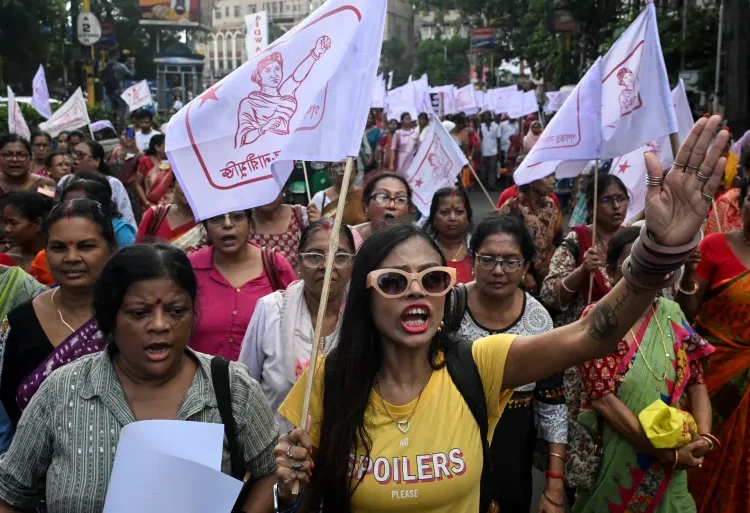
India’s youth-led Cockroach movement has called for fresh protests in Mumbai on today, October 2, demanding the resignation of Chief Election Commissioner Gyanesh Kumar over a controversial revision of voter registration lists that has drawn criticism from opposition parties and civil society groups.
The planned demonstration is expected to mark the beginning of a new wave of nationwide protests against the Election Commission of India, which oversees elections across the country.
The movement, which began as an online campaign and now identifies itself as the Cockroach Janta Party, has emerged as a prominent voice in protests over government accountability and public institutions.
Separately, a coalition of student and civil society organisations is expected to gather at Jantar Mantar, a designated protest venue in New Delhi, on Friday to make the same demand.
The demonstrations come amid growing opposition to the Special Intensive Revision (SIR) of voter lists, which critics argue could disenfranchise millions of eligible voters.
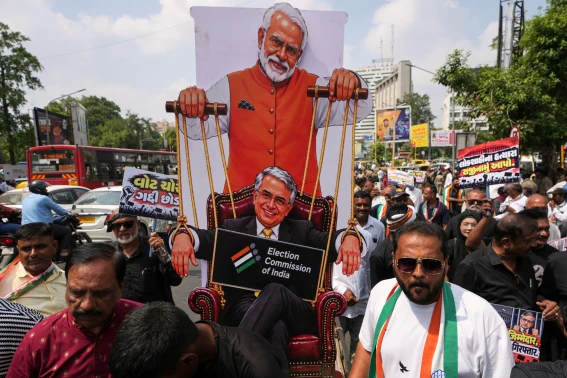
The controversy has intensified following allegations that the voter roll revision process could benefit Prime Minister Narendra Modi’s ruling Bharatiya Janata Party (BJP). Opposition parties and activists have accused the Election Commission of political bias, claiming that the changes could disproportionately affect voters in areas where the opposition has considerable support.
Both the Election Commission and the government have rejected the allegations, maintaining that the exercise is intended to remove duplicate and ineligible registrations while ensuring that all eligible citizens retain their right to vote.
The SIR exercise began last year in the eastern state of Bihar ahead of state elections and has since expanded to most Indian states and federally administered territories. However, the documentation requirements for establishing voter eligibility have become a major source of concern.
Critics argue that the process has been confusing and difficult for many citizens to navigate, raising fears that legitimate voters could be removed from electoral registers. Data from the Election Commission indicates that voter lists in some regions could shrink by as much as 30 per cent, intensifying concerns about the potential impact of the revisions on electoral participation.
The commission has defended the exercise as necessary to maintain accurate electoral registers. However, opposition parties and civil society groups maintain that the eligibility requirements and implementation process risk excluding legitimate voters, particularly those who struggle to provide the required documentation.
The dispute has also raised questions about the commission’s internal decision-making. A report published by The Indian Express last month alleged that two of the three election commissioners had formally objected to several decisions concerning voter roll revisions, registration procedures and the commission’s digital systems.
According to the newspaper, the two commissioners questioned the legality of certain decisions, but Kumar proceeded despite their objections. Indian law requires the three-member Election Commission to make decisions by majority vote.
The commission disputed the newspaper’s account, describing it as a reflection of “differing views and deliberations” among commissioners rather than evidence of formal written objections. Nevertheless, the report has added to scrutiny of the institution as protests against the voter roll revision continue to gather momentum.
The opposition’s demand for Kumar’s resignation has also gained political traction, with parties led by the Congress party preparing to launch their own demonstrations on October 6. Their planned protests are expected to add to pressure on the election chief as the dispute over the voter registration exercise continues.
Cockroach Movement Expands Its Campaign Beyond Education
The planned demonstrations mark a new phase in the Cockroach movement’s emergence as a political force, following its earlier protests over unemployment and examination paper leaks.
The movement, which gained prominence earlier this year, initially mobilised young people through an online campaign fuelled by frustration over limited employment opportunities and allegations of leaked examination papers. Its subsequent street demonstrations attracted national attention and culminated in the resignation of India’s Education Minister in July, marking a significant development for the youth-led campaign.
Led by Abhijeet Dipke, the movement has since broadened its agenda beyond education, taking up issues of government accountability, electoral transparency and the functioning of democratic institutions.
Its latest campaign against Kumar reflects this expansion, with the movement seeking to mobilise young people and other sections of society around concerns over voter registration and the electoral process.
By calling for demonstrations in Mumbai and encouraging wider protests, the Cockroach movement is seeking to sustain the momentum generated by its earlier mobilisation. The planned rally also coincides with efforts by opposition parties and civil society organisations to challenge the Election Commission’s handling of voter roll revisions.
The movement’s campaign comes amid broader political efforts to secure Kumar’s resignation, with Congress-led opposition parties planning demonstrations from October 6. The convergence of these protests places the election chief and the voter revision exercise at the centre of an increasingly prominent political dispute.
While the Election Commission maintains that the revisions are intended to protect the integrity of electoral registers, protesters and opposition parties continue to question their implementation and potential consequences for eligible voters.
READ ALSO: France Deploys Emergency Measures As Student Protests Escalate