Labour has regained its position at the top of the UK political polls, overtaking Reform UK after Prime Minister Andy Burnham’s renewed push to reconsider Britain’s relationship with the European Union appeared to strengthen support for the governing party.
A new Opinium poll places Labour on 30%, representing a two-point increase from the previous week and the party’s strongest rating since 2024. Reform UK follows on 25%, while the Conservatives remain further behind on 17%.
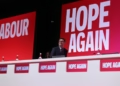
Burnham’s first Labour Party conference address pointed towards a new direction in the government’s dealings with Brussels following Brexit.
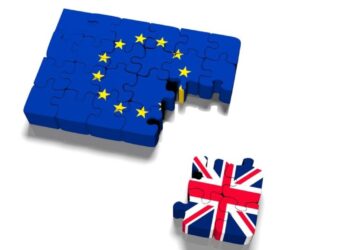
The Prime Minister promised to set out options for the future of UK-EU relations around the time of a planned UK-EU summit later this year, opening the possibility of closer cooperation with the bloc after years of political division over Britain’s departure.
Burnham subsequently indicated that the options could extend to Britain going “all the way” and rejoining the European Union if that reflected public opinion. He also declined to rule out including a commitment to rejoin the bloc in Labour’s next general election manifesto.
The Opinium survey, conducted in the days following Burnham’s conference speech, suggests that the government’s willingness to consider a wider range of options has attracted significant public support.
Some 54% of respondents indicated that Burnham is taking the right approach by considering all possible options for Britain’s future relationship with the EU. Only 25% believed the approach is wrong.
The figures also indicate that public attitudes towards the consequences of Brexit have continued to evolve.
Forty-six percent of those surveyed believe Brexit has done more harm than good to the UK, compared with just 13 percent who believe it has delivered more benefits than harm. A further 21 percent believe Brexit has produced an equal amount of good and harm.
The findings provide a political opening for Labour as it attempts to redefine Britain’s relationship with Europe without immediately committing the country to reversing Brexit.
The poll also indicates that the shift in public sentiment is not occurring in isolation.
A separate megapoll involving 11,461 people found that 49% supported Britain rejoining the European Union, while 28.5% opposed the idea. The findings provide further evidence of growing public interest in reconsidering Britain’s post-Brexit relationship with the bloc.
Brexit Back in the Spotlight of Britain’s Political Landscape
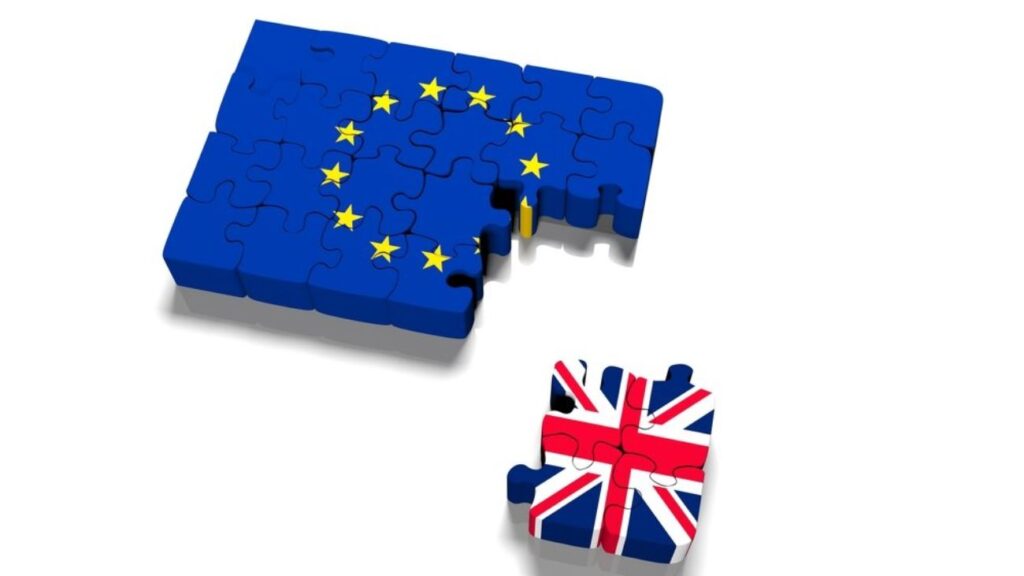
Labour’s return to the top of the polling table comes at a time when the opposition parties are attempting to exploit the government’s vulnerabilities over the economy, public services and Britain’s future relationship with Europe.
Reform UK, which has built much of its political identity around Brexit and opposition to what it regards as excessive European influence, remains a strong challenger despite Labour’s latest rise.
The party recorded 25% support in the latest Opinium poll, a one-point increase from the previous week.
Its position means Labour’s two-point improvement has not eliminated the threat posed by Reform, which has increasingly sought to attract voters disillusioned with the traditional political parties.
The Conservatives, meanwhile, remain on 17%, leaving them well behind both Labour and Reform. The Green Party recorded an increase of one percentage point to reach 11%, while the Liberal Democrats fell one point to nine percent.
The figures point to a fragmented political landscape in which Labour’s lead remains significant but far from secure.
Burnham’s personal standing, however, provides another potential advantage for the governing party.
He remains the only political leader in the latest survey to record a positive net approval rating. His rating rose one point to plus eight.
The contrast with some opposition leaders is notable.
Green Party leader Zack Polanski and Reform UK leader Nigel Farage remain the most unpopular leaders in the survey, both recording net approval ratings of minus 22. Polanski nevertheless improved by two points, while Farage gained three points.
Liberal Democrat leader Ed Davey’s rating declined three points to minus six, while Conservative leader Kemi Badenoch remained comparatively stable at minus one, an improvement of two points.
According to James Crouch, head of policy and public affairs at Opinium, “Andy Burnham clearly knows how to deliver a commanding conference speech, backed by major policy announcements, that dominates the political agenda.”
He added, “the question now is simple: can Kemi Badenoch seize the country’s attention next week in anything like the same way?”
READ ALSO: Mahama Challenges Financiers, Regulators to Build Africa’s Health Sovereignty