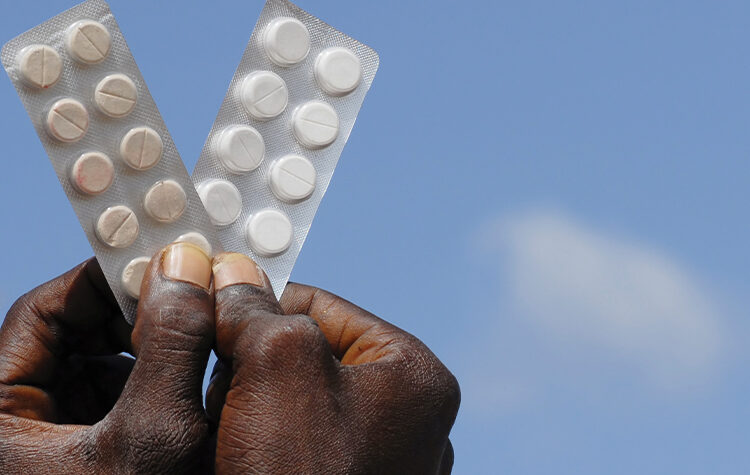
The trafficking of medical products is emerging as a growing threat to public health, economic development and regional security in Central Africa, with authorities seizing more than 251 tonnes of medicines and other health products across the Economic and Monetary Community of Central Africa (CEMAC) between 2020 and 2025.
A new report by the United Nations Office on Drugs and Crime (UNODC), produced in partnership with the World Health Organization (WHO) and the CEMAC Commission, reveals the scale and complexity of an illicit market that extends from falsified medicines and diverted pharmaceutical products to the trafficking of controlled and psychoactive substances.
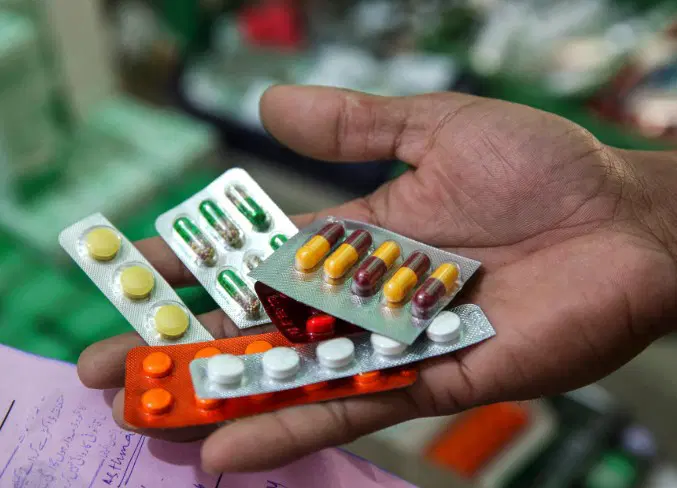
The products seized during the six years included antibiotics, antimalarial medicines, anti-inflammatory drugs, painkillers and psychoactive substances such as tramadol and pregabalin.
Behind the seizures, however, lies a broader public health crisis. The report indicates that illicit medicine markets have expanded within an environment characterised by shortages, high prices, weak health systems and limited access to formal healthcare, creating conditions that allow criminal networks to exploit the needs of vulnerable populations.
The consequences for patients are very severe. One of the clearest examples of the human cost occurred in Cameroon in 2023, when 12 children died after ingesting a paediatric syrup made with contaminated excipients, according to the report.
The scale of seizures has also fluctuated sharply. Authorities recorded roughly five tonnes of medical products seized in 2020, compared with nearly 116 tonnes in 2024 and more than 97 tonnes in 2025.
The United Nations cautions that the rise in seizures should not automatically be interpreted as proof that trafficking itself has increased at the same rate. Larger seizures can reflect both greater criminal activity and stronger enforcement, while the quality and availability of data differ significantly between countries and years.
Even with that qualification, the volume of products intercepted demonstrates the scale of the challenge facing Central African governments.
Cameroon accounted for the overwhelming majority of seizures recorded in 2025, with authorities intercepting about 96 tonnes, compared with approximately 2.5 tonnes in 2020.
The illicit trade also demonstrates how weaknesses in legitimate health systems can create opportunities for criminal networks.
Across parts of Central Africa, medicines remain difficult to access because of their cost, distance and shortages. Malaria, tuberculosis and HIV continue to place pressure on healthcare systems, while large sections of the population struggle to obtain timely treatment.
In the Central African Republic and Chad, more than half of the population lived at least two hours from a public hospital providing emergency care, according to data cited in the report. In Chad, the report found that a prefilled insulin syringe could cost the equivalent of nearly 16 days’ wages for the lowest-paid government employee.
Consumers interviewed in the Central African Republic described being able to purchase individual tablets from informal sellers for about 100 CFA francs rather than buying a full package from a pharmacy.
The result is a dangerous marketplace where legitimate, falsified, and substandard medicines can circulate alongside one another, making it increasingly difficult for consumers to determine whether a product is safe.
Between 2013 and 2025, the WHO surveillance system recorded incidents involving 228 medical products across the CEMAC region. Of those, 71% were classified as falsified and 11% as substandard.
Significantly, about one-third of the incidents were detected within regulated supply chains, indicating that the risk does not disappear simply because consumers purchase medicines through authorised outlets.
The trafficking networks themselves are also becoming increasingly sophisticated, according to the report, using many of the same transport corridors that facilitate legitimate commerce across the region.
Illicit Medicine Trade Fuels Criminal Networks and Regional Security Risks
The routes used to move illicit medical products stretch across land, air and waterways, making the trade a transnational problem that cannot easily be contained within individual national borders.
The report identifies the ports of Apapa in Nigeria and Douala in Cameroon, as well as river ports in Brazzaville and Bangui, among important entry points for trafficked medical products.
Air transport also plays a role. Authorities seized approximately 7.3 tonnes of medical products at airports across the region between 2020 and 2025.
From these entry points, products move through road and river networks into neighbouring countries, often exploiting gaps in customs enforcement and pharmaceutical regulation.
According to Sylvie Bertrand, Regional Representative of the UNODC Regional Office for West and Central Africa, “medical product trafficking is more than a public health issue. Criminal groups profit by exploiting the region’s health vulnerabilities.”
“The report outlines a multimodal trafficking system that uses maritime, riverine, air and road routes and involves a broad range of actors. No State can tackle this transnational challenge alone. UNODC remains committed to helping Member States advance a coordinated regional response.”
Sylvie Bertrand
According to the report, medical products have become a strategic resource for armed groups operating in parts of the region. Such groups may loot health facilities, resell medicines or impose taxes on shipments passing through areas under their control.
The illicit trade therefore generates revenue for armed actors while weakening legitimate health institutions and undermining the rule of law.
Meanwhile, regional governments have already taken steps towards strengthening pharmaceutical regulation. CEMAC Member States adopted a Common Pharmaceutical Policy in 2013 aimed at strengthening and harmonising pharmaceutical regulation across the subregion.
At the continental level, the African Union established the African Medicines Agency in 2019 to improve access to quality, safe and effective medical products.
Yet the continuing scale of trafficking indicates that regulatory frameworks alone have not been sufficient to close the gaps being exploited by criminal networks.
Ngabo Seli Mbogo, Commissioner responsible for the Common Market Department of the CEMAC Commission, noted that “trafficking in medical products poses a serious threat to people across our economic community, and efforts to combat it must be fully integrated into responses to the multiple challenges facing our subregion.”
“CEMAC is developing a regional action plan to implement the report’s recommendations and intends to adopt a strategy against transnational organized crime.”
The report calls for a coordinated approach that combines public health measures, criminal justice responses and international cooperation rather than treating trafficking as a problem belonging exclusively to law enforcement agencies.
READ ALSO: Ivorian Winger Diomande Earns Golden Boy Award Nomination