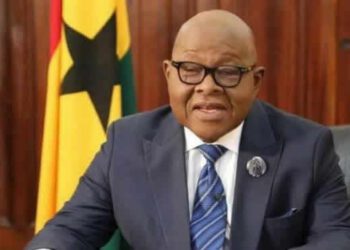
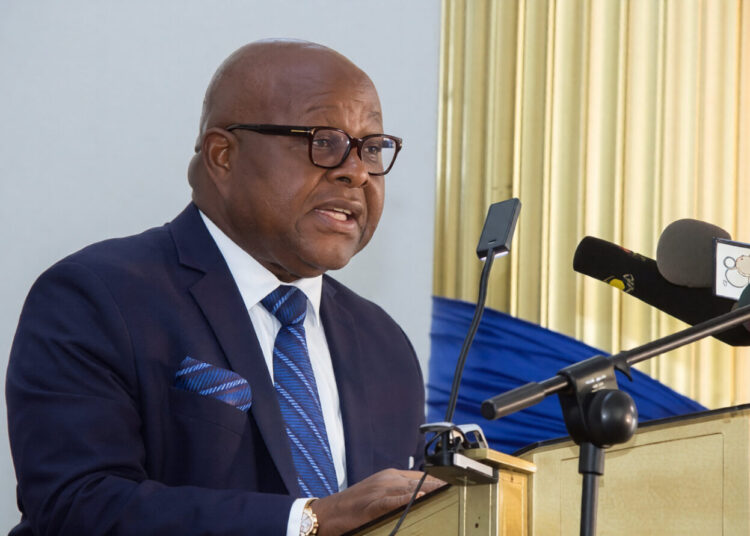
Professor Aaron Mike Oquaye, former Speaker of Parliament, has described the government’s proposed cap on Supreme Court justices as arbitrary. He spoke on Tuesday, October 6, 2026, at an Institute for Economic Affairs (IEA) event where he reviewed the Mahama government’s position paper on the recommendations of the Constitution Review Committee.
Prof. Oquaye, a Fellow at the IEA, argued that the size of the bench follows from Ghana’s appeals system. Fixing the number without fixing the system, he said, treats the symptom. He proposed making the Court of Appeal the final stop in ordinary cases.
Prof. Oquaye accepts that the government has a reason for the cap. He rejects the foundation under it. The intellectual, constitutional and historical basis for the proposed number, he said, is “generally arbitrary” because it does not meet the criteria set out in a recent paper.
He urged Ghanaians to read that paper, which remains available, before forming a view. Those who skip it, he warned, risk being misled. Prof. Oquaye called it the most brilliant article the IEA has published on the subject.

Why the American Comparison Fails
Public debate often points to the United States, where the Supreme Court is small. Prof. Oquaye says that comparison ignores how the two systems are built. The American court is essentially a constitutional court, he explained, and only special cases reach it. Most appeals end at the state level or at the Court of Appeal.
Ghana’s court carries a different load. The Constitution makes the Supreme Court the final court of appeal, so every Ghanaian may take a case there where the Constitution allows, even a small land dispute.
That open door, in his view, explains why the number of justices keeps climbing. A bench sized for a court that hears every appeal cannot be compared directly with a bench sized for a court that hears few.

Prof. Oquaye’s alternative targets the flow of cases rather than the size of the bench. Some countries treat the Court of Appeal as the last court of appeal, he noted, and many people in Ghana are now asking for the same arrangement in ordinary matters. Under that model, the Supreme Court would hear only very exceptional cases, and only with special leave.
The reasoning follows a simple line. Fewer routine appeals would mean less pressure to add judges, while a numerical cap would leave the flow of cases untouched. Prof. Oquaye also cautioned that anyone commenting on capping without understanding how the Supreme Court works, and what the Constitution provides, is speaking from weak ground.
What the Review Process Shows So Far
The proposal now sits inside a process that is moving toward drafting. Attorney-General Dr Dominic Akuritinga Ayine inaugurated an 11-member implementation committee on August 28 and set a November target for laying the first non-entrenched amendment bills before Parliament.
Committee Secretary Oliver Barker-Vormawor told The Vaultz News the body began work on inauguration day. The reforms already touch the court’s work in other ways.
The Citizens’ Platform on Constitutional Reform backed 16 proposals on September 15, including a rule requiring the Supreme Court to decide presidential election petitions within thirty days. The platform also supports shortening the window for filing such petitions to fourteen days.
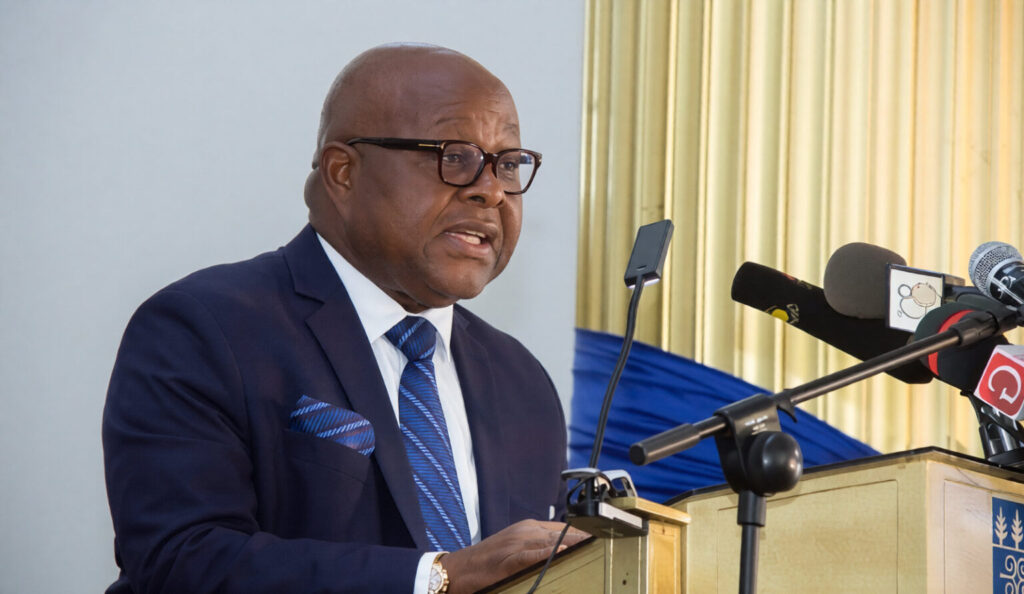
Constitution Review Committee chairman Professor Henry Kwasi Prempeh has called for a process that draws the widest possible public participation. Prof. Oquaye’s warning about uninformed commentary fits that call, because a debate on the court’s size needs a clear grasp of how appeals reach it.
Before Ghana settles on a number, his argument goes, it should decide which cases truly belong before its highest court.
READ ALSO: Energy Commission, VRA Plan Joint Media Capacity Building