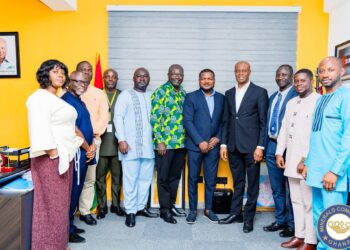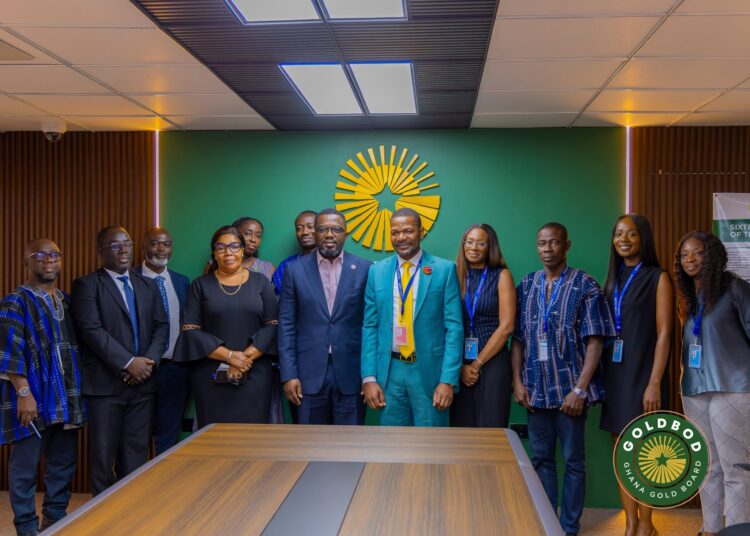
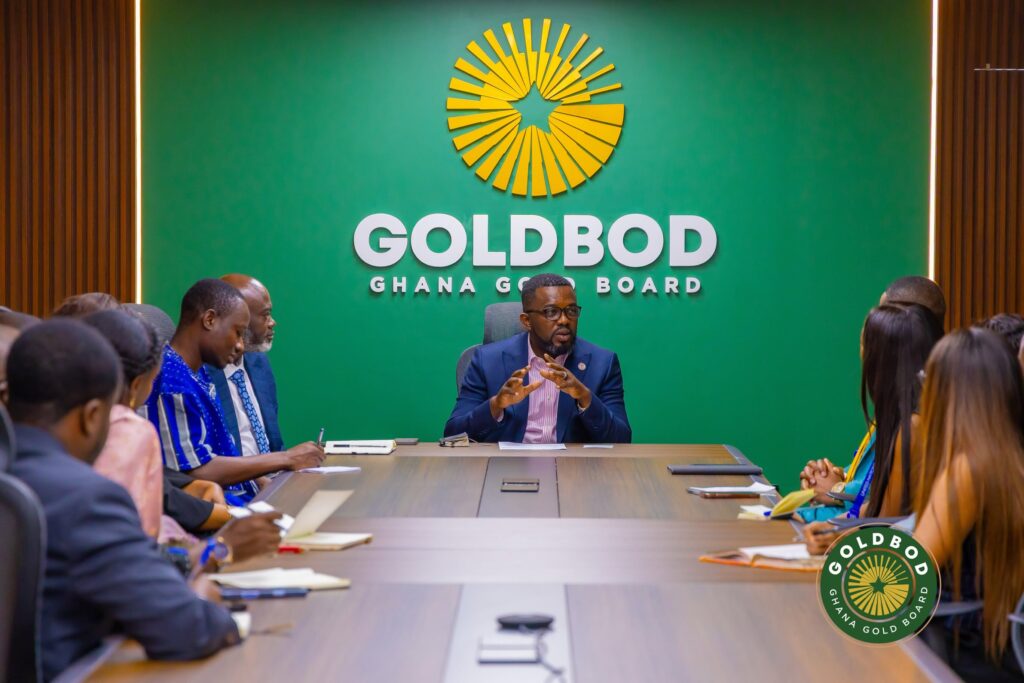
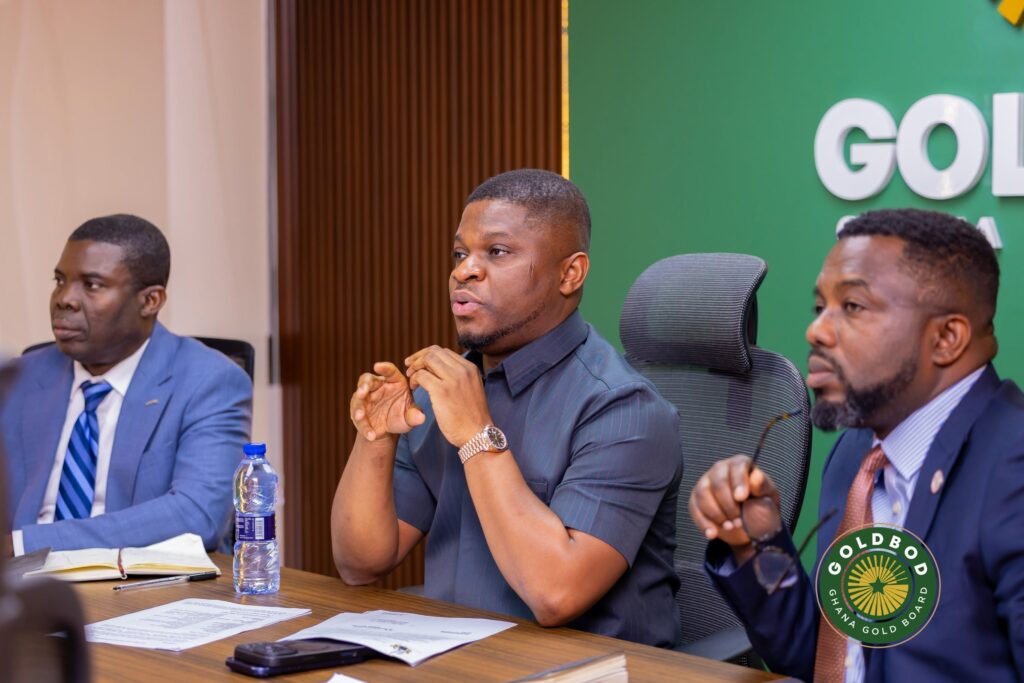
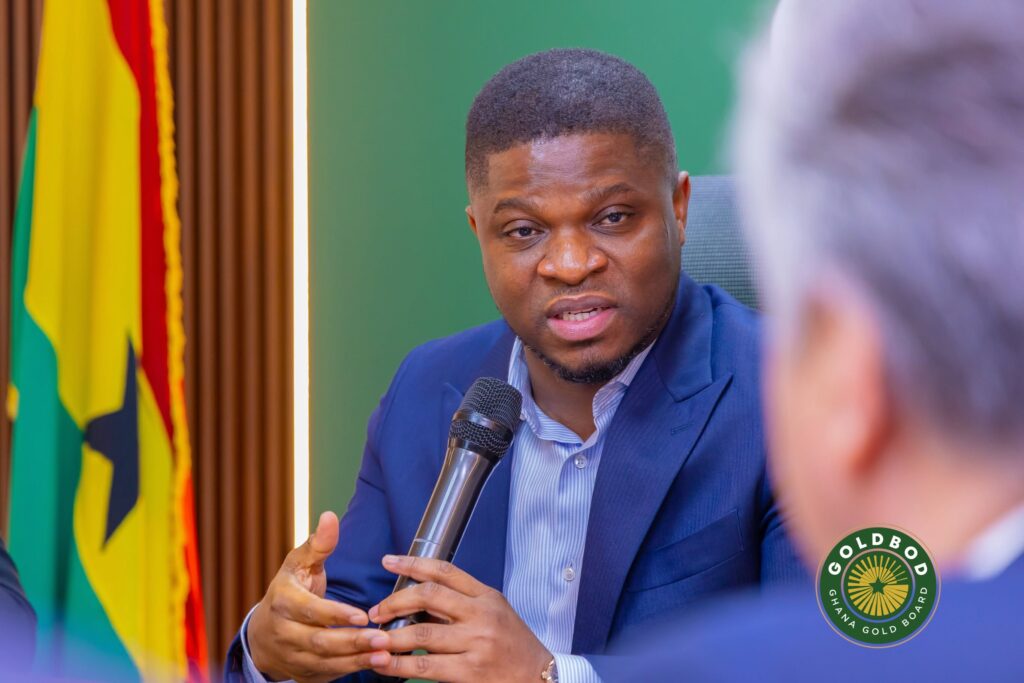
The Deputy Chief Executive Officer of the Ghana Gold Board (GoldBod), Richard Nunekpeku, Esq., has received a high-level delegation from the United Nations University Institute for Natural Resources in Africa (UNU-INRA), led by its Director, Dr. Richard Munang.
The strategic diplomatic engagement focused primarily on building environmental sustainability framework agreements and exploring tangible opportunities for technical collaboration aimed directly at protecting, preserving, and restoring Ghana’s vulnerable natural ecosystem.
“During the meeting, GoldBod highlighted its ongoing environmental interventions, including the reclamation of 50 hectares of degraded land in the Tano Nimri Forest Reserve and the rehabilitation of three Ghana Water Limited treatment plants serving over 76 communities and about 100,000 people”
Ghana Gold Board (GoldBod)
Restoring Ecosystems and Water Infrastructure
Ghana’s extractives sector has historically faced severe challenges stemming from illegal small-scale mining operations, artisanal land clearing, and unmitigated mineral processing.
These activities have destabilized sensitive ecological zones, resulting in massive topsoil erosion, severe deforestation, and heavy siltation across crucial river basins.
By deploying dedicated remediation strategies within critical areas like the Tano Nimri Forest Reserve, Gold Board is establishing a institutional blueprint for environmental governance, demonstrating that commercial mineral oversight must go hand-in-hand with aggressive natural resource recovery.
Beyond direct land reclamation, the strategic restoration of municipal water infrastructure represents a crucial intervention for community welfare.
Mining-induced pollution and excessive turbidity have long overburdened treatment facilities operated by Ghana Water Limited, inflating processing costs and frequently disrupting the supply of clean water.
GoldBod’s direct capital and operational rehabilitation of these facilities provides an indispensable safety net for rural health, effectively restoring stable access to safe drinking water for more than 100,000 citizens who rely on these compromised water tables daily.
Bridging Research, Policy, and Green Innovation
The strategic partnership with the United Nations University Institute for Natural Resources in Africa (UNU-INRA) introduces a powerful scientific and policy-driven dimension to Ghana’s extractive governance framework.
As a leading think tank dedicated to natural resource management across Africa, UNU-INRA brings vast research expertise in green economy transitions, eco-innovation, and climate resilience strategies.
Aligning scientific research with regulatory enforcement enables state institutions to implement evidence-based interventions that balance resource extraction with strict environmental stewardship.
This inter-institutional synergy comes at a pivotal moment when global mineral markets increasingly demand verified climate resilience, ethical supply chains, and transparent Environmental, Social, and Governance (ESG) standards.
Collaborative policy development with UNU-INRA will enhance capacity building, policy formulation, and green technological integration within Ghana’s gold sector.
By bridging the gap between empirical academic research and regulatory practice, the initiative ensures that Ghana remains at the forefront of sustainable mineral extraction in sub-Saharan Africa.
Strategic Imperatives for the Mining Sector
The urgent need for this collaborative initiative stems from the imperative to protect Ghana’s natural heritage while maintaining a competitive extractive economy.
Decades of heavy mining activity have severely compromised biodiversity hotspots, depleted agricultural lands, and strained rural livelihoods dependent on clean water bodies.
Left unaddressed, ecological degradation risks triggering long-term economic instability, severe public health crises, and the permanent loss of vital forestry assets.
By cementing strategic alignments with global sustainability authorities, Gold Board is proactively tackling these structural vulnerabilities.
Integrating scientific research, environmental engineering, and municipal utility rehabilitation establishes a scalable model for responsible mining governance.
This comprehensive approach reinforces the principle that resource extraction must support, rather than undermine, national climate resilience, environmental health, and sustainable development goals.
READ ALSO: Badenoch Sets Out Conservative Vision for Britain