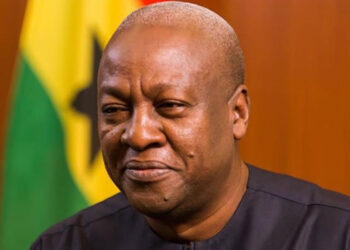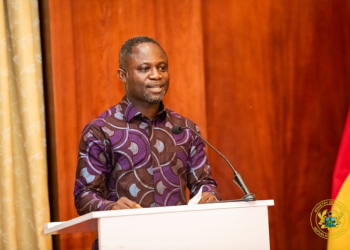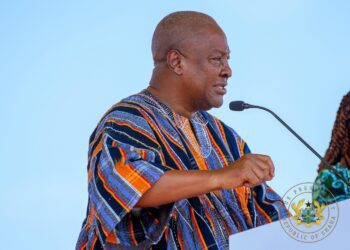
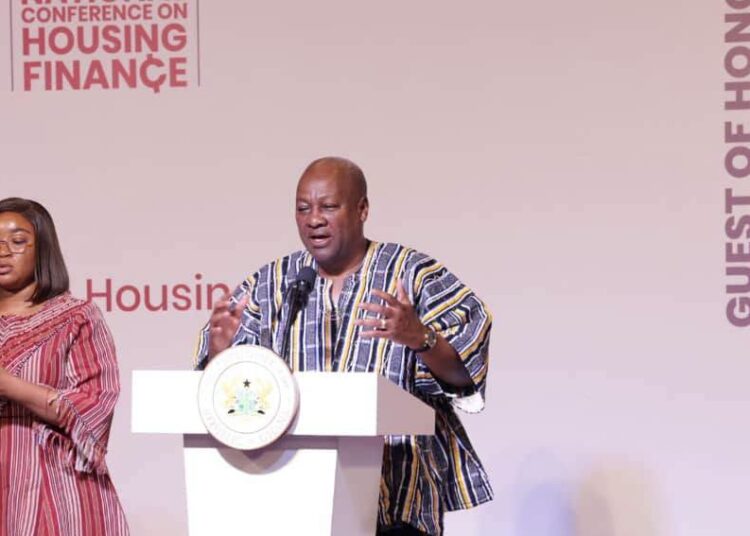
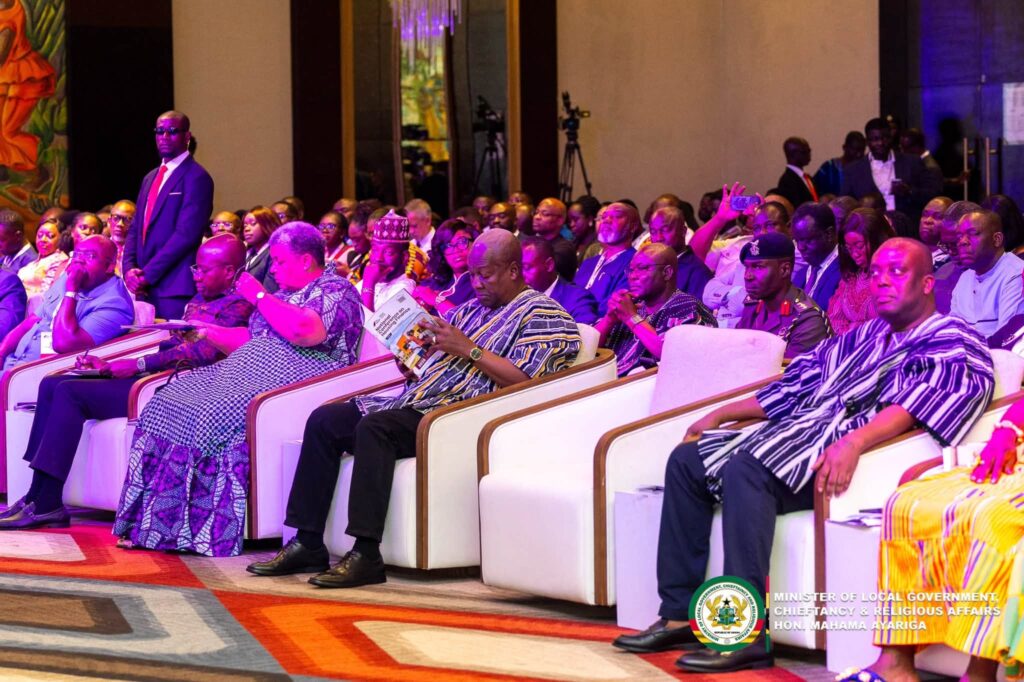
President John Dramani Mahama has pledged to accelerate housing construction, revive stalled projects and use government and institutional land banks to close Ghana’s 1.8 million unit housing deficit. He made the commitment on Wednesday, October 7, 2026, as he opened the National Conference on Housing Financing, held to mark World Habitat Day.
President Mahama argued that numbers alone will not solve the problem, because new homes must connect to roads, water, drainage, sanitation, schools, healthcare and workplaces.
He cited the 2024 Ghana housing profile, which shows that more than 30% of existing housing is inadequate, and promised faster delivery through the district housing programme and flagship projects.
“A lower purchase price offers little relief if a family must spend excessively on commuting or securing basic services.”
President John Dramani Mahama
The conference concept notes, drawing on that 2024 profile, put the shortfall at 1.8 million units. President Mahama read the figures as a double assignment. Ghana must build additional homes, and it must improve the conditions in which people already live.
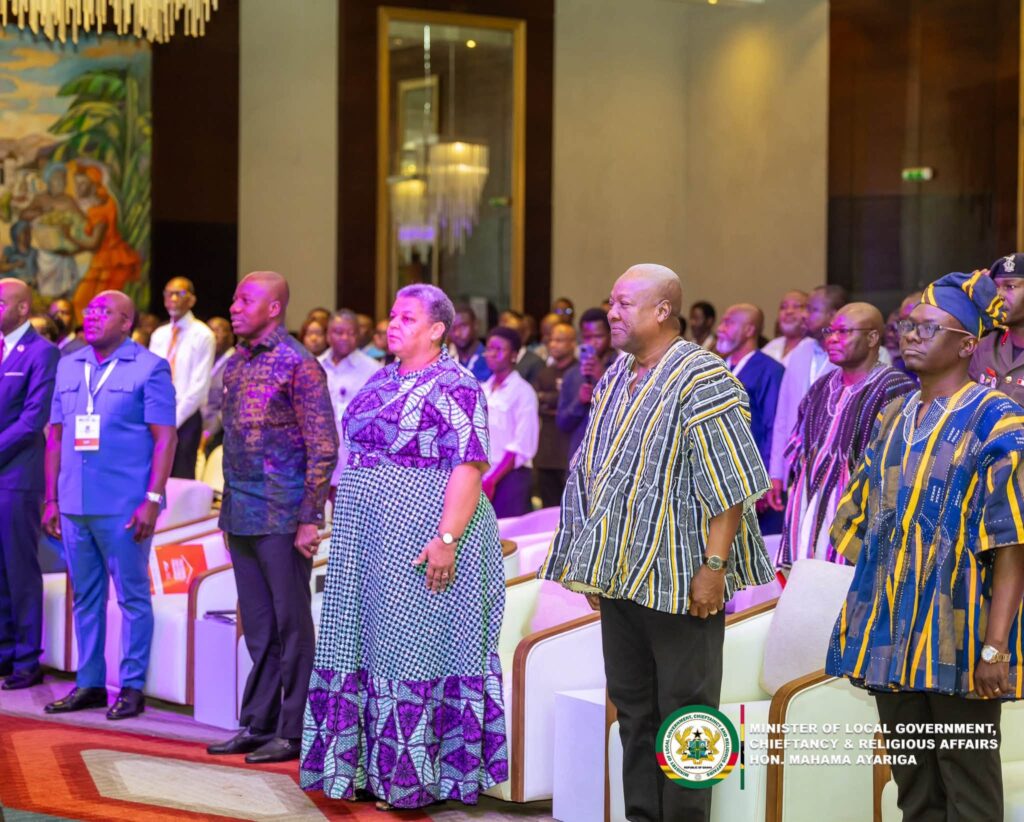
He listed overcrowding in slums, insecure tenure, poor sanitation and inadequate access to utilities as problems to confront. Homes, he added, must be safe, accessible and connected to jobs and essential services. Government has already stepped up its drive to narrow the gap, and the President signalled that more is coming.
Stalled Projects and Land Banks Take Priority
President Mahama stated that government remains committed to delivering decent and affordable housing at scale. That includes making effective use of government and institutional land banks, supporting private investment and reviving all stalled housing projects.
At Saglemi, the programme aims to complete the 1,500 units by next year. The Ministry of Works, Housing and Water Resources, working with the National Housing Fund, is piloting the district housing programme in eight districts, and President Mahama promised to accelerate it in the next financial year.
The Tema Development Corporation’s Oxygen City in Ho, in the Volta Region, and the State Housing Company’s Green City in Dedesua, in Ashanti, will add further units to the national stock.
Homes Must Connect to Roads, Water and Jobs
President Mahama insisted that these projects deliver communities, not just buildings. He wants roads, water, drainage, sanitation, schools and healthcare within reach of residents. “Land administration planning, planning approvals, infrastructure provision and housing finance must all work together as a symphony.”
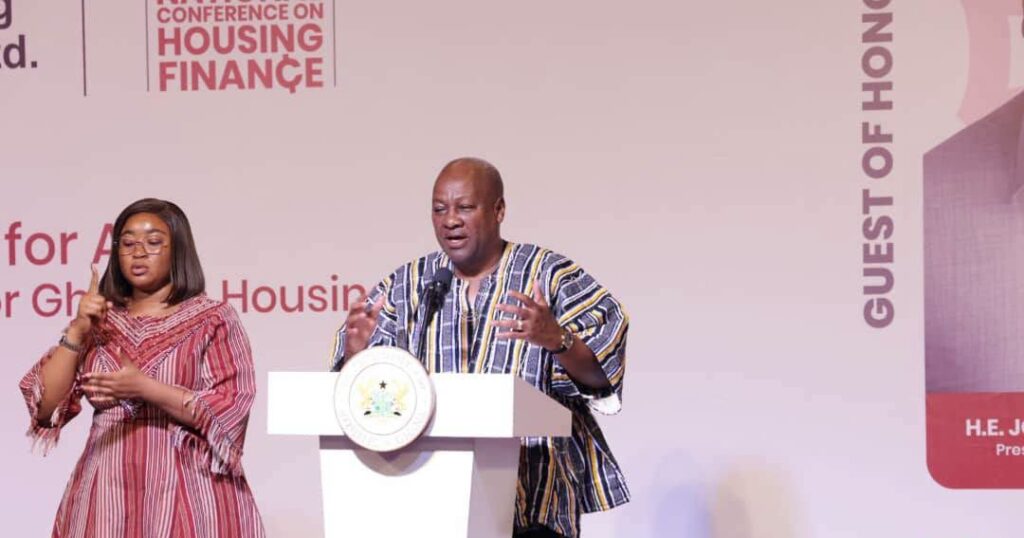
Uncertain land titles and avoidable delays, he warned, raise costs, discourage investment and ultimately burden the household. He also wants housing built into the planning of industrial enclaves under the economic transformation agenda. Where enclaves are established, residential facilities must rise alongside them.
President Mahama explained the payoff: “Homes close to workplaces can reduce the commuting costs for households, improve their productivity and give workers more time to spend with their families, spouses and children.”
The President turned to a problem he described with evident frustration: collapsing buildings. He argued that the country “must get to the roots of that, especially at the district assembly level.”
Builders are supposed to obtain a permit from the assembly, he noted, yet officials often paint a red stop-work mark on a site and work carries on regardless. Some builders even claim the mark keeps others from disturbing them. Then one day the whole house comes down, and President Mahama asked who gave the permit.
A Range of Housing Options for Different Incomes
President Mahama stressed that no single product will meet the need. Some households can obtain a mortgage with suitable support. Others will fare better with rent-to-own arrangements, secure rental accommodation or finance to build in stages.
The most vulnerable will need social housing assistance. He also backed community savings schemes, incremental housing loans and the upgrading of existing settlements to bring drainage, sanitation and safer structures to communities that have long lacked them.
President Mahama pointed to examples elsewhere on the continent. He had just returned from Egypt, where he found the housing built there phenomenal, and he noted that his friend President Ruto is delivering houses at a remarkable rate in Kenya.
When the two met, President Ruto jokingly called him John the Baptist, and President Mahama replied that he was the home builder. The President confessed that he wants the same title, but he cannot earn it alone.
He asked everyone in the room to join the effort, then declared the National Conference on Housing Financing and its associated exhibition duly opened.
READ ALSO: Stanbic Targets Ghana’s Clean Energy Shift With New Finance Push