
Italy’s parliament has given final approval to a sweeping overhaul of the country’s electoral system, handing Prime Minister Giorgia Meloni a major political victory while opening the way for a likely constitutional challenge to the reform.
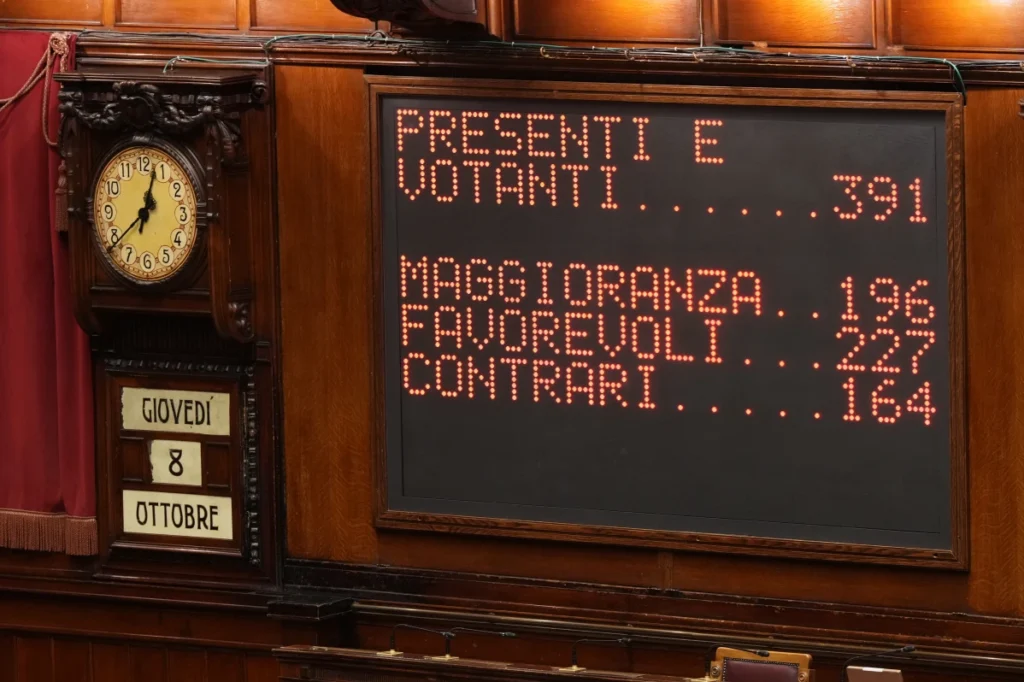
The Chamber of Deputies approved the legislation by 227 votes to 164 in a secret ballot today, providing definitive parliamentary approval after months of heated debate. The measure, known by supporters as “Stabilicum” and by critics as “Melonellum,” is intended to reshape how Italy elects its parliament and determine how governing coalitions are formed.
At the centre of the reform is a new majority prize that would grant additional parliamentary seats in both houses to the winning pre-election alliance, provided it secures at least 42% of the national vote.
Supporters argue that the measure would strengthen Italy’s political system by making election outcomes clearer and reducing the post-election negotiations that have frequently contributed to fragile governments. Under the new system, parties seeking the majority prize would be required to agree before an election on a common candidate for Prime Minister and a shared political programme.
The reform also replaces Italy’s current mixed electoral system, under which about one-third of parliamentary seats are elected through first-past-the-post constituencies. Those seats would instead be incorporated into a fully proportional system.
Meloni Hails Parliamentary Approval
Meloni has presented the changes as a way of giving voters greater clarity and choice when deciding which political coalition should govern the country. She welcomed the parliamentary approval, saying, “Italians would be able to vote for a party, coalition, governing program, prime ministerial candidate and, once again, their own lawmakers.”
The Prime Minister had made passage of the electoral law a test of unity within her governing coalition. She warned lawmakers from her Brothers of Italy party and coalition partners Forza Italia and the League that defeating the measure could trigger a government crisis.
The approval therefore represents an important victory for Meloni, whose coalition last month marked its record as Italy’s longest-serving government since World War II.
Reform Faces Opposition From Both Sides
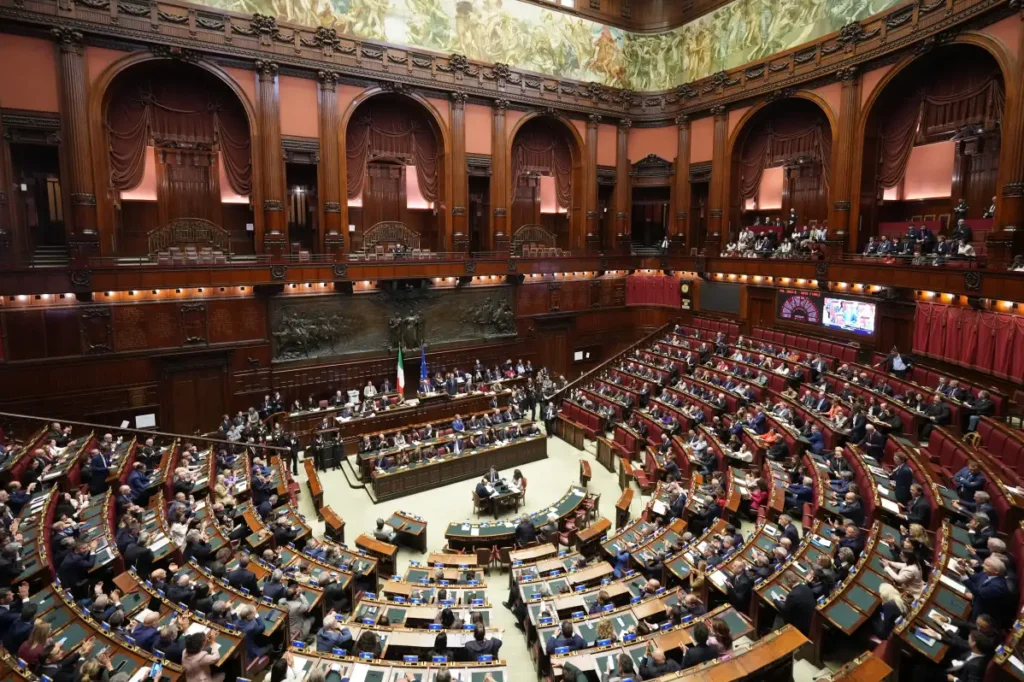
However, the reform has faced opposition both outside and within the governing coalition. Critics argue that the majority prize could distort the relationship between votes received and parliamentary representation. They have also raised concerns that the provision could conflict with earlier rulings by Italy’s Constitutional Court that struck down elements of previous electoral laws.
The centre-left opposition has described the legislation as a “scam law” and argues that it is unconstitutional. Opposition parties have pledged to challenge the reform before Italy’s Constitutional Court once it comes into effect.
A successful legal challenge could require Meloni’s government to revise the electoral system before the next general election, adding another layer of uncertainty to the political debate surrounding the reform.
Resistance has also emerged among some lawmakers within Meloni’s governing alliance. Some are concerned that the new system could ultimately work against the centre-right if support for former general Roberto Vannacci’s nationalist National Future party draws votes away from the governing bloc.
That concern is particularly significant because the governing alliance would need to reach the 42% threshold to qualify for the majority bonus. A division of centre-right support could therefore make it more difficult for the coalition to secure the additional seats provided for under the new system.
Other critics within the coalition have objected to provisions they believe could increase campaign costs for individual candidates and reduce the representation of women in parliament.
The reform also places additional pressure on Italy’s divided centre-left opposition. Tensions between the Democratic Party and the populist Five-Star Movement have complicated attempts to create a unified alliance capable of mounting a strong challenge to Meloni’s coalition at next year’s election.
Opponents, however, contend that the majority prize could give a winning alliance disproportionate representation and undermine the principle of proportional voting. They also question whether the reform will withstand constitutional scrutiny.
With parliamentary approval now secured, attention is likely to shift to the legal and political battles surrounding implementation. Meloni has secured the legislative victory she sought, but the opposition’s commitment to challenge the law means the electoral reform could remain at the centre of Italy’s political debate ahead of the next general election.
The legislation therefore represents both a significant achievement for Meloni’s government and the beginning of another contest over the rules governing Italy’s elections. Whether the new system ultimately produces the greater stability its supporters envisage will depend not only on its implementation but also on its ability to withstand constitutional challenges and political opposition.