The Ghana Chamber of Mines has affirmed its commitment to constructive engagement on the Minerals and Mining Bill, 2026, pledging support for structural legislative reforms aimed at deepening local participation and strengthening domestic governance in the extractive sector.
As the country’s principal mineral sector advocacy body, the Chamber highlighted that updating statutory framework definitions is essential to ensuring that local content provisions deliver maximum economic value to host communities.
“The Ghana Chamber of Mines remains committed to constructive engagement on the Minerals and Mining Bill, 2026. We support reforms that strengthen governance, deepen Ghanaian participation and increase national value while preserving the predictability and competitiveness required for responsible, long-term mining investment.”
Ghana Chamber of Mines
While expanding on this commitment, the industry group underscored the need to align statutory provisions with long-term national growth objectives without undermining investor confidence.
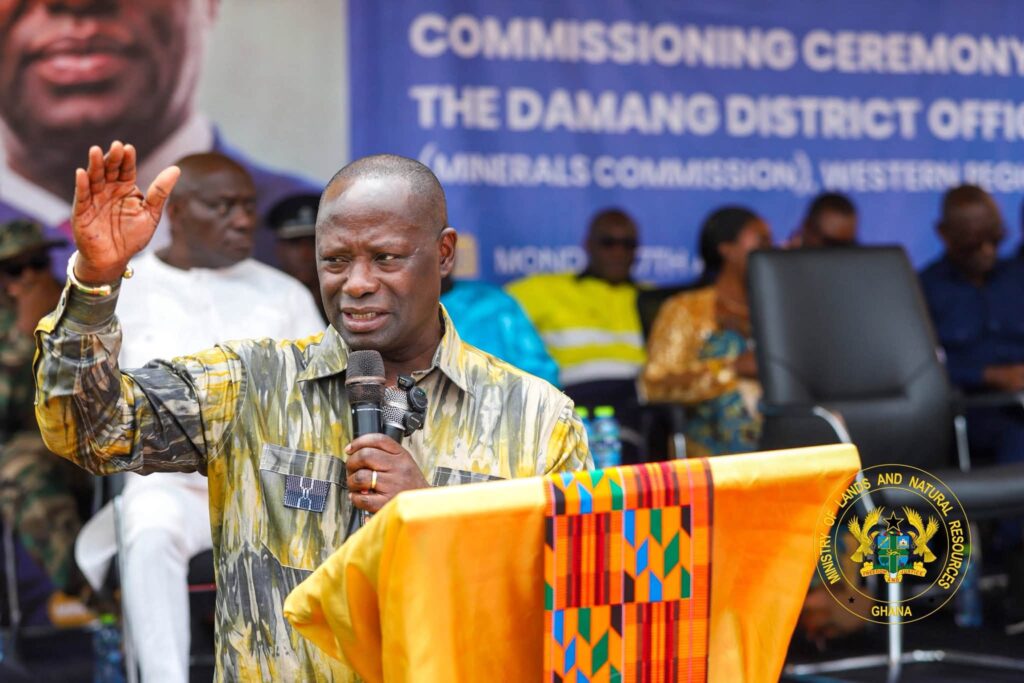
It explained that while legislative changes before Parliament seek to enhance national participation and retain mineral wealth domestically, maintaining predictable regulatory frameworks remains vital for international competitiveness.
Consequently, the organization continues its high-level consultations with key stakeholders, including Parliament, the Ministry of Lands and Natural Resources, and industry regulators, to fine-tune provisions that govern mining leases, state powers, and local enterprise involvement.
Legislative Reforms and the Urgency for Localized Value Creation
The imperative to deepen local participation stems from decades of structural disconnect between gold production volume and domestic economic retention.
Although Ghana stands as Africa’s largest producer of gold generating unprecedented output in recent fiscal cycles a substantial proportion of the capital expenditure associated with high-tech surface and underground extraction historically flows overseas through global procurement contracts and foreign service operators.

This dynamic has restricted local direct benefits mainly to statutory royalties and corporate income taxes, rather than building indigenous technical capacity.
To alter this trajectory, regulatory bodies such as the Minerals Commission have introduced aggressive local content directives alongside the proposed Minerals and Mining Bill, 2026.
These mandates mandate foreign operators to transition key operations, including surface mining and site haulage, to fully indigenous companies or Joint Ventures with significant domestic ownership.
By establishing firm timelines for these shifts, policy-makers aim to cultivate robust support industries, foster skill transfers, and ensure that indigenous contractors participate meaningfully in the value chain.
Balancing Regulatory Predictability with Investor Confidence
While the policy drive toward localization enjoys strong backing across political and social spectrums, sector analysts emphasize that statutory transitions require precision and clarity.
The Chamber’s stance reflects a critical balancing act: enabling aggressive local inclusion while safeguarding capital-intensive investments that require decadal planning horizons.

Recent legislative debates surrounding tenure limits such as proposals capping mining leases at a maximum of 20 years versus earlier draft baselines demonstrate why legal distinction between government policy intentions and enacted parliamentary text is necessary.
For global investors, financial institutions, and mining consortia, clear statutory language determines risk assessment models and debt financing terms.
The Chamber has explicitly noted that “because international reporting informs investors, lenders, mining companies, analysts and policymakers, precision on these distinctions matters” when evaluating the country’s business climate.
Mischaracterizations regarding state acquisition powers or mandatory share structures can inadvertently dampen foreign direct investment at a time when deep-level exploration demands heavy capital expenditure.
Navigating the Future of Responsible Extractive Governance
Achieving a sustainable balance in Ghana’s mining ecosystem requires ongoing multi-stakeholder dialogue that incorporates both commercial realities and host-nation rights. Responsible mining practices depend on stable legislative environments where both public institutions and private developers share common standards for environmental stewardship, community funding, and economic development.
By encouraging adherence to updated local procurement lists and supporting transparent legal updates, the Chamber seeks to position the domestic mining industry as a catalyst for industrialization.

As Parliament continues its deliberation over the Minerals and Mining Bill, 2026, the collaboration between the state and private operators will determine the future trajectory of the nation’s resource management.
Ensuring that local participation regulations are practical, enforceable, and legally clear remains the primary path toward retaining mineral wealth for Ghanaian citizens while maintaining the country’s status as a top-tier destination for international extractive capital.
READ ALSO: Ghana’s Debt Servicing Costs Threaten Fiscal Stability