The Minerals Commission has clarified that the offshore reconnaissance licences granted to Goldcoast GRC Ghana Limited have not been cancelled or revoked, despite a directive suspending activities under the licences pending stakeholder consultations.
The regulatory body clarified that the administrative directive freezing operations was enacted purely to safeguard environmental integrity and allow exhaustive stakeholder engagements following intense public scrutiny over coastal mineral exploration.
“The ministerial directive is not a cancellation, revocation or termination of the licences. The licences remain in force, subject to their terms and the applicable laws and regulatory requirements. The directive applies solely to operational activities and is intended to allow regulatory, environmental, ecological and social concerns to be fully considered before activities resume.”
Minerals Commission
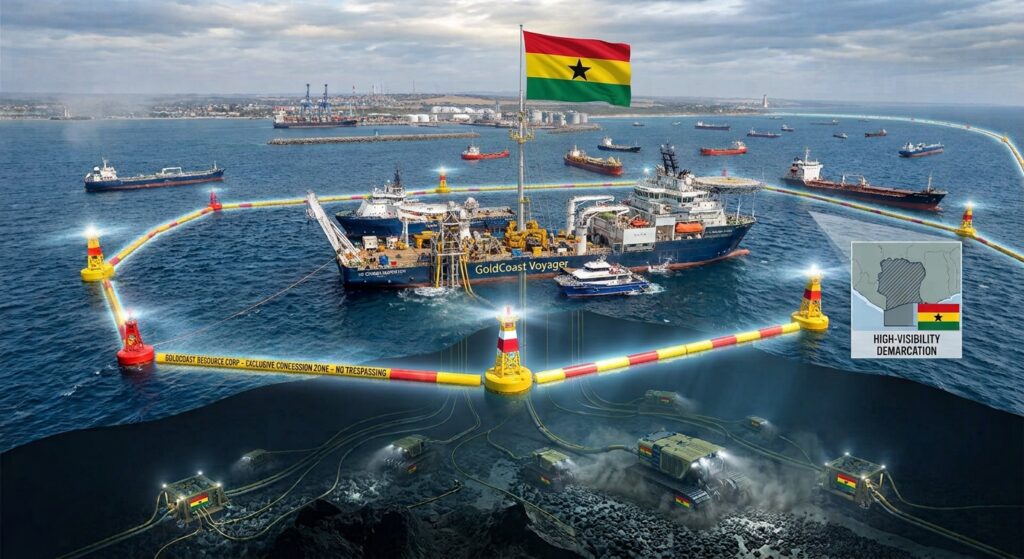
Expanding on the decision, the Commission explained that the directive was issued following concerns raised by civil society organisations and other stakeholders regarding the potential environmental and ecological impacts of the proposed offshore activities, alongside doubts about the depth of consultations with affected local communities.
The exploration rights, which were officially issued to Goldcoast GRC Ghana Limited on February 9, 2026, authorise the firm to conduct preliminary reconnaissance operations within Ghana’s territorial waters near Atwiwa in the Ahanta West Municipality of the Western Region.
Officials confirmed that the mineral rights remain active under law, as the suspension serves as a temporary pause to ensure that statutory environmental standards and local community consensus are fully satisfied before any offshore machinery is deployed.
Regulatory Safeguards and Environmental Mandate
According to the Commission, the operational halt applies solely to field activities and is structured to allow regulatory, environmental, ecological, and social concerns to be comprehensively evaluated before any prospective recovery or exploration work resumes.
The regulatory body emphasized that managing extractive developments requires balancing economic investment with strictly enforced ecological standards.
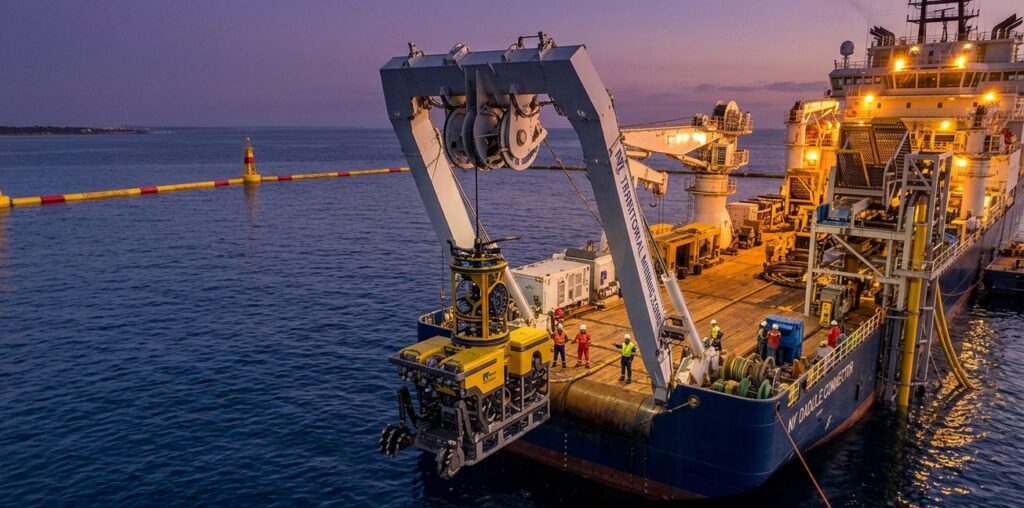
To maintain total compliance during this interlude, Goldcoast GRC Ghana Limited has been directed to immediately suspend all operations under the licences while statutory dialogues progress.
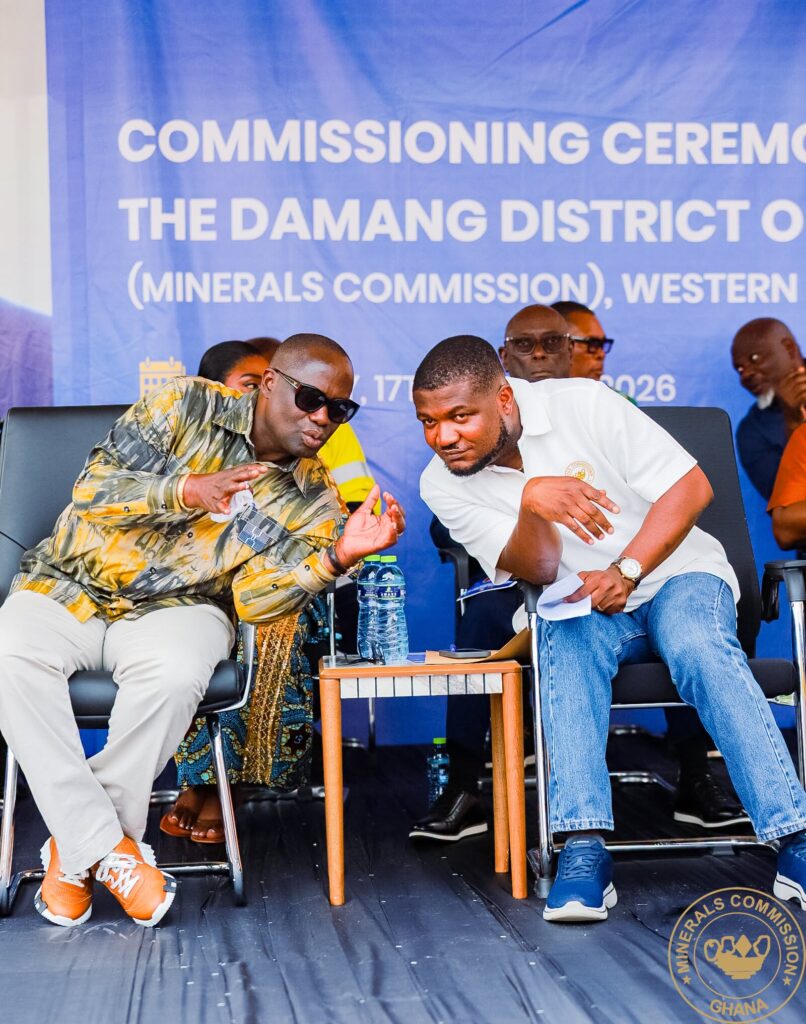
Furthermore, the mining company has been instructed to cooperate fully with the Commission, state regulatory agencies, and host communities throughout the consultation framework to resolve every outstanding ecological issue.
Economic Impetus and Offshore Exploration Imperatives
The drive toward offshore mineral reconnaissance stems from a critical need to evaluate Ghana’s marine resource potential and diversify the national extractive portfolio beyond traditional onshore operations.
With onshore gold deposits facing decades of intense exploitation and surface depletion, exploring territorial seabed geology offers a strategic frontier to quantify uncharted mineral reserves, boost state revenues, and attract high-value marine technology investments into the extractive economy.

However, marine mineral exploration brings distinct technical and environmental complexities that necessitate rigorous environmental baseline mapping.
Nearshore offshore zones near Atwiwa support rich marine ecosystems and host vital artisanal fishing communities whose economic livelihoods depend entirely on unpolluted coastal waters.
Consequently, conducting exhaustive preliminary reconnaissance governed by transparent environmental parameters is essential to prevent irreparable benthic disruption, protect marine biodiversity, and avoid operational conflicts between mineral exploration, commercial fishing, and offshore petroleum corridors.
Stakeholder Dialogue and the Path Ahead
The Minerals Commission’s proactive regulatory approach underscores a commitment to transparent natural resource governance, ensuring that economic development does not bypass ecological safety or host-community consent.
By insisting on comprehensive multi-stakeholder consultations, the regulator seeks to establish a clear balance between extractive industry expansion and coastal protection.
As the suspension holds, all eyes remain on the forthcoming consultation sessions between state regulators, civil society groups, municipal authorities, and Goldcoast GRC Ghana Limited.
The outcome of these ecological and social impact evaluations will determine the final operational framework under which offshore reconnaissance may safely proceed.
READ ALSO: World Bank Holds Ghana’s 2026 Growth Forecast at 4.8%