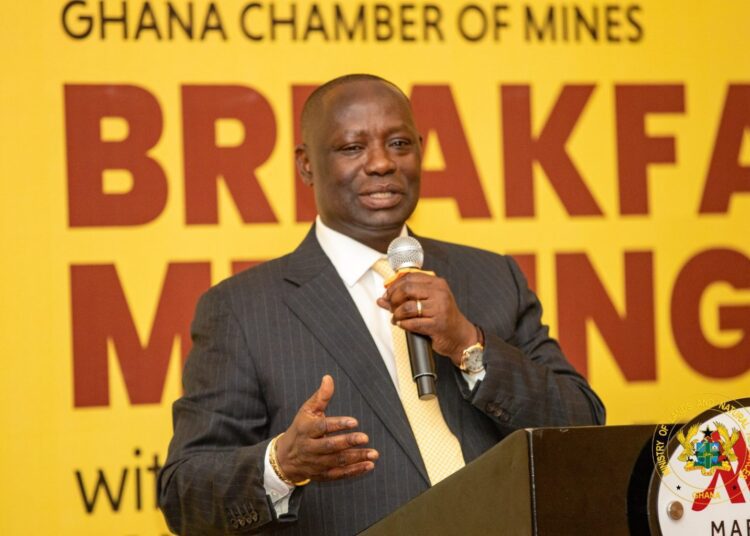
The Ministry of Lands and Natural Resources and Minerals Commission have pledged comprehensive stakeholder engagement following government’s instruction to suspend Goldcoast GRC Ghana Limited’s offshore reconnaissance licences amid environmental backlash.
This regulatory setback directly follows rising objections from civil society organisations and local groups regarding potential marine ecological damage and inadequate prior consultations off the coast of Atwiwa in the Ahanta West Municipality.
Acting on the ministerial directive, the Minerals Commission ordered an immediate halt to all operational activities while state authorities commit to aligning all affected parties before exploration can proceed.
“In appreciation of the continued vigilance of stakeholders in safeguarding Ghana’s natural resources for present and future generations, the Minerals Commission and the Ministry of Lands and Natural Resources reaffirms their commitment to meaningful consultation that ultimately aid in responsible mineral governance and environmental protection.”
Minerals Commission
Expanding on this directive, the policy intervention serves as a proactive measure to address community anxiety without revoking the underlying mineral rights.

Ghana’s mineral-rich terrain holds immense untapped wealth, with an estimated three trillion ounces of gold awaiting discovery across its territory and territorial waters.
Under section 31(1) of the Minerals and Mining Act, 2006 (Act 703), the sector minister holds the legal authority to grant reconnaissance licences based on recommendations from the Minerals Commission.
Although these licences were issued on February 9, 2026, to allow Goldcoast GRC Ghana Limited to obtain verifiable resource estimation data, the government has prioritised public alignment over immediate exploration.
Consequently, this temporary suspension guarantees that environmental impact considerations, regulatory requirements, and local community concerns are thoroughly addressed before any oceanic survey operations resume.
Constitutional Provisions and Legal Framework governing Mineral Ownership
Ghana’s legal architecture surrounding natural resources firmly vests all mineral holdings in the sovereign trust of the executive presidency.
Article 257(6) of the 1992 Constitution of Ghana, reinforced by Section 1 of Act 703, dictates that all minerals in their natural state whether located under or upon any land, rivers, streams, water courses, the exclusive economic zone, or areas covered by the territorial sea and continental shelf belong exclusively to the President in trust for the Ghanaian people.
Complementing this ownership structure, Article 269 provides strict constitutional safeguards to oversee mineral agreements and guarantee that rights are granted through transparent mechanisms.

Under this legal canopy, the state retains total authority to approve, regulate, or pause offshore reconnaissance licenses.
Although the current suspension delays marine resource mapping, the regulator emphasizes that Goldcoast GRC Ghana Limited must “cooperate fully with the Commission, the relevant State institutions and all affected stakeholders” throughout this interim cooling-off period.
By asserting firm regulatory oversight, the Ministry ensures that statutory compliance precedes any physical deployment of marine exploration technology.
Marine Ecological Concerns and Stakeholder Backlash
The decision to pause the offshore reconnaissance activities was heavily influenced by swift representations from civil society organizations and local groups.
Critics voiced profound concerns about the “potential environmental and ecological impacts of the proposed operations” within fragile marine ecosystems.
Primary objections focused on the disruption of oceanic habitats, potential threats to artisanal fishing livelihoods in Ahanta West, and the overall “adequacy of consultations with persons and groups likely to be affected.”
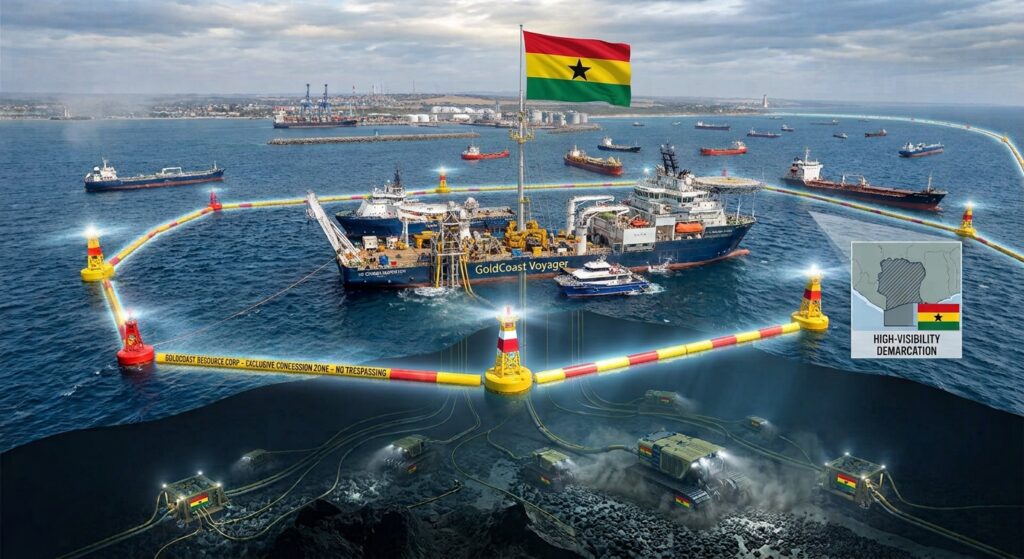
Offshore exploration, even at the reconnaissance stage, carries inherent risks to underwater biodiversity, seabed integrity, and coastal fisheries.
The intense pushback from civil society highlights an evolving public expectation for participatory environmental decision-making.
By bowing to public scrutiny, the government signals that economic resource estimation cannot bypass localized consent or compromise marine conservation priorities.
The Imperative for Comprehensive Engagement and Sustainable Governance
The necessity for extensive stakeholder consultation stems directly from the need to balance resource extraction with sustainable environmental stewardship.
Halting operations allows regulators to address unresolved ecological and social issues while honoring the “continued vigilance of stakeholders in safeguarding Ghana’s natural resources for present and future generations.”

Aligning institutional objectives with community interests prevents long-term social conflict and protects marine biodiversity.
Ultimately, this initiative sets an essential precedent for responsible extractive governance in West Africa’s marine jurisdictions.
By establishing a platform for meaningful dialogue before exploration commences, the Ministry of Lands and Natural Resources and the Minerals Commission reaffirm their “commitment to meaningful consultation that ultimately aid in responsible mineral governance and environmental protection.”
This strategic pause ensures that Ghana’s offshore mineral potential is developed through transparent, accountable, and environmentally sound practices.
READ ALSO:IMANI Pulse Ranks Afenyo-Markin Ghana’s Most Negative Political Figure Online