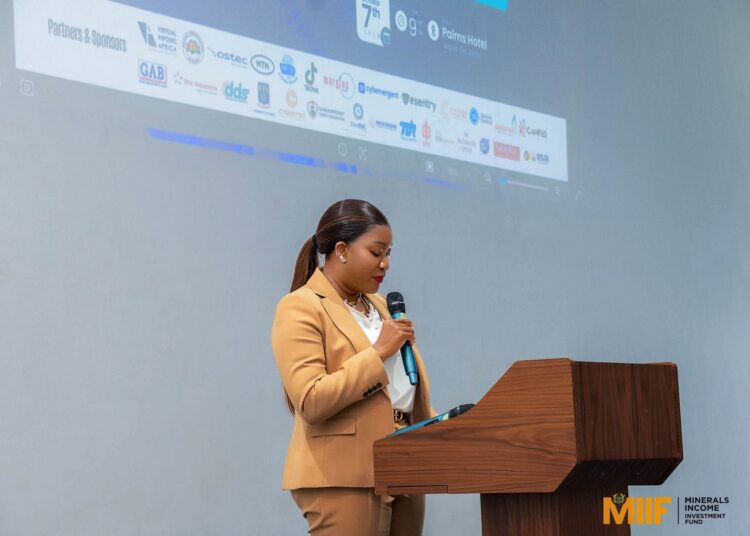
Mrs. Justina Nelson, Chief Executive Officer of the Minerals Income Investment Fund (MIIF), has advocated for enhanced cyber defense mechanisms within Ghana’s mining ecosystem as extracted-resource industries accelerate their integration of digital technology.
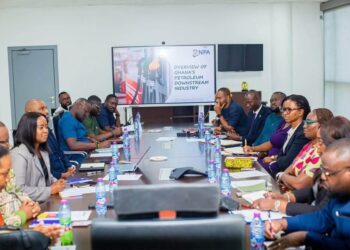
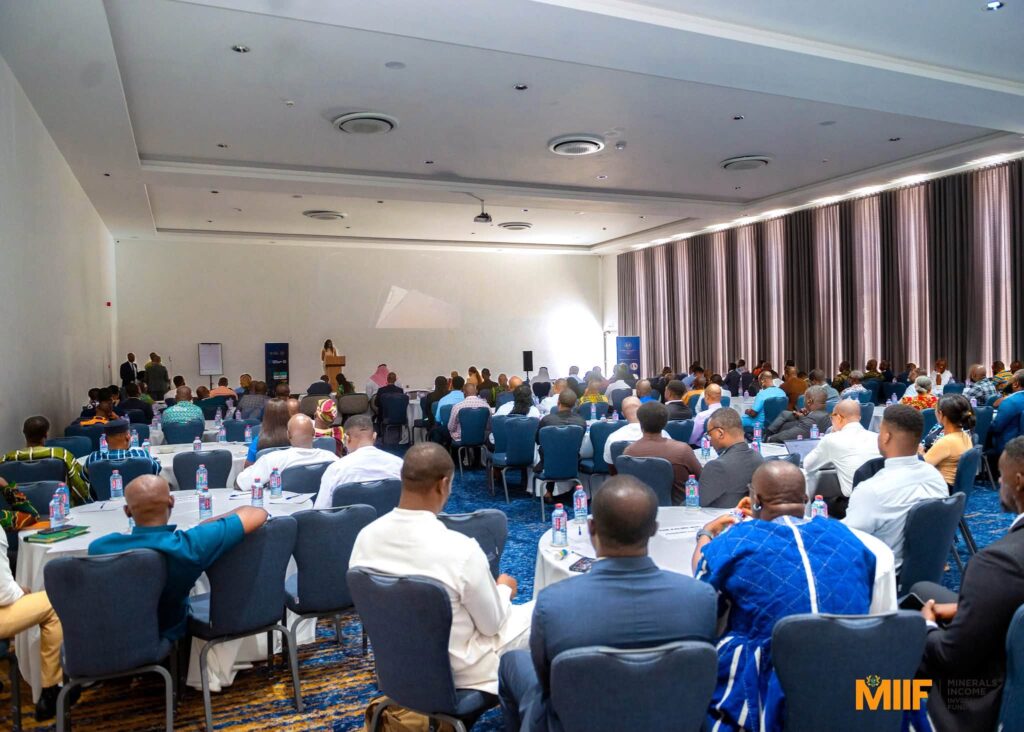
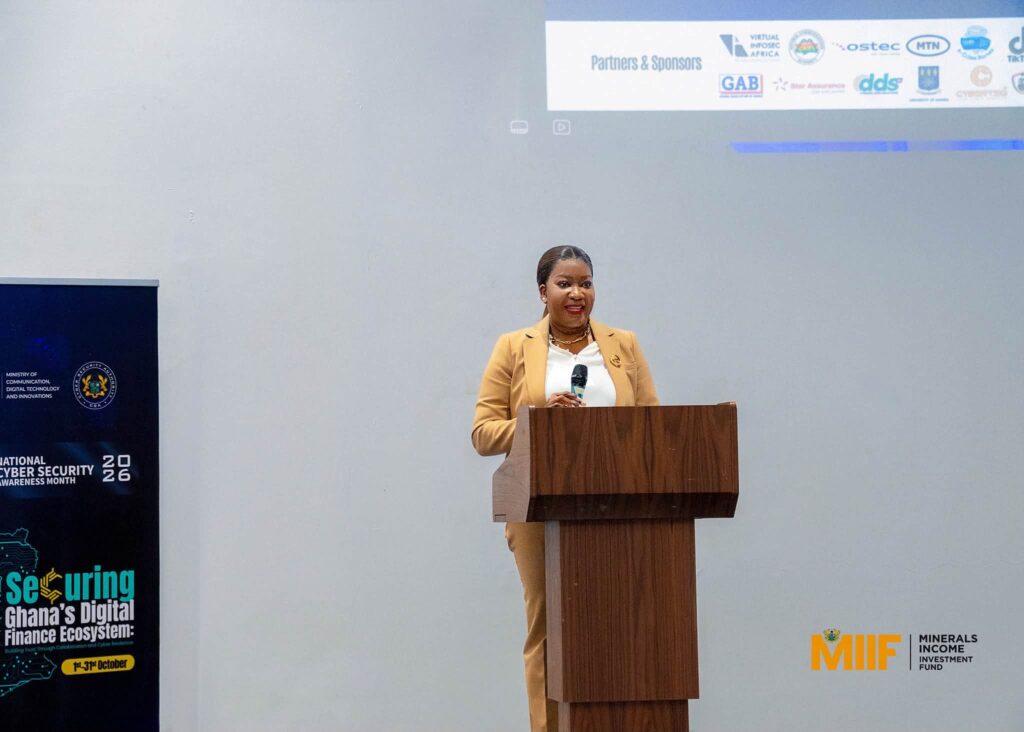
Speaking in Accra at a workshop themed “Critical Information Infrastructure Resilience Beyond IT,” hosted by the Cyber Security Authority (CSA) of Ghana to observe National Cybersecurity Awareness Month, she highlighted how modern extraction methods expose production channels to digital vulnerabilities.
Addressing an audience comprising hundreds of IT specialists, corporate leaders, and cybersecurity experts, Mrs. Nelson emphasized that the rapidly evolving operational landscape requires an equivalent advancement in digital safeguards across all mining operations nationwide.
“…Mrs. Nelson called for stronger cyber resilience in Ghana’s mining sector as the industry increasingly adopts automation, artificial intelligence and connected technologies to enhance safety, efficiency and productivity.”
Minerals Income Investment Fund (MIIF)
The MIIF boss explained that the push for robust digital infrastructure is driven by the industry’s swift adoption of automation, artificial intelligence, and interconnected systems aimed at driving yield, efficiency, and worker safety.
However, this growing reliance on complex technology opens new attack vectors for malicious actors targeting physical infrastructure and operational logistics.
Mrs. Nelson noted that as smart technology merges with traditional field operations, mining enterprises must adopt proactive cybersecurity frameworks to mitigate potential breaches that could halt active production.
Without dedicated safeguards matching this technological shift, the financial returns, national resources, and structural safety of the industry remain vulnerable to unauthorized intrusions and deliberate network disruptions.
Industrial Digitization and the Vulnerability of Operational Technology
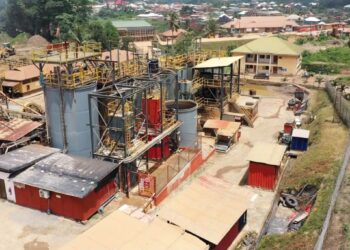
Ghana’s extractive sector is undergoing a profound digital transformation, transitioning from manual, labor-heavy workflows to automated processes driven by advanced telemetry, automated heavy equipment, internet-of-things (IoT) sensors, and predictive algorithms.
While these technology deployments optimize ore recovery and worker welfare, they fundamentally bridge the traditional gap between isolated Operational Technology (OT) and corporate Information Technology (IT) enterprise networks.
SCADA systems, programmable logic controllers (PLCs), and central processing facilities once physically isolated from external networks are now linked to broader data pathways for real-time monitoring and analytics.
This interconnected environment exposes high-value mining assets to global cyber threats, including targeted ransomware attacks, supply chain disruptions, and state-sponsored espionage aimed at critical national infrastructure.
Industrial Control Systems in large-scale gold, bauxite, and manganese extraction plants manage vital processes ranging from underground ventilation, toxic waste containment, and heavy machinery transport to chemical processing algorithms.
A cyber breach affecting these specialized environments could trigger devastating physical failures, equipment damage, or catastrophic industrial accidents, threatening workforce safety and local ecology.
Consequently, treating OT protection as a core component of occupational health and safety standards is essential to maintaining operational integrity across production facilities.
Protecting Ghana’s Strategic Mineral Revenues and National Heritage
Beyond operational continuity, safeguarding digital infrastructure directly impacts the stability of Ghana’s national economy.
The mining sector remains a primary source of foreign exchange, government revenue, and corporate tax receipts for the state, with MIIF managing equity stakes and royalty streams derived from these assets.
Any deliberate cyber intrusion or prolonged network outage targeting major mining operations risks stopping production, delaying exports, and creating significant shortfalls in state revenues.

In an era where mineral assets fund public infrastructure and economic development initiatives, maintaining cyber resilience within industrial operations serves as a crucial line of defense for fiscal stability and national sovereign wealth.
The Cyber Security Authority’s classification of mining platforms as Critical Information Infrastructure (CII) underscores the geopolitical and economic stakes involved.
Disruptions to automated refining operations, export tracking networks, or royalty accounting systems could ripple through domestic supply chains, damage investor confidence, and reduce annual mineral returns.
Establishing rigorous security protocols across OT networks creates an effective defense against extortion tactics and operational hold-ups, keeping production schedules uninterrupted and protecting public revenue inflows.
Frameworks for Sector-Wide Cybersecurity Integration
Building enduring cyber resilience across Ghana’s mining landscapes requires active collaboration between state regulators, industry executives, security agencies, and technology developers.
Enterprise leaders must move beyond standard corporate IT defenses and invest in specialized OT security measures, continuous threat monitoring, zero-trust network access, and regular vulnerability audits tailored for industrial control environments.

Moreover, workforce development programs must equip engineers, technicians, and site managers with the training necessary to detect, report, and neutralize cyber threats at the operational level.
Through alignment with the Cyber Security Authority’s directives and international standards, Ghana’s extractive sector can set a benchmark for safe resource management across the African continent.
Proactive threat mitigation, combined with robust incident response planning, enables mining firms to leverage modern automation while protecting vital operations, human life, and long-term mineral revenues from digital risks.