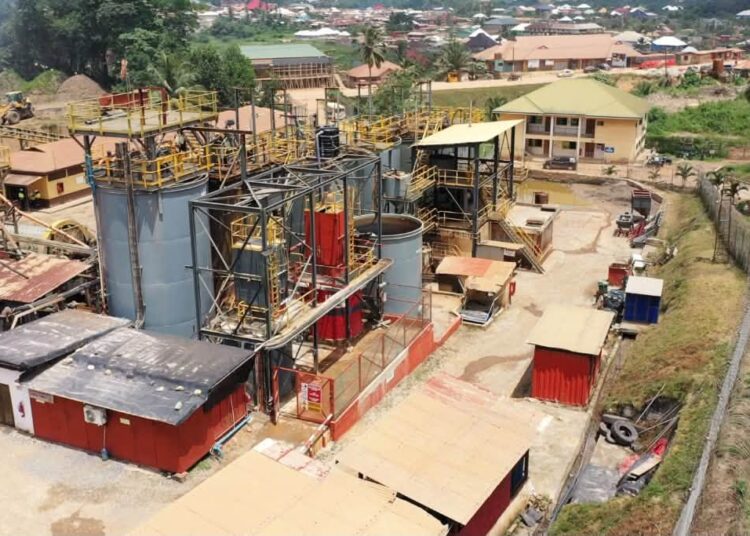
Prestea Sankofa Gold Limited has officially resumed operations at its processing plant after a challenging nine-month shutdown, reopening critical processing of gold tailings.
The restart of the facility represents a key operational milestone for the company following months of technical hurdles and structural maintenance.
With operations now active, attention has turned to the ongoing work on the tailing’s storage facility and key site infrastructure needed to maintain stable throughput and safe processing.
“When I paid a working visit to the company today, I commended the management and staff for the progress made in the face of these challenges. This is the momentum we must sustain. With Ghana placing renewed emphasis on maximising value from our gold resources, Sankofa has an important role to play.”
Hon. Joseph Nelson, Western Regional Minister
Building on this operational restart, management and workers at the facility have demonstrated resilient determination to overcome severe institutional and structural challenges that previously hampered production capacity.
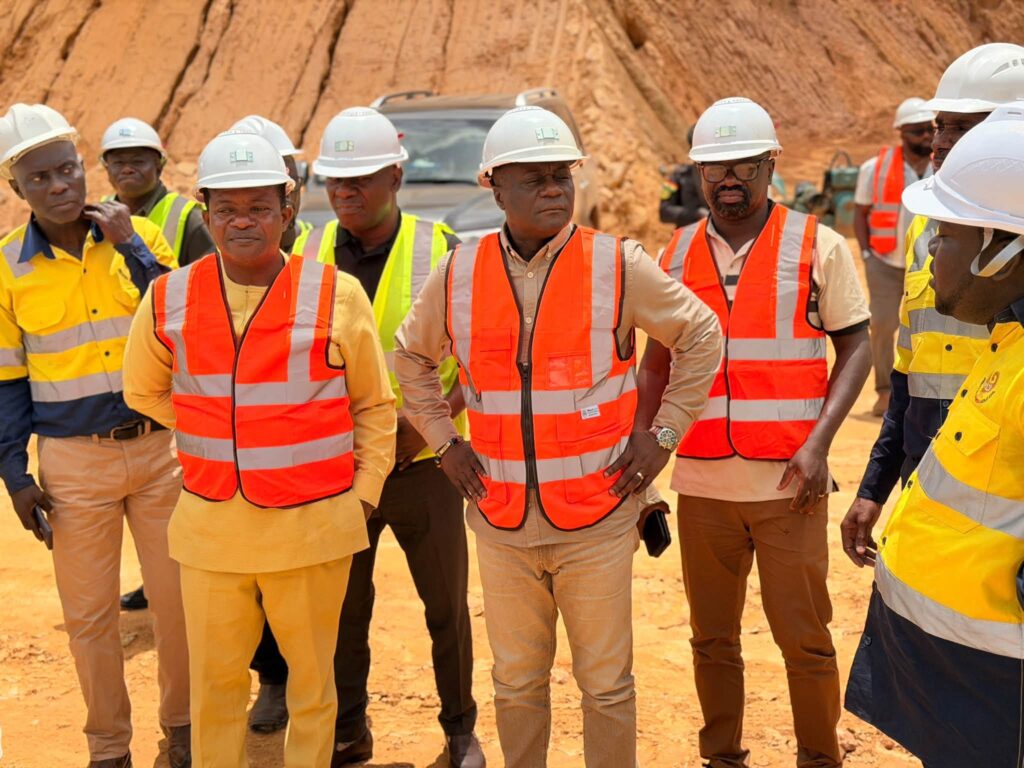
The current operational scope extends beyond the primary processing unit, encompassing critical structural maintenance on containment facilities and tailings storage facilities to ensure complete environmental compliance and operational efficiency.
Sector regulators and state observers note that maintaining this technical infrastructure is paramount as Ghana seeks to optimize resource recovery, bolster domestic mineral output, and maximize economic returns from historical gold-bearing residue assets.
Operational Revival and Strategic Value Addition
The resumption of tailings operations at Prestea Sankofa Gold Limited aligns directly with national policy frameworks prioritizing downstream mineral value addition and environmental stewardship.
For years, historical tailings dump in legacy mining communities posed serious environmental liabilities while holding unextracted economic potential.
Re-processing these surface deposits through modern hydrometallurgical techniques provides a dual advantage: systematically rehabilitating legacy mining footprints while recovering economic gold reserves without the capital-intensive demands of deep underground mining.
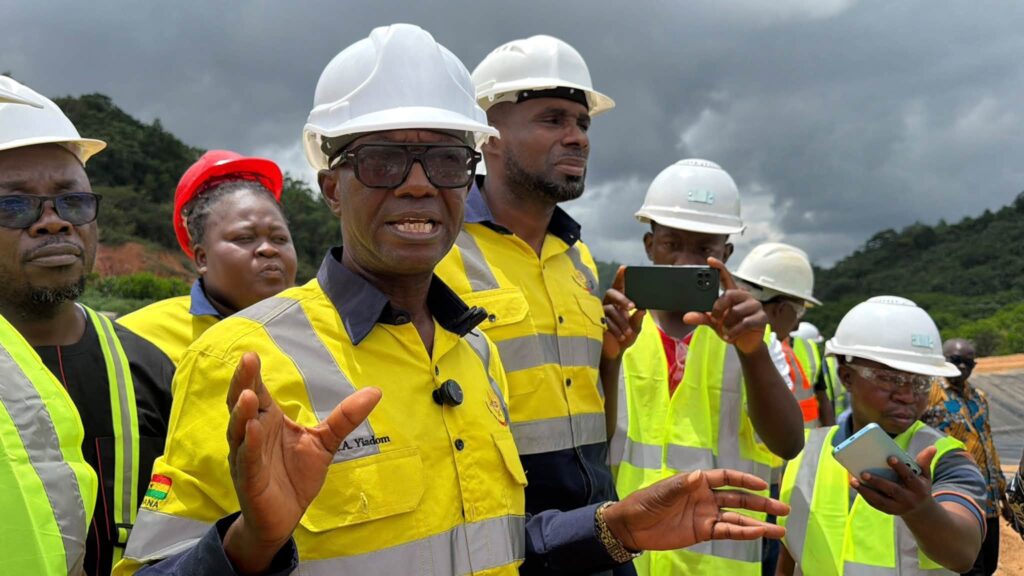
The sector minister reiterated that “increased production, operational efficiency, diversification and long-term sustainability must now become the focus” for all state-affiliated mining entities.
Industry analysts emphasize that optimizing state-backed enterprises such as Sankofa reduces reliance on speculative primary extraction while creating stable internal revenue channels for national development.
By transforming potential ecological hazards into productive financial assets, the company models a circular extraction framework crucial for the modern mining landscape.
Corporate Sustainability and National Economic Realignment
To maintain long-term commercial viability, management must maintain continuous plant run-time and strict operational discipline.
Operating in a competitive global market requires the facility to optimize recovery rates, adopt energy-efficient recovery mechanisms, and mitigate process equipment wear.

State authorities have placed clear parameters on the leadership team: “the expectation is clear: keep the plant running, keep improving, produce more, create greater value for employees and communities, and contribute more meaningfully to Ghana’s economy.”
Achieving these targets requires predictable funding flows, systematic asset management, and sustained technical expertise across all engineering and metallurgy departments.
Furthermore, integrating robust community relations strategies with technical operations ensures that local host communities derive direct economic benefits from regional extractive activities through direct job creation, local procurement partnerships, and environmental remediation commitments.
Industry Outlook and Long-Term Resource Policy
The operational comeback of Prestea Sankofa Gold Limited represents a microcosm of Ghana’s broader strategy to secure higher equity and fiscal value from its mineral wealth.

State intervention and structural oversight are designed to ensure that state-owned mineral concessions transition into profitable, self-sustaining commercial enterprises.
Extractive industry stakeholders contend that “Sankofa must not only recover; it must emerge stronger, more sustainable and positioned to tell an even better story of Ghanaian gold.”
Success at Prestea will provide a clear blueprint for transforming stalled domestic resource assets across the West African sub-region into operational, sustainable drivers of macroeconomic growth.
READ ALSO: NPA Shares Downstream Regulatory Experience With Eswatini