Ghana’s banking sector is entering another critical phase in its recovery, with fresh financial data revealing a striking divide between lenders maintaining healthy loan portfolios and institutions still battling a heavy burden of bad debts.
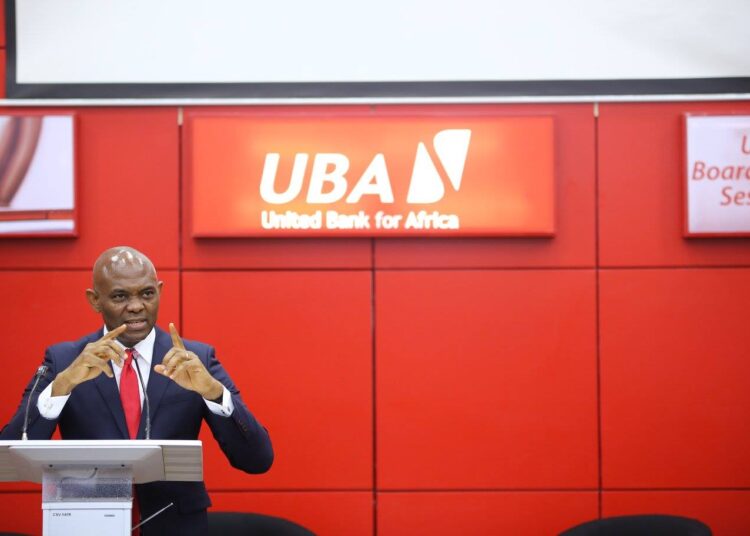
United Bank for Africa (UBA) Ghana emerged as the strongest performer among the banks highlighted, recording a non-performing loan (NPL) ratio of just 2.1% at the end of 2025. At the opposite end of the spectrum, Agricultural Development Bank (ADB) and National Investment Bank (NIB) continued to struggle, with their bad loan ratios remaining above 69%.
The figures expose the uneven progress banks are making in managing credit risks, raising questions about their capacity to support businesses and households while strengthening their balance sheets.
According to the Ghana Association of Banks’ Consolidated Banks’ Audited Financial Statements for 2025, the differences in loan performance remain substantial, despite improvements recorded by some institutions.
UBA Leads as Ghana’s Banks Deliver Contrasting Results
UBA Ghana’s 2.1% NPL ratio placed it ahead of the other banks highlighted, suggesting that a relatively small proportion of its loan portfolio had deteriorated into non-performing status by the end of 2025.
Fidelity Bank Ghana followed with an NPL ratio of approximately 6.1%, while Guaranty Trust Bank (GT Bank) Ghana recorded 7.1%. Zenith Bank Ghana and Access Bank Ghana also remained below the 10% threshold, with ratios of 8.5% and 9.2%, respectively.
These figures offer a glimpse into the varying credit outcomes across Ghana’s banking industry. Banks with lower NPL ratios generally face less pressure from impaired loans, although the ratios alone cannot establish their overall financial strength.
However, a closer examination of the figures reveals that some lenders with relatively low bad loan ratios are experiencing worrying deterioration.
Access Bank Ghana’s NPL ratio climbed from 2.1% in 2024 to 9.2% in 2025. Zenith Bank Ghana recorded an even sharper increase in relative terms, with its ratio rising from 1.0% to 8.5%.
GT Bank Ghana also experienced a notable deterioration, as its NPL ratio increased from 2.4% to 7.1%.
Although the three banks ended 2025 with ratios below 10%, the increases suggest that credit risks are building within their loan portfolios. Sustaining their relatively strong positions will depend partly on their ability to identify repayment difficulties early and strengthen loan recovery efforts.
ADB and NIB Remain Burdened by Bad Debts
The most troubling figures came from ADB and NIB, where non-performing loans continued to account for a substantial share of total lending.
ADB recorded an NPL ratio of 70.5% at the end of 2025, down from 75.3% in 2024. NIB also registered a marginal improvement, with its ratio declining from 75.5% to 69.7%.
Despite the reductions, the figures indicate that both institutions continue to face considerable challenges in recovering troubled loans and improving the quality of their assets.
Universal Merchant Bank also remained under significant pressure, recording an NPL ratio of 52.3%, compared with 54.9% a year earlier.
These elevated ratios can create serious difficulties for lenders. When borrowers fail to repay loans as scheduled, banks may have to increase impairment provisions, potentially reducing profits and weakening their capacity to deploy funds into new lending.
High levels of impaired credit can also tie up capital and undermine confidence in a bank’s ability to manage its risks effectively.
For institutions already dealing with substantial bad debts, improving recoveries and preventing fresh loans from deteriorating will be essential to restoring healthier balance sheets.
CalBank Makes Significant Progress in Loan Recovery
While ADB and NIB continue to grapple with severe credit challenges, CalBank recorded one of the most substantial improvements among the banks highlighted.
Its NPL ratio fell sharply from 47.5% in 2024 to 17.0% in 2025, representing a significant reduction in the proportion of its loan portfolio classified as non-performing.
Prudential Bank also recorded progress, with its ratio declining from 74.0% to 57.0%.
Although both institutions remain burdened by elevated bad loan ratios, the improvements suggest that their asset-quality positions have moved in a more favourable direction.
The picture was less encouraging at Consolidated Bank Ghana, where the NPL ratio surged from 12.5% to 33.4%. Stanbic Bank Ghana also recorded a deterioration, with its ratio rising from 17.1% to 24.6%.
These contrasting performances demonstrate why banks must be assessed not only by their current NPL ratios but also by the direction in which those ratios are moving.
Salary Deduction Delays Could Trigger Lending Freeze
Beyond the audited financial figures, concerns about delayed salary deductions are adding another layer of pressure to Ghana’s banking sector.
The Ghana Association of Banks has raised concerns about delays in remitting deductions taken from public sector workers’ salaries to repay loans contracted from financial institutions.
The association’s Chief Executive Officer, John Awuah, has indicated that banks could suspend new lending to public sector workers in the coming weeks if the outstanding remittances remain unresolved.
Such a move could affect workers who depend on salary-backed loans to finance household expenses and other personal needs.
The problem also exposes lenders to cash-flow disruptions when deductions have already been made from employees’ salaries but have not reached the banks responsible for providing the loans.
If the delays persist, banks may become more cautious about extending fresh credit, particularly where repayment arrangements depend on deductions at source.
Credit Recovery Will Shape Banks’ Next Moves
Ghana’s 2025 banking figures reveal an industry where some lenders have maintained comparatively strong asset quality while others remain weighed down by years of difficult credit exposures.
UBA’s leading position offers a notable contrast to the challenges facing ADB and NIB. Yet the sharp increases recorded by Access Bank, Zenith Bank and other lenders show that even institutions with relatively low NPL ratios cannot afford to relax their credit controls.
The next phase will require stronger loan monitoring, effective recovery mechanisms and timely remittance of salary deductions.
Ultimately, reducing bad loans will be central to improving banks’ profitability, protecting capital and expanding their capacity to finance Ghanaian businesses and households.
READ ALSO: Ghana Stock Market Sheds Momentum as 28 Equities Battle for Direction